
INTERVIEW: How Customs Operations is Powering Economic Growth, Suppressing Smuggling Across Kano, Jigawa – Adamu

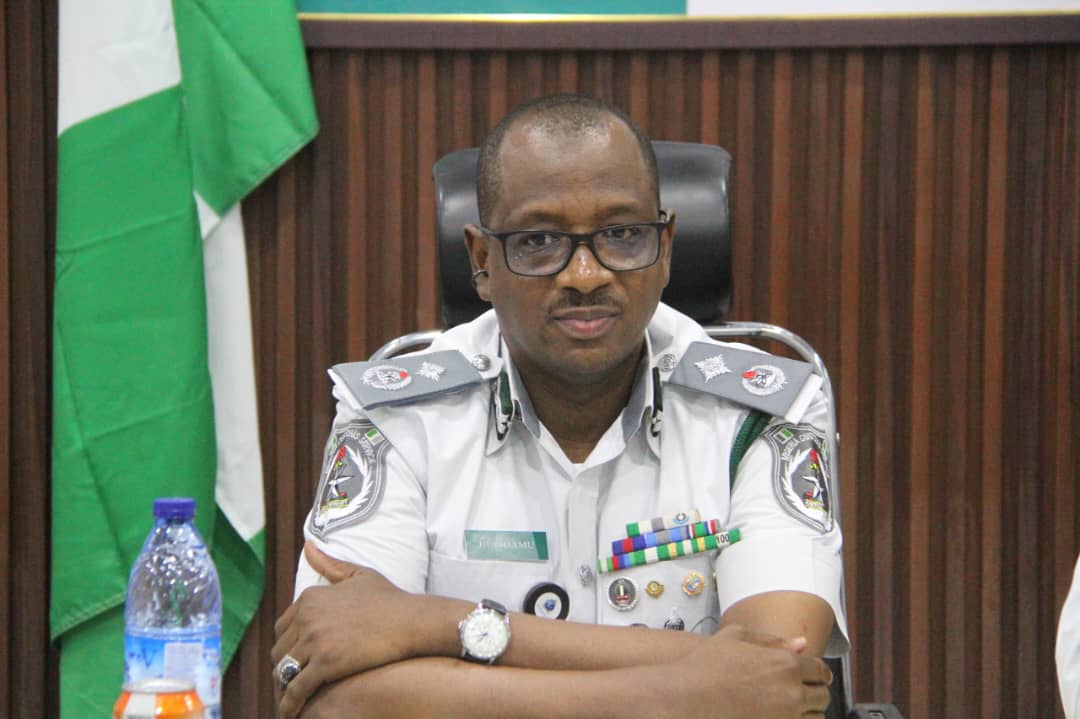
In this exclusive JournalNG interview, Deputy Comptroller Usman Umar Adamu, Acting Controller of Customs for the Kano/Jigawa Command, outlines the command’s strategic interventions that have strengthened legitimate trade, enhanced compliance within the Kano Free Trade Zone, expanded government revenue, and intensified the suppression of smuggling.
Adamu also discusses the command’s recent record wildlife seizures, attributing the interdictions to intelligence-led operations informed by his extensive international experience and specialist knowledge of transnational wildlife crime.
Speaking with Ismail Aniemu, he revealed that
Adamu under whose area of command has a dry port, border stations,excise factories and a thriving free trade zone,confirmed that as at the first week of October 2026 , the command has generated ₦100 billion, with half of that sum, about ₦50 billion originating from the Kano Free Trade Zone.
Excerpt:
 You assumed office about 10 months ago. Looking back, how would you assess your performance and the achievements of the command?
The first thing that comes to my mind is that I stepped into bigger shoes, and I must not only fill them with my feet but also carry my heels and support them to make them fit. Today, 10 months later, Glory be to Almighty Allah, we have done more with the support of the CGC Bashir Adewale Adeniyi, MFR, and my lieutenants. We have achieved more across the board.
I am not trying to blow our trumpet, but I must appreciate that my predecessor laid the foundation for a more progressive administration, and we have found ways to build on his achievements.
In terms of revenue, we have beaten last year’s record. Despite low cargo throughput and other challenges, we surpassed last year’s record by 15.1 per cent. That is huge because it translates into billions of naira.
We are talking about the last nine to ten months, despite the global economic crisis, the conflict in the Middle East and other challenges.
We are proud to say that we generated over N100 billion in less than 10 months, about N10 billion more than the corresponding period last year. So, Alhamdulillah. About ₦50bn of this revenue was made from the Kano Free Trade Zone
On seizures, we also set a new record. Throughout last year, a single second-hand vehicle, known as Tokunbo was not seized, but from January to date, we have detained and seized a good number of Tokunbo vehicles.

This shows our courage and commitment to confronting those who habitually violate our procedures, processes, and government fiscal policy measures.
In general, we have also acted against those who divert consignments. We visited some warehouses and, at one point, I personally led the interception of diversions and the sealing of warehouses suspected of infractions.
We have not only shown that Customs exists; we have also demonstrated that the right thing must be done and that nobody is above the law. We sent that signal, and today it has translated into improved compliance.
None of this would have been possible without the foundation we laid when I assumed office. I took over on 31 December, 2025, and on January 2, 2026, when I fully assumed duty, I looked at what I found on the ground and asked myself: How can I improve this?
This brought back a memory of an interview with Nigeria’s former President, Olusegun Obasanjo.
I recall that while I was in university, he was asked why he did not have a Minister of Petroleum during a particular tenure. He explained that he had travelled to a country where a significant portion of the country’s exports were dairy products.
He said that, at the time, the State House kept a few cattle. The President reportedly inspected how much milk those cattle produced daily.
Based on production from those cattle under similar conditions, the government could estimate expected output across the country’s ranches because dairy production was an important source of national revenue.
President Obasanjo said this was why he felt the Petroleum Ministry should be directly under his supervision, so he could establish the volume of crude oil produced per day and determine how much Nigeria earned from crude oil production and export.
In my case, I said I am here in the hinterland. Up north, my revenue is solely dependent on how much cargo comes through the Command. So, to make headway, I first revisited the entire transire process from beginning to end and ensured it was transparent, predictable, accountable, friendly, and end-to-end encrypted. We reviewed the entire transire process.
From the second day, I introduced a desk officer responsible for recording all transire applications electronically, not in the normal hard-copy book, so the records could be easily accessed. Using a fingertip, you could recall and retrieve information without delay.
We began recording all our transire applications, and I said this would only be possible if we could track the applications.
We know that an application does not necessarily translate into throughput. However, we track the applications, so we know which have been dropped along the way and which are expected to arrive.
We can also determine, to a large extent, why some have not arrived and raise queries based on the records available to us. We began collecting records and realized there was an imbalance between the Free Trade Zone’s operations and those of the Kano Area Command.
We began asking questions. It became clear that we needed improvements.
As someone with experience in the clearance processes, I began to query the situation, request meetings, and organize stakeholder engagements because I believe stakeholders must be on the same page as us. Otherwise, we will not achieve the desired results.
We continued engaging them, building on the Command’s history of stakeholder engagement. You may recall that when the Comptroller-General of Customs conference took place last year, this particular Command received awards in three different categories and was also recognized as the overall best Command within the Nigeria Customs Service for stakeholder engagement, Controller of the Year Award, and the Command was further recognized for having the best Public Relations Officer.
As I said, the platform for excellent performance has already been created, and we must not go lower bar.
What next? Fortunately, the Comptroller-General of Customs, a man full of wisdom and foresight, gave us his three policy thrusts, the cardinal points on which he built for the administration to help achieve the service’s mandate. These are consolidation, collaboration and innovation.
For me, I felt we should start with consolidation. Let us consolidate the past gains. We continued creating awareness, engaging stakeholders, exchanging ideas and bringing them closer. All of this was propelled by what I call my Administration’s open-door policy.
We put these measures in place, and before the first quarter, we started seeing changes. The direction became clearer, and our vision became more practical and attainable. Initially, everything seemed like a mirage, but we realized that the measures we were putting in place could eventually produce the desired results.
That was the foundation. We have also strengthened collaboration with various stakeholders, including sister government agencies and private-sector operators. We have also introduced innovations aimed at achieving the federal government’s objectives and the NCS’s goals as contained in the Nigeria Customs Service Act 2023.
Your recent seizures of wildlife were outstanding. What role did intelligence play, and how did you arrive at such a massive level of wildlife seizures?
I expected this question because wildlife seizures have been trending lately. However, I want to assure you that this is not far-fetched. I must again re-emphasise my appreciation to the Comptroller-General of Customs. While in the Customs Intelligence Unit, I was privileged to attend overseas training.
I am an alumna of the International Law Enforcement Academy (ILEA) Roswell and attended an Executive Symposium on Wildlife Trafficking and Model Law in the United States of America.
I was trained by the U.S. Fish and Wildlife Service and other LEAs. I have also attended World Customs Organisation (WCO) meetings on Wildlife Trafficking in Brussels.
Last year, I attended a WCO wildlife programme. This formed the foundation and inspiration for me to help save wildlife from daredevil traffickers. I understood the terrain very well.
I understood that Kano is the commercial centre of northern Nigeria, and that northern Nigeria shares borders with several countries. We have borders with Niger Republic, Benin Republic, Chad and Cameroon.
Most of these countries also border Central African countries, where large forests and climates support endangered species. Some of the trafficked wildlife are not necessarily from Nigeria. They may have been illegally trafficked from the Central African Republic, but the smugglers have established routes.
They may move from the Central African Republic into Cameroon, then to Chad, then to Niger, before returning through Nigeria, to conceal their actual route.
In Kano, we understand the vulnerable points. We invested heavily in intelligence and, most importantly, as I previously served in the Customs Intelligence Unit, I understand the importance of local intelligence. We relate to people living around the border areas. When we ask them about suspicious movements, they provide useful information.
We have also invested heavily in training our patrol officers to understand certain non-verbal behaviours, physical appearances, expressions and other indicators.
That has gone a long way in helping us intercept some of these illicit activities. We understood the pattern, sequence, and routes involved. So, we placed our officers on high alert. The seizures began to come, one after another.
We had the first seizure in January, followed by another one. Then, one evening, we came across another major seizure. Based on how the items were concealed, we expected to find something bigger than what we had seen. However, we could not examine it at the point of interception. We dispatched a backup team to escort the seizure back to the Command.
We eventually discovered about 47 endangered wildlife species, including albino crocodiles, chimpanzees, gorillas, and wild cats, among others.
We also recovered various birds and other items. According to our partners, particularly conservationists, this was the first time such a seizure was recorded. They described it as the largest seizure ever made, not only in Nigeria but, according to them, in West and Central Africa.
Looking at unregistered and suspected fake pharmaceuticals such as pregabalin and other products that you have intercepted, how do you think these interceptions have helped society, particularly in terms of the spread of illicit drugs and addiction?
Most importantly, we must understand that this is the product of a well-orchestrated collaboration model, based on the Comptroller-General of Customs’ policy thrusts. I can attest to the fact that, as you said, we have made significant seizures this year, particularly in terms of unregistered pharmaceuticals such as pregabalin hydrochloride.
I recall that we seized over 15 million capsules of pregabalin hydrochloride. When translated, that is about 504 master cartons, among others. Most importantly, we have used this to curb the proliferation of unregistered pharmaceuticals in society.
We are dealing with unregistered drugs and other controlled substances because there are two dimensions to the issue. One is the menace of drug addiction, where drug addicts may constitute a nuisance with associated crimes such as gangsterism, violent groups, and other forms of criminality. Today, the northern part of Nigeria is being ravaged by banditry, kidnapping and other crimes. These substances can fuel such activities.
Second, innocent members of society who need genuine medications may not have access to them because some unregistered products do not meet the standards set by the National Agency for Food and Drug Administration and Control (NAFDAC). If they do not meet these standards, what people take may contain substances above or below the required threshold. In Kano, the Command has intercepted medicaments worth about N2 billion in duty-paid value so far.
Looking at undeclared foreign currency and other negotiable instruments intercepted at the Kano International Airport, how does the Command balance the position of travellers with anti-money laundering obligations? What message does this send to those moving illicit or undeclared funds through the airport?
The last seizure we made here in Kano was $265,000, but let me start by exposing you to the overall seizures.
This year, the total seizures of hard currencies and other negotiable instruments that were undeclared at departure or arrival in Kano, when converted to naira, exceed N2.5 billion. It is huge. These seizures were not made from sheer wickedness, as some people in society perceive them.
The truth is, this is not unique to Nigeria. Worldwide, anti-money laundering laws require passengers travelling into or out of a country to declare currencies or other negotiable instruments equivalent to or exceeding $10,000.
Therefore, if a traveller has such an amount above the threshold in their possession without declaring it, it becomes an offence.
As Customs, we are responsible for intercepting undeclared funds and, under the Nigeria Customs Service Act, we can refer them to the appropriate agencies, such as the Economic and Financial Crimes Commission (EFCC) for further investigation and necessary action.
We have not stopped there.
We have consistently engaged Traders, Bureau de Change operators, and Members of the general public. We have also sponsored programmes on some media stations, both print and electronic, to educate people about their obligations regarding currency declaration when travelling into or out of the country.
We have taken time to educate people about these laws. I am quite sure most of these arrests for currency declaration cannot be attributed simply to ignorance; in many cases, people tried to conceal the currency beyond what the naked eye could see or what common sense could comprehend.
Many of the suspects were merely carriers. They were instructed to carry the money in a way that involved concealment.
The public should also understand that carrying such money is not an offence unless you fail to declare it. The law sets a minimum declaration threshold but no ceiling. As an agency, we record declarations and share the database with other relevant financial agencies.
Excise factories under your Command are part of revenue collection. What is the current state of compliance among excise manufacturers, and how do you monitor production without Customs becoming a bottleneck?
Absolutely, I must give credit to the Comptroller-General of Customs and the Excise Department.
For the first time in the service’s history, the entire excise process has been automated. Monitoring is no longer as difficult because everything is now recorded and automated. In Kano, we have six excise factories; 3 are small, while the other 3 are viable factories.
In terms of performance, we give glory to Almighty Allah and appreciate our officers and the service for providing us with a platform that promotes efficiency. Today, we can stand tall and declare that we have almost attained our excise revenue target for the year.
At our last meeting at the NCS headquarters in Abuja, Kano/Jigawa Command was among the few Area Commands whose excise unit performed above its assigned target.
This also reflects our stakeholders’ decision to embrace compliance rather than non-compliance. We appreciate companies such as the Nigerian Bottling Company, 7UP, Pop Cola, and others that have demonstrated commitment to legitimate trade and high compliance.
Looking at Customs operations in this area, you are not working in isolation. What is the level of your relationship with sister government agencies such as the Police, DSS, NDLEA, NAFDAC and SON? How has this collaboration contributed to your success, and is there any way you also contribute to the success of their mandates?
It is interesting to note that all the issues you have raised so far revolve around the Comptroller-General of Customs’ policy thrusts. That is, the CGC has done a good job developing these policy thrusts. Collaboration is key, and I believe the World Customs Organization platform on trade facilitation also supports it.
We call this Coordinated Border Management (CBM), which emphasises the need for all Agencies to operate on the same platform, particularly for intelligence sharing, and to create what is more or less a single window.
These are also part of the reforms the CGC introduced. The State’s operations also provide an umbrella under which most Security and Regulatory agencies operate.
For example, I serve on the State Security Council. The Commissioner of Police, the Director of State Services, the Brigade Commander, and representatives of other Security and Regulatory Agencies, including NDLEA and the Federal Road Safety Corps, are also members.
So, we have a cordial relationship with the Agencies, and we share intelligence.
That is the most important thing. In performing our mandate while helping them achieve theirs, I can attest that this year alone, we have worked with most of the Agencies. For example, we intercepted rustled cattle along Gezawa Road and handed both the cattle and the suspects over to the Police.
Normally, that would not be our mandate, but as Sister Agencies, we must ensure we remain committed to stamping out crime and criminal activities within Kano and its environment. As I mentioned earlier, we handed over seized pregabalin hydrochloride to NAFDAC.
Recently, we handed over a truckload of unregistered pharmaceuticals to the NAFDAC. The NAFDAC representative at the Mallam Aminu Kano International Airport is also a regular visitor here.
Every time he comes, we reaffirm our commitment to intercepting any medicament that enters the Airport and does not meet the required standards, and handing it over to NAFDAC for further necessary action. We also collaborate closely with the military and other Agencies operating in the State. These organizations contribute positively to achieving our mandates.
Looking at the overview of your operations, there seems to be a strong Customs presence and influence in Kano. Tell us about Jigawa State. What is happening there in terms of Customs operations?
The Command is called the Kano/Jigawa Area Command. It covers two states. In Jigawa, we have the Maigatari Approved Border Station and the Jigawa State Free Trade Zone in Maigatari, which is also developing.
A law restricts checkpoints and patrol operations outside a certain radius of the border area unless on information. So, our concentration is basically around the Border Area.
Overall, our reforms did not end in the Kano part of the Command. We have carried out major reforms on cargo Entry and Exit through the Maigatari-Jigawa Border Station.
For example, we handle international transit cargo destined for the Niger Republic that passes through Nigeria because Nigeria is on the coast. International maritime law allows cargo destined for landlocked countries to pass through a coastal country. We ensure that everything we do follows international best practice.
We realized that, from time to time, several vehicles were entering under temporary importation using a document called a Laissez-Passer. Accountability was sometimes an issue because the process required improvement.
So, I issued a directive and incorporated it into a protocol and procedure in the Command: any vehicle entering under temporary importation, after the Laissez-Passer has been issued, must have a copy of the document uploaded to a platform, along with a photograph of the vehicle.
When the document expires and the vehicle exits, we follow the same process. I am happy we achieved that. I can show you records of vehicles that enter the country through the approved route daily using Laissez-Passe, including their pictures and other details. This has reduced smuggling because we can use the records to separate genuine vehicles from suspicious ones.
That is why some people may say Customs carries out patrols within Kano to intercept vehicles. No, we target those smuggled vehicles because we already have information about those that entered using Laissez-Passe.
If we see a vehicle and check our records but cannot find its details, we follow it. I can assure you that 99.9 per cent of our targets are genuine infractions because we already have the information on the platform. It is real-time information. You can see the vehicles, their registration numbers and other details.
We have also made it mandatory that any vehicle coming under Laissez-Passe must be registered in the Republic of Niger before it enters the country, except in special exempted cases. Previously, we had incidents of vehicles carrying fake Laissez-Passe documents. We have now made that very difficult. This demonstrates our commitment, as an Area Command, to transparency and efficiency in our processes and operations.
How would you appraise the support you receive from the state governments of Kano and Jigawa?
If there is anything beyond excellent, I would ascribe it to our relationship with the two State Governments. Our relationship with them is excellent. I can attest that neither governor has ever expressed any interest in our operations. They have accorded to us all the necessary support and the political will to fight illicit trade.
No interference?
No interference. They have supported us in carrying out our responsibilities. In Kano, we operate without interference from the governor or members of his executive, same as in Jigawa.
What is your advice to compliant traders, and how would you rate the level of compliance on a scale of 0 to 100? What is the level of compliance by traders, and what is your advice to compliant businesses?
Based on World Customs Organization standards, compliance has certain levels. We have those who are voluntarily compliant, those on the fence, and those who are deliberately non-compliant.
I can say that a few companies in Kano demonstrate voluntary compliance, particularly those that are Authorized Economic Operators and related companies previously on fast-track procedures and have established a reputation. Even after the fast-track procedures were disbanded, they maintained their level of integrity.
Generally, traders try to cut corners to save costs. I can attest that most of the consignments we handle here are commercial goods. Previously, many traders found it difficult to comply fully, but with increased awareness and education, the compliance level has improved.
It has improved greatly. If I were to quantify it, I would say that our compliance level in Kano has risen to about 70 per cent. No wonder we are seeing the results on our dashbarewacind and electronic platforms. As I stated earlier, despite the decline in cargo throughput, we have overcome the challenges and generated over N100 billion from January to date.
My advice to compliant traders is that we will do our utmost to provide the trade facilitation they need. Our commitment to trade facilitation, as contained in CBM, is key. We assure them that we will continue to match those who remain non-compliant. We will continue to develop stringent but friendly policies.
The policy can be stringent and friendly at the same time: stringent for those determined to remain non-compliant, and friendly for those who have chosen compliance as a means of clearing cargo. We are trying to ensure that, in the end, those who cannot rise above self-interest, self-centeredness, and other mischievous interests will gradually be flushed out of the system.
Is that the price to pay?
Absolutely!
We will continue along that path; we have taken the pillars of trade facilitation very seriously. Our relationship with other Customs Administrations also extends beyond Nigeria. As I said earlier, we have a good working relationship with the Nigerien Customs Administration and our counterparts in neighbouring countries.
We share intelligence based on the principles of collaboration enshrined in the WCO Models of Customs-to- Customs and Customs-to-other-Agencies. This means that Customs Administrations in Nigeria, Niger Republic, and other neighbouring countries maintain relationships with each other. We also have relationships with other agencies.
As you asked earlier about our relationship with security and regulatory agencies, I can say that we have excellent working relationships with them. At the same time, we have relationships with Customs and businesses. Businesses are also a source of intelligence. If someone believes he should not be subjected to certain processes because he wants to avoid due process, their competitors may provide us with information.





One Comment