
Why Women Should Occupy Leadership Positions in Maritime Industry – Gambia Maritime DG, Danso-Malang

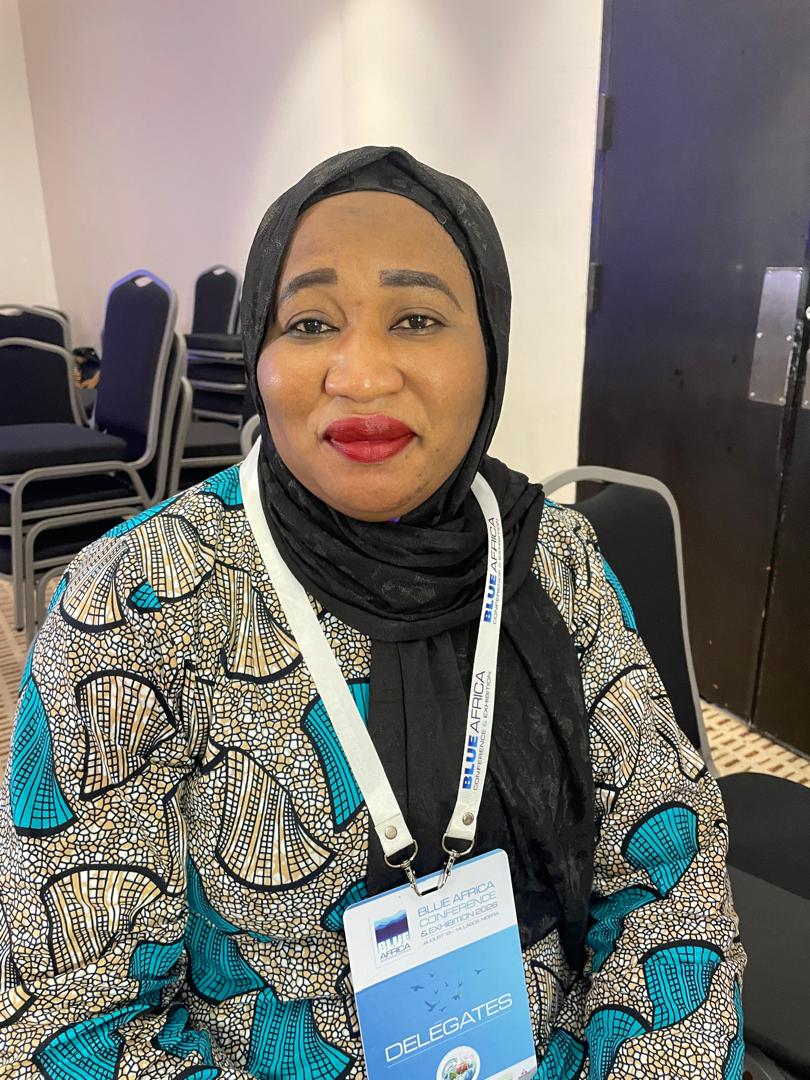
For decades, the maritime industry has remained one of the sectors where women have had to work harder to gain visibility, recognition and leadership opportunities. But across Africa, that narrative is gradually changing as more women enter the industry, acquire specialised skills and rise to positions of influence. One of them is Olimatou Danso-Malang , Director-General of the Gambia Maritime Administration and the first woman to occupy the position.
A lawyer by profession who later specialised in International Maritime Law, Malang’s career reflects the growing possibilities for women beyond the traditional boundaries of the maritime sector. From maritime administration and regulation to fisheries, transportation, tourism and other areas of the blue economy, she believes women have an important role to play in shaping Africa’s maritime future.
In this interview with JournalNG, the Director-General of the Gambia Maritime Administration speaks with Feyisola Adeyeha and Hannah Tedunjaye about her journey from law into the maritime sector, her experience as the first woman to lead the institution, the challenges and opportunities for women in the industry, and why African women must position themselves to take advantage of the expanding blue economy.
Question: For the record, could you please introduce yourself and tell us a little about your professional journey, particularly how you moved from a career in law into the maritime sector and eventually became the Director-General of the Gambia Maritime Administration? What inspired that transition, and what has the journey meant to you personally and professionally?
Answer: My name is Mrs.Olimatou Danso-Malang , the Director-General of the Gambia Maritime Administration.
My background is in law, and my entry into the maritime sector was largely driven by the desire to understand the industry better and broaden my professional knowledge. I eventually pursued a Master’s degree in International Maritime Law because I wanted to specialise and gain a deeper understanding of the legal and regulatory framework governing the maritime industry.
Moving into maritime was an important decision for me because the sector is very broad and presents many opportunities. It is not just about ships and ports; it involves international trade, transportation, fisheries, environmental protection, safety, security and, increasingly, the wider blue economy.
That journey eventually brought me to the position I occupy today as Director-General of the Gambia Maritime Administration. It has been a very interesting experience, particularly because I am a woman and the first woman to head the institution. I am also among the relatively few women heading maritime administrations globally.
If you look around the globe, there are very few women leading maritime administrations, and in Africa, the number is particularly small. I believe Angola and The Gambia are among the few African countries where women are heading maritime administrations, while, at the international level, there are also only a handful of women in similar positions.
The International Maritime Organization is now paying considerable attention to gender inclusivity and encouraging more women to take up leadership positions, particularly in the core maritime sector. I am therefore happy and, at the same time, humbled to be a woman heading a maritime administration, especially considering that the sector remains largely male-dominated.
For me, the position has reinforced the importance of confidence, competence, collaboration and the willingness to take on responsibilities in areas where women have historically been underrepresented.
Question: As a woman leading a key maritime institution, what have been some of the biggest challenges you have had to overcome?
Answer: In The Gambia, to be honest, we have not experienced the kind of hurdles where women are deliberately blocked from progressing within the system. Women are encouraged, and the question is often about when the opportunity will come rather than whether women should be given the opportunity.
If you look at other societies, you may find situations where women face discrimination, including differences in pay compared with their male counterparts. But in The Gambia, we have not experienced that particular problem in the maritime administration.
I have also been fortunate to have a very strong team that supports me and stands behind me. Having a committed team is important because leadership is not something you do alone, and the support of colleagues makes it possible to deliver effectively.
Question: How would you describe the progress of women’s participation and representation within the Gambian maritime industry?
Answer: Women’s participation is still relatively low, primarily because maritime remains a male-dominated sector, and the maritime industry itself is still developing in The Gambia. When people hear about maritime, many of them immediately think about the Port Authority rather than the broader maritime sector, and some people who come to the Port Authority for matters that fall within our mandate are eventually referred to the Gambia Maritime Administration.
So, women’s participation is still low, but we are creating awareness and encouraging more women to join the sector. At our ministry, we have a programme through which we train fresh school leavers at the Regional Maritime University, and we are now particularly encouraging more female students to participate so that we can develop a pool of qualified and properly trained women who can eventually take up leadership positions within the maritime industry.
Every year, we send 10 people to participate in the scholarship engineering programme, and this year, we want at least four of those candidates to be female. Our objective is to deliberately increase the number of women entering maritime education and training so that they can build careers and eventually occupy leadership positions across the industry.
Question: The maritime sector is increasingly being recognised as critical to Africa’s economic transformation. From your perspective, what opportunities does the blue economy present for African women?
Answer: There are many opportunities for women within the blue economy, and if we look specifically at The Gambia, we can see that women are already playing important roles in some areas, particularly fisheries.
If you go to our fisheries sector, especially around the landing sites and beaches, you will find a significant number of women, and in some areas, women are more involved than their male counterparts. Women are already participating in the fisheries value chain, which demonstrates that they can have an important place in the broader blue economy.
The oyster market in The Gambia is another good example because it is largely dominated by women. When you go there, you find women actively involved in the sector, and this shows that women are already contributing to blue-economy activities, even though they may not always be visible in the formal maritime industry.
What we need to do now is create the necessary awareness and provide the training and opportunities that will enable women to move from those areas into higher levels of the maritime and blue economy value chain. This is why we are encouraging women to enter maritime education and training programmes, including those at the Regional Maritime University, so that they can acquire the skills necessary to take up leadership positions in the future.
The blue economy is broad, and there are opportunities in sustainable fisheries, biodiversity conservation, tourism, transportation and other areas. In The Gambia, for example, much of our GDP depends on tourism, which means that the blue economy provides another avenue through which tourism can be expanded and connected to maritime development.
We are also looking at revitalising river transportation because The Gambia is divided by the River Gambia, and improving transportation along the river could create significant economic opportunities for communities located along its banks. Revitalising river transport would allow us to better harness the opportunities presented by the blue economy while improving connectivity and creating jobs and businesses for communities.
Question: Finally, what message would you like to send to women and girls across Africa who aspire to lead in the maritime sector?
Answer: My message to women and girls is that they should come and join the maritime sector because there are great opportunities available. They should not look at maritime simply as a male-dominated sector and assume that there is no place for them.
Women should come forward and harness the opportunities available in maritime and the blue economy, particularly now that the blue economy is receiving greater attention across Africa. They should not shy away from the sector simply because men have traditionally dominated it.
I am a lawyer by profession, but that did not stop me from entering the maritime sector. I went on to obtain a Master’s degree in International Maritime Law because I wanted to understand the sector better and position myself to take advantage of the opportunities it offers.
My advice to women is therefore to acquire the necessary education and skills, develop confidence and be willing to enter areas where women may still be underrepresented. There are many opportunities emerging with the growth of the blue economy, and women should be part of that growth rather than watching from the sidelines.





Az online játékok világában az nv casino online,
nv casino bel?p?s kiemelkedő szerepet játszik. Itt a látogatók számos
színvonalas lehetőség közül választhatnak, és könnyedén játszhatnak a kedvenc játékaikkal.
my page :: https://www.speedway-world.pl/forum/member.php?action=profile&uid=NVHungary
If you are looking for a place with good odds and a wide range of games then look no further. wc888game is definitely a winner.