INTERVIEW: My Journey Through Customs: We Suppressed Smuggling Without Firing a Bullet— Aliyu

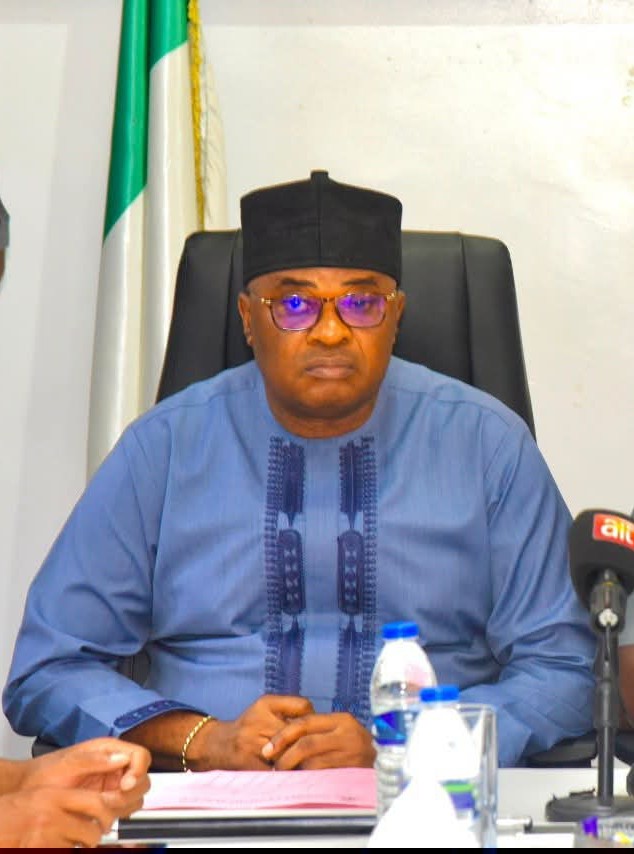
The Federal Operations Unit (FOU), Zone A of the Nigeria Customs Service, operates across the South-West, one of the country’s busiest trade corridors and a major route exploited by smugglers.
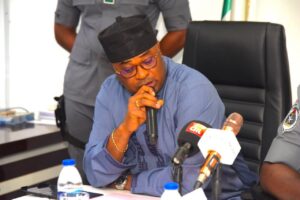
Hitherto under the leadership of retired Comptroller Aliyu Gambo , the unit recorded significant seizures and revenue recoveries while deploying intelligence-driven enforcement, surveillance, technology and strategic partnerships with other government agencies.
In this interview with Ismail Aniemu, Gambo speaks about the strategies behind the unit’s enforcement operations, the challenges of managing officers and stakeholders, threats associated with anti-smuggling activities, the sacrifices his career has demanded from his family, his mentors and his efforts to groom younger Customs officers.
Q: On your watch as Controller of Federal Operations Unit, Zone A, which is regarded as one of the busiest anti-smuggling networks in Nigeria, how were you able to achieve these results within a year?
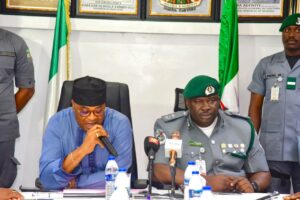
Obviously, it has been people-centric and based on teamwork. It has also been about upskilling from where we were to where we thought we should be. We embarked on a very targeted approach to the suppression of smuggling, with the backing of the Comptroller-General of Customs, Bashir Adewale Adeniyi who gave us all the support, muscle and authority to embark on that targeted approach.

He also directed us to upscale our operations from mere inter-agency collaboration to strategic partnerships with various partner agencies. If you notice, I don’t call them sister agencies. We prefer to call them partner agencies because we are collaborating at a very strategic level. The Comptroller-General has signed Memoranda of Understanding with most of them, and that has definitely upscaled our relationship to that of strategic partnership.
We have relied on intelligence-driven enforcement, track and trace, spatial tools, geospatial technology and other requisite tools and techniques. We have also relied on aerial surveillance and invested in our people, whom we understand drive the processes. Through these measures, we have been able to achieve the results that we have recorded.
Q: There seems to have been almost zero casualty on the part of Customs in making these seizure. How were you able to get your men to achieve this without injury?
What we did was rely on situational awareness. Situational awareness helped us because we were able to pre-empt and forecast our operations. It is noteworthy that, at the last count, we had intercepted over 12,500 parcels of cannabis and more than 23,000 bags of rice along the South-West corridor, in addition to other environmentally hazardous goods, ozone-depleting substances and several psychotropic and other substances, without firing a bullet.
We achieved that through situational awareness. We also conducted trainings. The Comptroller-General directed us to embark on rigorous training for officers and men on situational awareness to prepare them adequately. For us, it is a permanent combat. We are fighting a battle, and the battle is for the safety and security of Nigeria.
Q: Your service history shows strong participation in enforcement activities, including your time as DC Enforcement at Tin Can and what you achieved at Oyo/Osun Command. What would you describe as the greatest challenge you have faced in enforcement?
You would always have to understand that managing people is one of the most difficult parts of management. So, what we did was invest in change management, which is a way of eliciting compliance. Managing people was essentially the most difficult task. We manage not only the officers , we also try to manage the stakeholders.
When managing stakeholders, we meet different types of people, with different ideas and different motives. We need to be able to elicit compliance from them. That is a very difficult component of the job, but we addressed it. We faced it, and we embarked on engagement with traditional institutions, which are the first line of leadership in the communities.
When I went to Oyo, I made sure that I visited all the traditional rulers across the length and breadth of Oyo/Osun Command. We took that as a deliberate ploy. It was strategic and well-planned. When I came to FOU, we met with all the major stakeholders and players. We also met with our officers and made them understand that this is not about being public masters, it is about being public servants. We made them understand that they must be guided by the public trust.
Q: Looking at your service years and the people you have interfaced with, a Customs officer is naturally viewed first as a tax collector. In addition to being a tax collector, you now prevent crime, track criminals and stop their activities. Have you at any time come under threat?
Threat is a constant decimal. Threats will definitely come, but the way it is, we have to navigate through them because if we allow threats to guide our operations, definitely we are not going to achieve any result.
Threat is a constant factor, and we have to surmount it to get the job done. I would also like to emphasise that, with respect to revenue, we have done a lot. When I was in Oyo/Osun, we improved revenue collection, especially from the major factories. We got factories that were not doing well to improve their performance.
That also meant talking to the business processes and looking at the gaps. We did a gap analysis in Oyo/Osun, and we were able to improve revenue collection. We did this on a company-by-company basis. We had quite a lot of compliant traders in Oyo/Osun, but we had some that were not as compliant as we would have expected.
So, we particularly took an interest in looking at their business processes and identifying the gaps that existed in those processes. We tried to help them plug those gaps to ensure that revenue was collected and accounted for as and when due.
Q: Some Customs officers involved in enforcement have said their social lives have been affected because of the nature of their work. Some avoid certain social gatherings because of the risks associated with the job. Have you paid any price in this regard?
For me, I go everywhere because I am guided by the truth. For every action I take, there must be justification. If I am going to take an action and I cannot write two or three full pages to justify that action, I will not take it. So, I have no regrets about arresting anybody. I have a clear conscience, and I am guided by that clear conscience. I attend social gatherings as I consider appropriate. I definitely mix up as much as I can because I know that whatever action I take is guided by the truth. One who walks by the truth fears no fall.
Q: As a serviceman, what has been your happiest moment on the job?
My happiest moment, of course, is the recognition that God has allowed me to receive. It is not easy. When we joined the service, there were so many officers who joined the service together. In the beginning, the appraisal system was a group appraisal system. In a group appraisal system, it was a matter of squad mates moving together.
Nobody was looking at competence on the job. Nobody was looking at capacity.
It took me about 18 to 20 years to define a mark for myself, and it happened while I was in Apapa Port. I was a Chief Superintendent then, and I undertook some really daring jobs because the hitherto untouchables, I touched them.
I remember instances where I took on a lot of the high and mighty. Revenues were collected. In 2014 particularly, I was transferred out of Apapa Port four times. I alone. I mustered the confidence to go to my Area Controller. I said to him, “Sir, you asked us to go and collect maximum revenue, all collectible revenue.” That was what the Area Controller used to call it. I went and did just that. But I was then faced with four postings away from my duty post within one year, in 2014.
The Area Controller looked at me and asked what I was saying. I repeated myself. He asked whether I had evidence to back up what I had said. When I was younger, I was very studious. I maintained files. So, I told him, “Sir, can you give me 10 minutes to go to my office and bring a compendium of the things that were done in the recent past?”
He said, “Aliyu, you can go. Go and get them.” I went and, lo and behold, in 10 minutes, I came back with two large files full of debit notes that I had raised. I had raised them and made sure that the payments were made to the Federal Government of Nigeria. The Area Controller looked at me and asked, “Officer, what is your name?” I said, “Sir, my name is Aliyu.” I was then the Chief Superintendent.
The Area Controller then asked me where the staff orders were. I showed him the four staff orders, including the most recent one. He wrote to the then Comptroller-General of Customs and told him that I should be given posting consideration, stating that my efforts were in line with the vision and mission of the administration. He requested that the posting should be stood down.
The letter was intercepted by some people at the headquarters at the time. The Area Controller called me and told me what had happened, but said he was not going to relent, and he never relented.
He wrote the same letter again and sent it to the CGC’s secretary through the CGC’s private email.
When the secretary received the mail, he printed it and gave it to the boss. The Area Controller later told me that the boss said, “These people do not understand that this officer is a headquarters beacon.” That Area Controller is alive today. For some reasons, I don’t want to mention his name. He later retired as an Assistant Comptroller-General of the Nigeria Customs Service. Character is not something that happens coincidentally. It is not something that is unintentional.
Q: Who mentored you, either within the service or outside it, through literature or personal interaction?
For me, I had two mentors. Fortunately, or unfortunately, they were not from Customs. The first mentor that I have, and still have, is my mother, who is 88 years old. She is an exceptionally spiritually discerning woman and a teacher. She tutored me, mentored me and taught me how to say, “I am sorry,” when I go wrong.
She taught me humility, the virtues of contentment and patience, humility and service. I picked those values from the basic cradle of my family, from my mother. I belong to a family of three children. She had twins and then me. By the grace of God, the twins, who are my seniors, left this country maybe 35 or 40 years ago, and I have remained here to serve as a Customs officer.
She has always told me, “Remember who you are. Remember where you come from, and remember that a good name is better than gold.” I also have another mentor, but he is of blessed memory. He was a former Information Minister of the Federal Republic of Nigeria , Prince Tony Momoh. I am his child. I grew up under his tutelage. He mentored me and guided my progression.
He was a father to me. I lost my father when I was 16. So, from the age of 16, Prince Tony Momoh assumed that role.
He looked after me, sent me to school, paid my fees and guided my path until we lost him a couple of years ago. As a matter of fact, I joined Customs from in front of Prince Tony Momoh’s office. The late Alhaji Aziz Garba had come and called him to confer with him because Prince Tony was a convergence point for other great men.
People like the late Areth Adams, Dipo Giwa, Alhaji Aziz Garba, Super Permanent Secretary and General Hafiz Momoh, among others, came to confer with him. Prince Tony Momoh was a great man. He was a man who saw tomorrow and a man who guided me to become the person I am today.I still revere him in life and in death.
The most remarkable thing in my life is that I share the same birthday with Prince Tony Momoh. We were both born on April 27. I don’t know how that happened. It probably happened through divine occurrence. I also remember my family. When I talk to people, both in private and in public, my children, particularly the older ones, evaluate me and criticise me. That has also helped make me the person I am today.
Q: Looking at family life, this is a round-the-clock assignment. Did it at any point affect your family life? Were there times you were absent from your family?
I have always been absent from my family because of the job, but one good thing about me is that my wife’s father was a police officer. So, she understands what it means to be the wife of a serviceman. She is not the type of woman who will put a rope around my neck or say to me that I must come home. I passed through that phase while I was in Apapa and Tin Can.
Whenever I was posted to Lagos, I worked and worked and worked. I never came home. Sometimes, it would be 3 a.m. before I got home. When I came home at 3 a.m., my wife would say, “I have prepared your food. Come and sit down and eat your food.” I would say, “But how can I be eating at 3 a.m.?” She would say, “But I prepared this food. I struggled and suffered to prepare this food for you.”
You know what it did to me? That is what has given me this little pot belly. It is courtesy of all the food I ate late at night because of work. I appreciate her patience, devotion and sacrifice. She is also, in her own way, a Customs officer because of all the pitfalls, the bashings and the long hours of prayers.
I must tell you, Customs work, as I often say to people, is not a bed of roses. When I joined Customs at 24, and that was my real age, I never really knew what Customs was. I had never seen a Customs officer in my life. I had never gone to any border, seaport or airport. So, I didn’t know what Customs was all about. I was simply looking for a job. That was my motivation.
It was about 18 years later that I began to understand the rudiments of the job. Eighteen years down the line, I had only been promoted twice. I came in as a two-star officer, and between my two stars and the next stage, it took me 17 years. I guess that happened to a lot of us. We were very youthful. We were more like what you would describe as a rudderless ship. Things have changed tremendously.
We must give kudos for the transformation that has happened in the Nigeria Customs Service, where officers get promoted as and when due, based on a well-defined selection process through examination.There are criteria. If you observe, we are gradually moving away from the group appraisal system to personal appraisal. That is why, in the next generation of Customs officers, you will see more highly skilled people becoming Customs leaders because they went through a definitive selection process. In the private sector, people are assessed based on efficiency and effectiveness.
The same progression should be seen in Customs, where people are rated based on their capabilities. We thank the Comptroller-General for setting up a competency-based career management system, where officers have the opportunity to move laterally based on their competence, skills and abilities. What does it do? It enhances the service and makes it more resilient and capable of standing the test of time.
Q: For your subordinates, how have you been able to mould younger officers to make them fit into bigger shoes and perhaps do better than their superiors?
Unfortunately, I never really had a mentor within the service, but I remember when I was a Superintendent and later Chief Superintendent. Around 2009, the present group of officers came into the service as “Greyhounds” after their training. I was in Apapa Port, working at APM Terminals under the Deputy Controller in charge at the time. I remember it vividly, and we are still together today. Comptroller Nike Oladuni, whom I see as a visionary leader with a lot in stock, brought all these junior officers who were just coming into the service together.
She spotted me and said, “Aliyu, I am handing all these 30 officers over to you so that you mentor them and show them the rudiments of the job.” That was where my mentorship started in Customs. When I tell people that we should establish a definite mentor-mentee programme, these are the kinds of things I am talking about. A lot of those officers are now Deputy Controllers and Assistant Controllers, and they are doing extremely well.
I taught them how to conduct examination properly. I taught them the rudiments of classification, duty appraisal and revenue collection. Honestly, a lot of them are bright stars in the Nigeria Customs Service today, and I am happy for that. Going forward, in the Federal Operations Unit and other commands where I have worked, I replicated a similar template where it is more or less interactive and we learn from one another.
There has to be something that you pass on to your subordinate. Even in my meetings, after the meetings, I come into the office and ask the officers who came with me, “How was the meeting? I hope we gained something out of the meeting.” The meeting affords us a miniature training session. There has to be something. There have to be deliverables. These are the types of meetings we have at the Federal Operations Unit. Aside from seizure records, we have also done significantly well in terms of lost revenue.
At the last count, we had gone over 700 per cent above our revenue target in terms of lost revenue. Our annual target for FOU Zone A was ₦400 million, and at the last count, we had recorded over ₦3.7 billion to ₦3.8 billion. We have gone over 798 per cent above the revenue target for 2026, and we are only in the ninth month. I am sure that if my successor keeps faith with the revenue figures, at the end of the year, FOU should have generated approximately ₦4 billion in recovered lost revenue. We are not a revenue-generating unit. It is our business to prevent losses by looking at the integrity of the supply chain.
Q: What is your message to junior officers in the service?
My message to junior officers in the service is very straightforward.They should de-emphasise pecuniary gains. They should think more about the technical aspect of the job. They should invest in personal self-development. Customs will train you, but you need to build on the skills. You need to realise that you are a public servant, not a public master, and you are guided and governed by the public trust.
Q: This is 2026. When some people leave a workplace or service, they want to see the organisation continue to grow and do better. Looking ahead 10 years, what kind of Nigeria Customs Service do you envision?
In the next 10 years, I see a service that is going to be resilient , a service that is going to be the backbone of the economy of Nigeria. I see a service that is going to contribute significantly to the industrialisation of Nigeria. I see a service that is going to address the infrastructure deficit because we have a lot of infrastructure deficits in Nigeria, and that will be addressed through effective revenue collection. The foundation has been laid for a very modern service. Advanced Rulings, Authorised Economic Operator and Trade Facilitation Agreement tools are going to enhance Customs revenue collection. That will be a plus for the initiatives of the Federal Government of Nigeria.