
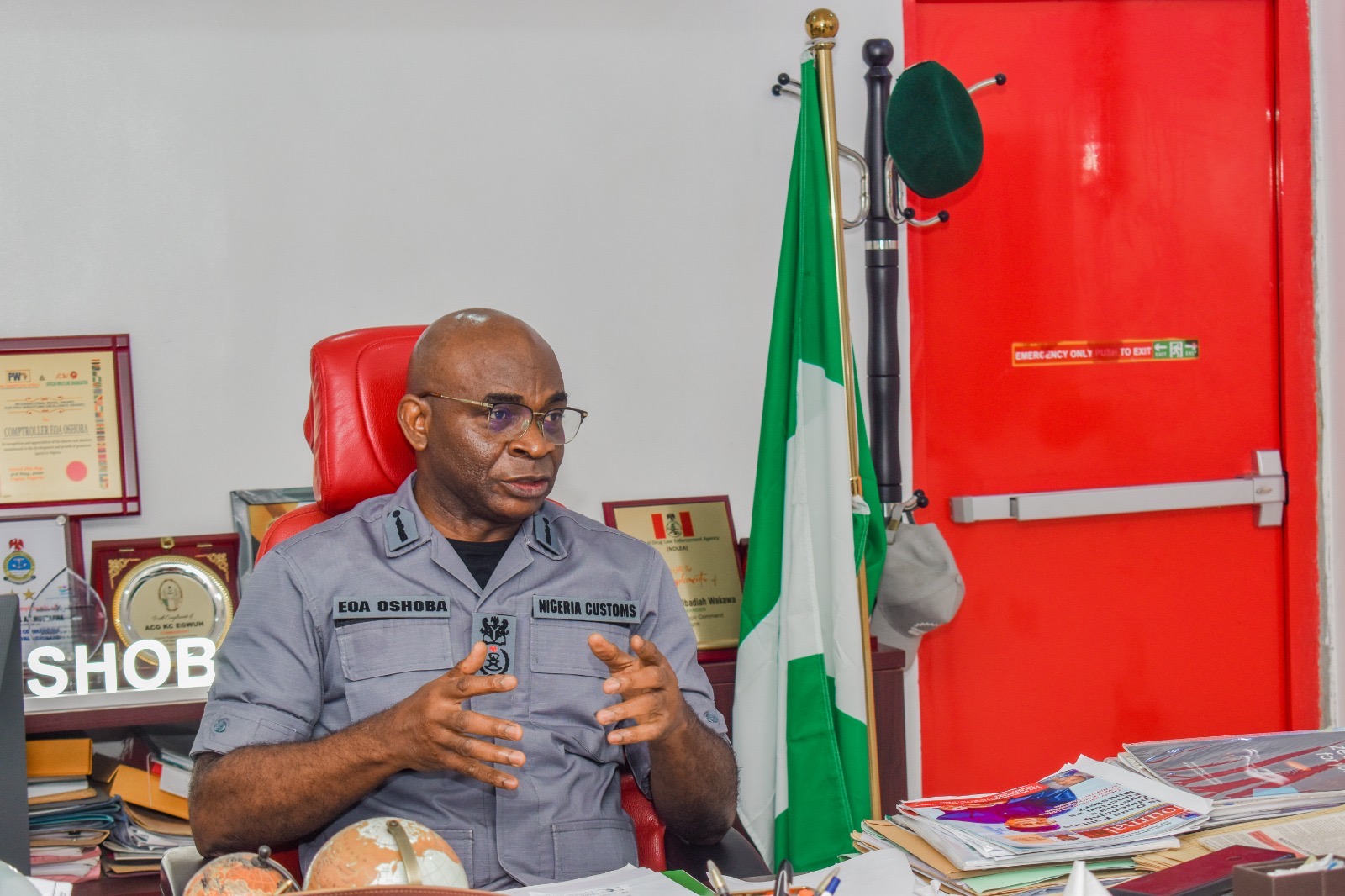
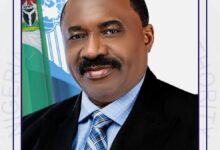
Comptroller Emmanuel Oshoba, Customs Area Controller for Apapa Port Command in Lagos has given an insight into recent unprecedented feats achieved on his watch at Nigeria’s busiest seaport. He said the port has become a no go area for prohibited goods with attendant seizures
Overseeing Apapa Port Command of the Nigeria Customs Service which posted ₦323 billion in July 2026 and a single-day haul of ₦28 billion, Comptroller Oshoba attributes the surge to intelligence-led enforcement, wider use of scanners and a customs platform that has finally settled and performing better after early teething problems.
Apapa is Nigeria’s premier seaport and handles the country’s highest volume of trade. He said collections so far this year are significantly ahead of the same period in 2025.
According to him, the ₦323 billion July figure is the command’s highest monthly collection on record. The ₦28 billion 24-hour collection is also a command highest daily collection
‘No-go area’ for prohibited goods
Oshoba said Apapa has become a no-go area for prohibited trade. He linked stronger enforcement this year to intelligence-led operations rather than random checks.
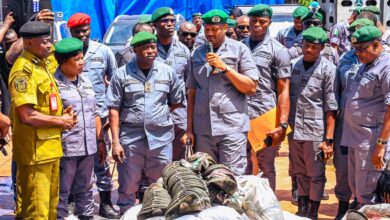
Notable seizures under his watch include consignments of “Canadian loud” (cannabis), expired pharmaceuticals, and expired food and drinks. Seized items have been handed over to relevant agencies, including the National Drug Law Enforcement Agency (NDLEA). He said further seizures are under processing, with more handovers expected.
B’Odogwu and the drive-through scanner
The command credits much of the improvement in trade facilitation to the Universal Customs Management System (UCMS), known as B’Odogwu.
Oshoba said the platform is now working optimally after earlier challenges and has simplified processes enough to support the command’s revenue and clearance numbers.
A drive-through scanner at the port now supports what he described as universal scanning: every consignment is scanned before it is allocated to a terminal. The scanner can process about 200 containers an hour.
That capacity has changed how cargo is examined. The mix has shifted from roughly 30 per cent scanning and 70 per cent physical examination to about 65 per cent scanning and 35 per cent physical checks.
More trusted traders, higher compliance
The number of Authorised Economic Operator (AEO) beneficiaries at nationwide has risen from about 120 last year to more than 200 presently .
Stakeholder compliance, Oshoba said, has climbed from an estimated 60 per cent when he took over the command to above 80 per cent presently. He tied the gain to non-intrusive scanning and cleaner declarations through the single window, which he said has reduced incidents of possible document manipulation.
According to him, temporary congestion on the port corridor is being tackled with the Nigerian Ports Authority port manager and the Presidential Enabling Business Environment Council (PEBEC), which has stepped in on clearance on several occasions.
On the National Single Window, he said early document-upload problems involving agencies such as NAFDAC and the Standards Organisation of Nigeria (SON) have been resolved with support from Customs ICT at headquarters. Documents now move freely between the National Single Window and B’Odogwu.
The full interview will be published on www.journalng.com.



The betting odds on this site are much better than others I have used. The app is very responsive and easy to navigate. Give bdbolbybol a try!
Best VIP experience I have had in a long time. The rewards are generous and the customer support is top notch. Keep it up slotmaxvip2!
Amazing graphics and very responsive controls. It feels like a premium experience on my phone. Get the phokplayapp now.