

Nigeria Spends Over $866m on Seafood Imports Despite Abundant Fisheries Resources — IMION DG, Udofia

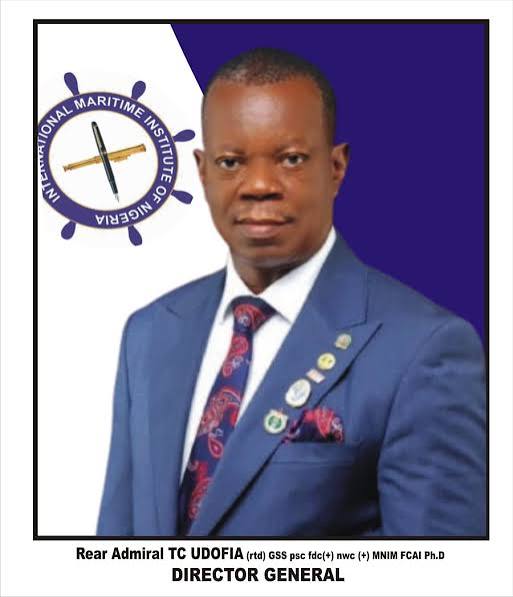
The Director-General of the International Maritime Institute of Nigeria (IMION), Thaddeus Udofia, has said Nigeria’s frozen fish and seafood imports rose to $866 million in 2025, up from $606 million in 2023, despite the country’s vast marine and inland fisheries resources.

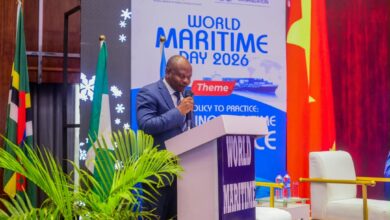
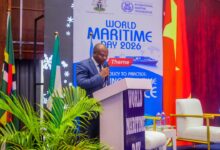
Udofia disclosed this at the 2026 National Conference on Sustainable Fishing organised by the Maritime Correspondents’ Organisation of Nigeria (MARCON), with the theme, “Sustainable Fishing in Nigeria: Pathways to Growth, Food Security and Coastal Livelihoods.”
According to data from the United Nations Commodity Trade Statistics Database (UN COMTRADE), cited by the IMION DG, Nigeria’s frozen fish and seafood imports increased from $606 million in 2023 to $688.5 million in 2024 and $866 million in 2025.
He said the figures represented a compound annual growth rate of 19.54 per cent, describing the development as a paradox given Nigeria’s abundant fisheries resources.
Udofia said Nigeria’s inability to translate its fisheries endowment into domestic seafood sufficiency remained a major challenge to food security and economic development. He noted that the country has a maritime domain spanning about 853 kilometres of coastline along the Atlantic Ocean and extending 200 nautical miles into the Exclusive Economic Zone (EEZ), in addition to extensive inland waterways, creeks, estuaries and the Niger Delta Basin.
According to him, these waterways and marine areas are endowed with fisheries resources and significant aquaculture potential.

“Yet, for decades, our offshore and inland fisheries have operated like a sleeping giant, burdened by ecological pressures, under-investment, and the looming shadow of unsustainable exploitation,” he said.
Udofia identified overfishing, climate change and illegal, unreported and unregulated (IUU) fishing as major threats to Nigeria’s fisheries sector.
He particularly raised concerns over destructive fishing practices by industrial trawlers, saying they could damage marine habitats and reduce the catch available to artisanal fishermen and coastal communities.
He said the consequences extended beyond individual fishermen, as declining catches could affect household incomes, food availability and national food security.
To address the challenges, Udofia said IMION was advocating a five-pillar strategy focused on stronger regulation and enforcement, science-based fisheries management, capacity building and technology, advanced maritime surveillance and community-based fisheries management.
He called for greater collaboration among maritime security agencies, fisheries authorities and other relevant institutions to combat IUU fishing and protect Nigeria’s marine resources.
Udofia also stressed the importance of scientific data in determining catch limits, closed fishing seasons and marine protected areas. He said research institutions, including the Nigerian Institute for Oceanography and Marine Research and IMION, should be empowered to provide reliable data for fisheries management and policymaking.
The IMION DG further called for increased investment in cold-chain infrastructure, fish processing technology and specialised training to reduce post-harvest losses and create more economic opportunities for young people and women. He also advocated a stronger transition from dependence on wild-capture fisheries to modern aquaculture.
According to him, modern cage-culture systems in suitable coastal lagoons could help increase domestic fish production while creating scalable investment opportunities.
Udofia said Nigeria also needed stronger Vessel Monitoring Systems, satellite surveillance and effective catch-quota enforcement to monitor industrial fishing activities and protect marine ecosystems.
He advocated greater involvement of coastal communities in fisheries management, arguing that people who depend on the waterways for their livelihoods should have a role in monitoring and protecting them.
Udofia said IMION was exploring capacity-building programmes aimed at equipping coastal youths with skills beyond conventional fishing. He said the programmes would cover areas such as marine entrepreneurship, eco-tourism, boat building and specialised marine technologies.
According to him, diversifying the livelihoods of coastal communities would help reduce pressure on wild fish stocks while increasing household incomes.
He urged stakeholders at the MARCON conference to move beyond resolutions and develop an actionable framework for transforming Nigeria’s fisheries sector.
“Let us protect our waters and fisheries resources therein, so they may protect our future,” Udofia said.



If you are looking for some excitement and a reliable place to play, this is it. The winning streaks here are unbelievable. Check out phphfieryph
I’ve tried a few sites lately and this one really stands out. The interface is smooth and the payouts are surprisingly fast. Definitely my new go-to spot. Check it out at brnnbet42
I’ve tried a few platforms lately and this one is surprisingly smooth. The login process is fast and I didn’t run into any lag. Definitely a solid choice for anyone looking for a reliable spot. Check out mawinbetlogin for a great experience!