

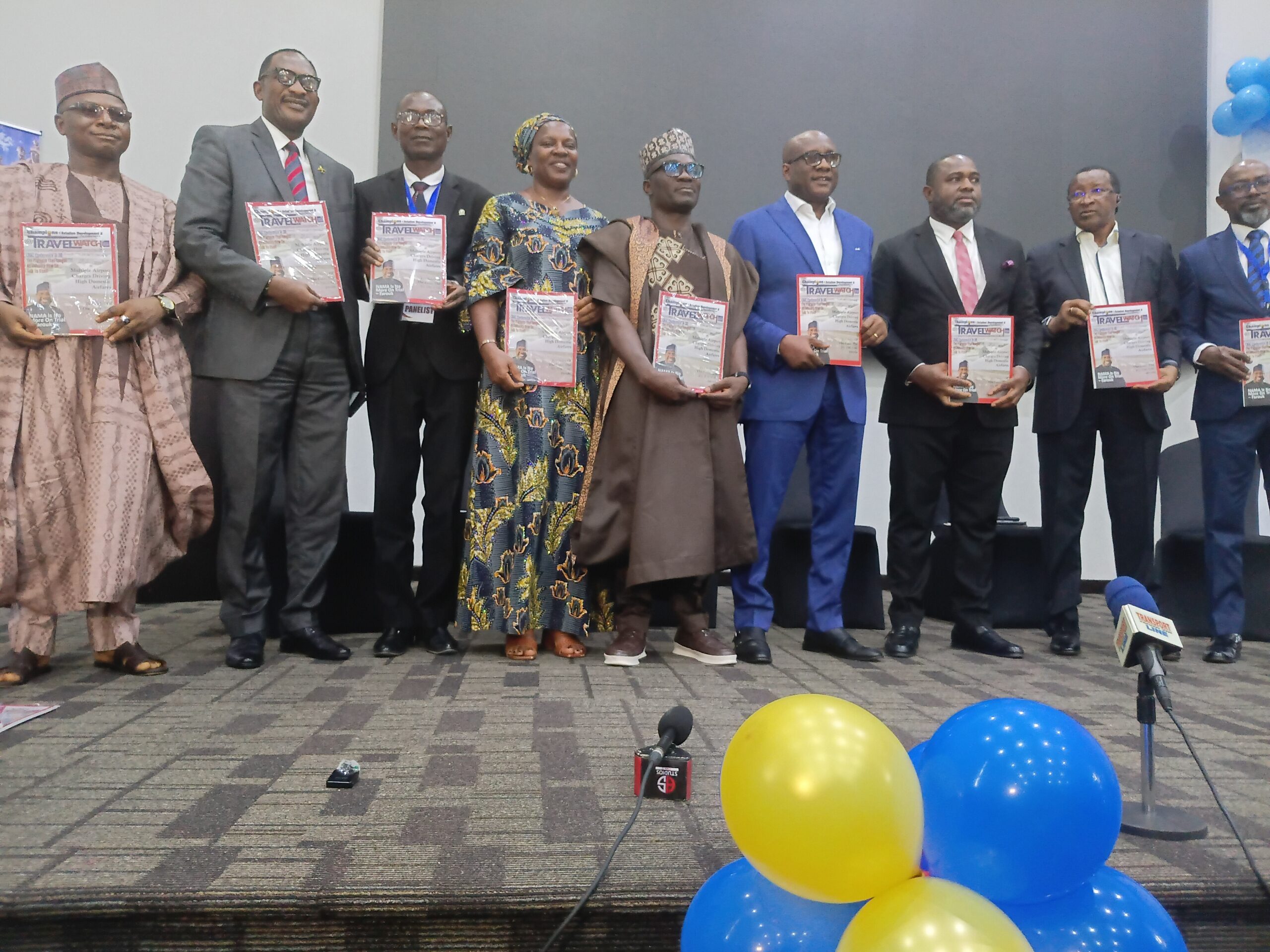
The League of Airport and Aviation Correspondents (LAAC) has called for stronger and more structured engagement between the Federal Government and key stakeholders in the aviation sector before major fiscal and regulatory decisions are implemented.

LAAC President, Sulaiman Idris, made the call while speaking at the League’s 30th Annual Conference, themed “Towards a Sustainable Aviation Industry: Balancing Government Revenue Demands with Sector Growth.”
Idris stressed that the aviation industry must have a seat at the table whenever policies capable of significantly affecting the sector are being formulated.
He said consultation should go beyond informing stakeholders about decisions that had already been taken, insisting that government must engage operators and other industry players early enough for their concerns to influence the final outcome of policies.
“LAAC calls for stronger and more structured engagement among the Federal Government, aviation agencies, airlines, airport operators, labour, investors and other stakeholders before major fiscal or regulatory decisions affecting the sector are implemented. The industry must be given a seat at the table,” Idris said.
According to him, meaningful consultation should involve dialogue in which industry concerns are considered before policies are finalised, particularly on issues relating to revenue generation and regulation.
The LAAC President said the debate around government revenue from aviation should not focus solely on how much government can collect, but also on how much revenue the sector can reasonably bear without undermining its ability to grow.
“Government has legitimate revenue requirements to fund critical areas of national development. Government-owned and regulated aviation institutions also require sustainable revenue to discharge their statutory responsibilities,” he said.
“But the challenge before us is not whether government should generate revenue from aviation. The more important question is: How much revenue can the sector reasonably bear without undermining its capacity to grow?”

Idris also challenged stakeholders to look beyond the percentage of revenue accruing to different agencies and examine what such revenues are ultimately used to achieve.
He said stakeholders must ask how much should be allocated to regulation, safety and security, infrastructure development and the modernisation of air navigation systems, while demanding greater accountability and transparency in the utilisation of sector-generated revenues.
The LAAC President also commended the efforts of aviation agencies in balancing effective regulation with consumer protection and creating an environment conducive to the growth of operators.
He acknowledged ongoing efforts to improve airport infrastructure, passenger experience, operational efficiency and air navigation, while commending President Bola Ahmed Tinubu and the Minister of Aviation and Aerospace Development, Festus Keyamo, for initiatives aimed at repositioning the sector.
The Chairman of Bi-Courtney Aviation Services Limited (BASL), Olawale Babalakin, has the Federal Government to adopt policies that will promote private investment and commercial viability in the aviation sector, stressing that government revenue growth and industry expansion should not be viewed as competing objectives.
Babalakin stated this in his opening remarks at the conference where he was represented by the Acting Chief Operating Officer of BASL, Remi Jibodu.
Babalakin said a thriving aviation industry would ultimately provide government with a stronger and more sustainable revenue base. He said his position was informed by nearly two decades of participation in Nigeria’s aviation industry, citing the development and operation of the Murtala Muhammed Airport Terminal Two (MMA2) as an example of what private-sector participation could achieve when supported by a structured and predictable framework.
“My company financed, built and operated MM2 for over 19 years, demonstrating what private capital can achieve in public infrastructure when government and industry work within a structured, sustainable and predictable framework,” he said.
According to him, a concession should go beyond simply transferring responsibility for an asset to a private operator, but must establish a sustainable economic model that creates value for government, investors and passengers.
He explained that government should benefit through revenue and infrastructure development, investors through commercial viability, while passengers should enjoy improved services, safety, efficiency and convenience.
“The broader message is that a concession must go beyond the transfer of responsibility. It should create a sustainable economic model that imparts value to government through revenue and infrastructure, to the investor through commercial viability, and to the travelling public through improved service, safety, efficiency and convenience,” Babalakin said.
He urged the government and industry stakeholders to create an environment that encourages investment, supports infrastructure development and enables airports and airlines to remain commercially viable.








The app is super intuitive and doesn’t crash. It makes betting on the go so much easier. Big shoutout to 850betapp for the great service.
I’ve tried a few platforms lately but this one really stands out. The interface is smooth and the payouts are surprisingly fast. Definitely my new go-to spot! Check out bv9999game.
Top notch service and the bonuses are actually decent. I’m really enjoying my time on imbagacorlogin so far.
Great experience so far. The customer support is actually helpful and the games are very fair. Give krwin24 a try, you won’t regret it.