
INTERVIEW: MOWCA’s Push for Continental Maritime Body Gaining Momentum , Says SG Adalikwu

The Maritime Organisation of West and Central Africa (MOWCA) is intensifying efforts to strengthen Africa’s blue economy through improved training, increased sea-time opportunities for young cadets, regional collaboration, ship ownership and the proposed establishment of an African Maritime Organisation.
Speaking on the sidelines of the just concluded maiden edition of the Blue Africa Conference and Exhibition in Lagos, the MOWCA Secretary-General, Dr Paul Adalikwu outlined the organisation’s initiatives to develop maritime human capacity, promote African ship ownership and ensure that the continent plays a stronger role in global maritime affairs.
The Secretary-General also disclosed that MOWCA is working with maritime institutions and international partners to improve training, while an agreement with Blue Kauri Africa Shipping Line is expected to create sea-time opportunities for young African maritime graduates.
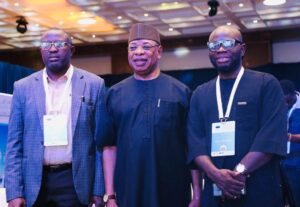
Dr Adalikwu sat with the JournalNG team comprising of Ismail Aniemu, Feyi Adeyeha and Hannah Tedunjaye
Question: Under your watch, MOWCA has been working to get more Africans to work on board ships. How far have you gone in terms of certification, training the trainers and vessel acquisition?
Answer: Since I came on board as Secretary-General of MOWCA, we have taken a number of initiatives to increase sea-time experience for young cadets who graduate from our maritime educational and training institutions. We have also engaged global partners on capacity building for the sector.
For example, last year, we obtained a $1.7 million grant from the government of Indonesia to train lecturers in maritime training institutions on the requirements of the International Maritime Organization (IMO) under the Standards of Training, Certification and Watchkeeping (STCW).
We had 97 training positions available through the grant, and we shared them among MOWCA member states. Beneficiaries undertook one-month training in Jakarta, Indonesia, as part of our capacity-building programme.
Singapore has also agreed to provide similar capacity-building opportunities for our member states. However, because of the crisis involving Iran, Israel and the United States and its impact on activities around the Strait of Hormuz and the global economy, some capacity-building programmes have been put on hold this year. Hopefully, they will resume early next year.
We have also brought together three maritime institutions in the region: the Regional Maritime University in Accra, Ghana; the Academy of Science and Technology of the Seas in Abidjan; and the Maritime Academy of Nigeria. The objective is to promote collaboration and the sharing of global best practices.
The collaboration involves the exchange of students and lecturers as well as joint research. The first edition took place in Oron, while in the last quarter of this year, they will converge at the Academy of Science and Technology of the Seas in Abidjan. Next year, they are expected to sign an MOU at the Regional Maritime University in Accra.
All these initiatives are aimed at improving staff capacity and student knowledge.
On the placement of young men and women for certification and sea-time experience, Blue Kauri Africa Shipping Line is expected to commence operations in November. The company has acquired three vessels for door-to-door shipping services in West and Central Africa.
MOWCA has signed an MOU with the company, and we are engaging with them to ensure that our young men and women are placed on these vessels to obtain the required sea-time experience.
Question: Looking beyond West and Central Africa, how is MOWCA mobilising the entire continent for maritime emancipation?
Answer: Excellent question. In the last three to four years, under my leadership, I have engaged with the International Maritime Organisation and the Association of African Maritime Administrations, which consists of maritime administrators across the continent.
We attended meetings in Dar es Salaam, Tanzania, and Monrovia, Liberia, to push this agenda. We also met with the African Union and its co-secretariat in Abuja to advocate for the establishment of an African Maritime Organisation.
The revised African Transport Charter, adopted by the African Union last year, clearly established in Article 5 the necessity for the establishment of an African Maritime Organisation.
We are therefore moving gradually. Unfortunately, some countries on the continent still want to operate in silos and are not embracing the initiative to bring everyone under one umbrella.
However, we are working with the African Union, our member states and different regions to drive this initiative to a logical conclusion.
I can also disclose that the President of Togo has put together a draft bill, in collaboration with MOWCA, which is undergoing review for submission to the AU Heads of State Summit for the establishment of the African Maritime Organisation.
Today, I can proudly say that 25 countries under the MOWCA umbrella have adopted the necessity to establish this organisation. We need about five more countries to join them, and then we will have the required quorum for its establishment.
The modalities are contained in a document that will be presented at the Heads of State Summit, led by the President of Togo and supported by MOWCA member states.
Our goal is to establish, within the next couple of years, a continental maritime body that will enable Africa to speak with one voice on global maritime issues, similar to the European Maritime Safety Agency (EMSA).
This will also strengthen Africa’s position when we go to international forums such as the IMO, particularly when competing for Category A, B or C representation.
Question: How have governments across the continent responded to efforts to make Africa a major maritime power?
Answer: There is always a change of leadership in Africa, particularly at the presidential level, and this can sometimes make it challenging to get governments to key into initiatives.
Africa has enormous challenges, including a large youth population and unemployment. MOWCA is therefore engaging individual governments to make them understand the importance of supporting the maritime agenda.
About 80 per cent of African trade is conducted through maritime transport. There is therefore a need for countries to key into this initiative. Gradually, we are getting there.
Question: How is MOWCA taking maritime education to younger people, particularly those in secondary schools, beyond the traditional maritime academies?
Answer: This is one of the objectives we recently adopted, and we are pushing to make maritime education known at the primary and secondary school levels.
We want young men and women to begin to understand and embrace maritime studies from an early age. We are encouraging our member states, beginning with West and Central Africa, to revise their curricula and introduce maritime studies, at least at the secondary school level.
We are pushing that agenda going forward.
Question: Can you give us the immediate, medium and long-term vision for MOWCA?
Answer: One of our medium-term goals is to strengthen maritime training institutions through partnerships among them.
We also want to see the establishment of a Regional Maritime Development Bank that will provide single-digit interest financing, grants and loans for maritime infrastructure to private-sector stakeholders and governments in member states.
In the longer term, we want to see the establishment of an African Maritime Organisation that will enable the continent to speak with one voice on maritime issues at the global stage.
The Europeans are doing it, the Asians are doing it, so why not Africa?
We also want to see improvements in maritime infrastructure, particularly ship-repair facilities and dry docks across the continent.
MOWCA recently obtained a $500,000 grant to conduct a study in this area. Once the study is concluded, we hope to see investments in improving dry-dock infrastructure so that ships can be serviced and maintained, while new speedboats and other vessels can also be built at these facilities for the benefit of the continent.
Question: Considering the vast coastline and huge maritime trade in West and Central Africa, are citizens of MOWCA member countries participating enough in ship ownership?
Answer: At the moment, the answer is no. Very few people have the capital required to acquire brand-new vessels or even used ones.
That is why I keep emphasising the importance of the Regional Maritime Development Bank.
Nigeria is a key player in the maritime sector in the region. It is the largest economy in West and Central Africa, and we are hopeful that once the bank is launched, with its headquarters in Nigeria, and the appropriate leadership is put in place, it will provide the capital required for vessel acquisition.
Once member states pay their contributions and other investors come in, we expect the bank to provide the financing needed to support ship ownership.
I am also delighted to hear that Nigeria is on the verge of launching the Cabotage Vessel Financing Fund, which will enable Nigerians to acquire ships, either through partnerships or individually, and drive the maritime sector. This will also have an impact on neighbouring countries in the region.
Question: From your perspective, how would you rate the role of women in the maritime sector, and how would you encourage greater participation?
Answer: The participation of women in the maritime sector is very important.
I am glad that organisations such as Women in Maritime in West and Central Africa (WIMA), Women in Logistics and other similar organisations exist across the region. Their membership is growing, from the information available to us.
We want to see greater participation of women in maritime activities. Gender inclusiveness in all sectors is very important.
Through organisations such as WIMA and WISTA, we want to promote the inclusion of women in maritime activities.
We have signed MOUs with some of these organisations, invite them to our meetings and exhibitions, and ensure that women become critical components and players in the maritime sector.
Our commitment is to ensure that Africa does not merely participate in the global maritime economy but develops the capacity, infrastructure, human resources and institutions required to derive greater value from its enormous blue economy potential.



One Comment