

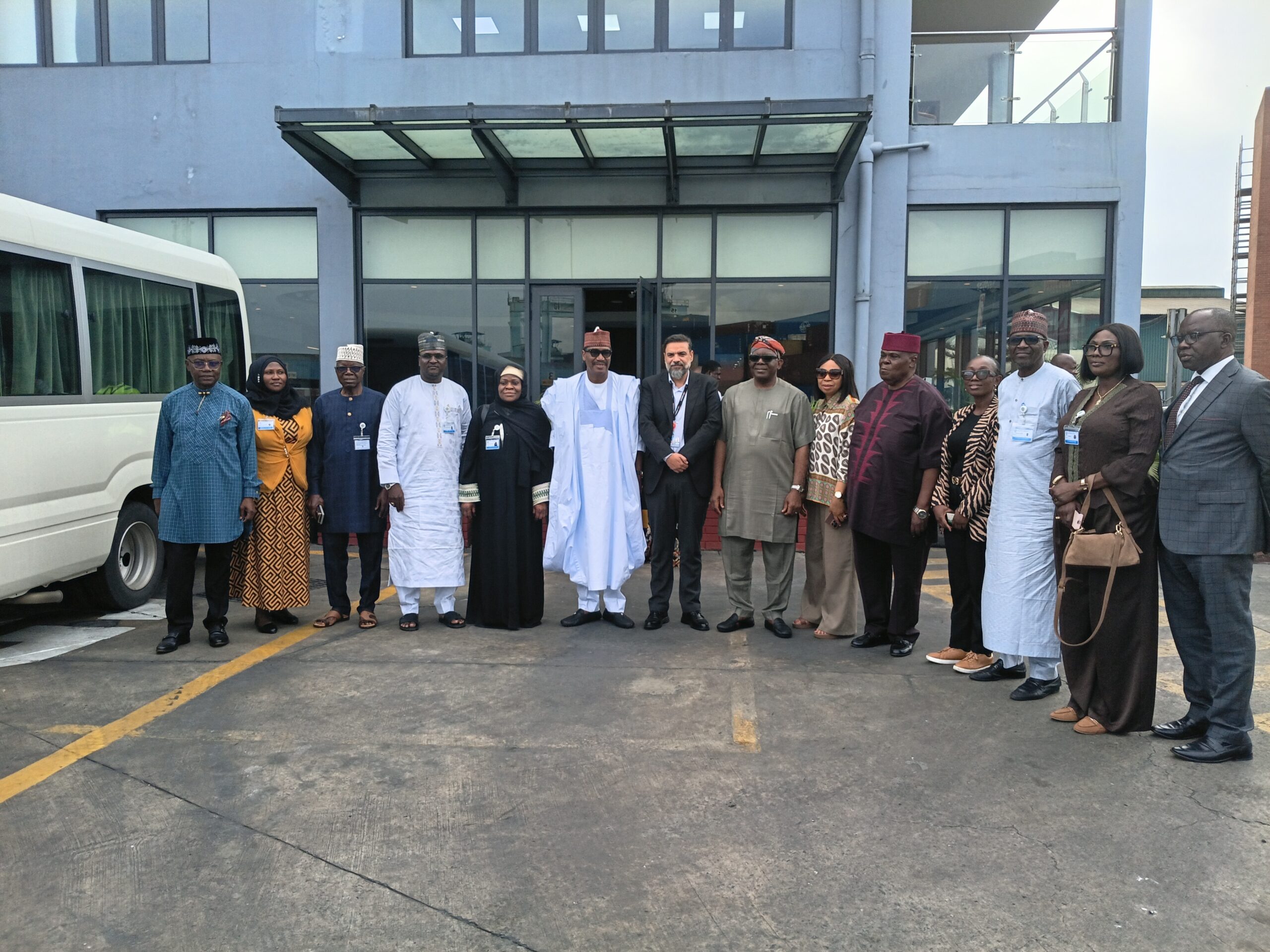
Following a tour of CMA CGM Nigeria Shipping Limited and APM Terminals, the Executive Secretary/ Chief Executive Officer of the Nigerian Shippers’ Council, Pius Akutah has disclosed a significant rise in Nigeria’s export trade volume, revealing that export cargo has increased by 30 percent.
He attributed the growth to ongoing reforms within the Ministry of Marine and Blue Economy , noting that the initiative is now firmly established and being actively monitored for performance improvement across various operators.
According to him, the Council is conducting continuous oversight of industry entities to assess efficiency and ensure alignment with national development goals, particularly in modernisation and service delivery.

“The marine blue economy has come to stay. We are monitoring the various entities operating within the sector to see their performance and to see how to enhance this performance,” he stated.
He further explained that many operators are already responding positively to regulatory expectations, particularly in upgrading facilities, embracing innovation, and adopting technology in their operations.
The Executive Secretary also noted that the improvements could have a significant long-term impact on Nigeria’s trade balance, potentially reducing the country’s historical reliance on imports.

He pointed out that while exports are currently driven largely by raw commodities, emerging developments in the energy and manufacturing sectors could soon diversify export earnings. He referenced expectations that petroleum product exports may rise following the commencement of operations at the Dangote Refinery.
Looking ahead, he expressed optimism that Nigeria could begin exporting more manufactured goods under the African Continental Free Trade Area (AfCFTA), which is designed to integrate African markets into a single trading platform.
He also revealed that there are ongoing proposals for over $600 million in fresh investments into the sector, describing the commitment from existing operators as a strong vote of confidence in Nigeria’s maritime industry.
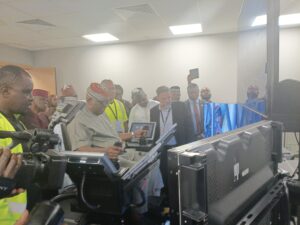
“As much as President Bola Ahmed Tinubu and his team are going around the world looking for investors and looking for foreign direct investment, we are glad that companies operating already in Nigeria are also bringing in more capital to reinvest,” he added.
The Managing Director of CMA CGM , Hinelder Ferreira, highlighted the shipping company’s ongoing digital transformation and efficiency drive aimed at improving customer experience and accelerating cargo movement across its Nigerian operations.
Speaking on the company’s service delivery approach, Ferreira said CMA CGM is increasingly prioritising seamless, technology-driven processes that reduce the need for physical office visits by customers.
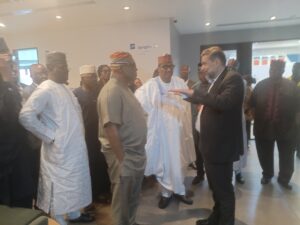
“We try as much as possible to put in place services which are seamless for our customers. Everything, actually we are trying as much as possible to ask customers not to come to our office and do everything they have to do online,” he said.
He explained that the shift to digital platforms is aligned with broader industry reforms being promoted by the Nigerian Shippers’ Council, which continues to encourage the adoption of digital solutions across the maritime value chain.
Ferreira noted that the company is also working collaboratively with stakeholders to co-develop systems that improve efficiency and reduce turnaround time. According to him, customer service at agency level has been streamlined to ensure minimal delays, with a target of processing requests within 15 to 20 minutes.

“As far as the agency is concerned, we try to make sure that customers don’t spend more than 15–20 minutes max between the time they enter the agency and they leave,” he said.
On terminal operations, the CMA CGM chief said similar efficiency measures have been implemented, particularly in coordination with truck appointment systems and online documentation processes designed to reduce congestion and improve cargo flow.
He explained that truck operators are now required to complete registration and appointment scheduling online before accessing terminals, a measure he said has significantly improved turnaround times for containers.
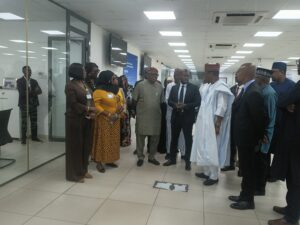
“We work with the truck appointment system to make sure that you don’t approach the terminal unless you have all your documentation ready, which helps to speed up the turnaround of the boxes,” he noted.
The Managing Director of APM Terminals, Kamal Alhraishat, highlighted the company’s shift toward fully digitalised port operations, stressing the role of electronic data systems in improving efficiency, predictability, and real-time coordination across maritime logistics.
Alhraishat explained that the terminal operator now relies heavily on Electronic Data Interchange (EDI) systems to manage vessel arrivals, cargo planning, and operational scheduling in collaboration with shipping lines.
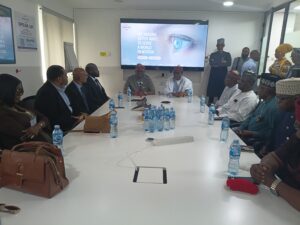
He noted that advance digital notifications from previous ports allow APM Terminals to prepare proactively for incoming vessels, ensuring smoother and more efficient cargo handling.
“We have something called an EDI—Electronic Data Interchange files that before a vessel leaves the previous port, they send to us that we’re going to complete the operation, for example in Ghana today at 18:00,” he said.
According to him, once vessel data is received, the terminal coordinates with shipping lines to obtain detailed cargo manifests and operational requirements, enabling precise planning based on agreed berth windows.
He explained that this system allows the terminal to assign equipment and manpower efficiently, including cranes and operational timelines, ensuring vessels are serviced within predetermined schedules.
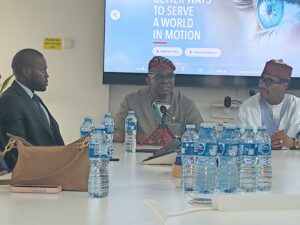
“Based on the berth window agreement, we tell them: come at this date, at this exact time. You will receive this number of cranes, and you are expected to start operation at this time and complete at this time,” he stated.
The Chairman of the Governing Board of the Nigerian Shippers’ Council, Ibrahim Shehu Shema, affirmed strong collaboration among key maritime stakeholders, noting a shared commitment by shippers, shipping lines, terminal operators, and port operators to sustain and deepen support for Nigeria’s trade and logistics sector.
According to him, one of the major areas of focus remains the dredging of critical sea channels to allow larger vessels to berth in Nigerian ports, a development he said would significantly boost cargo throughput and expand the country’s trade capacity.
“The shippers and the shipping line and the terminal operators and the port operators are all ready and willing to continue to work with Nigeria,” he stated, adding that “there is the issue of dredging also for the parts of the sea area where the dredging will enable bigger and larger ships to come with bigger quantum of goods into the country.”
Shema disclosed that extensive consultations have already been held with relevant organisations on how dredging projects should be implemented and why government involvement remains critical to achieving long-term sectoral growth.
He further noted that the current administration has shown strong interest in supporting reforms aimed at improving shipping, marine trade, and overall port efficiency.




ctcak5