

Nine Months After Demolition, Makoko Survivors Battle Loss, Death, Harsh Living Conditions

By Elizabeth Toyon & Hannah Tedunjaye

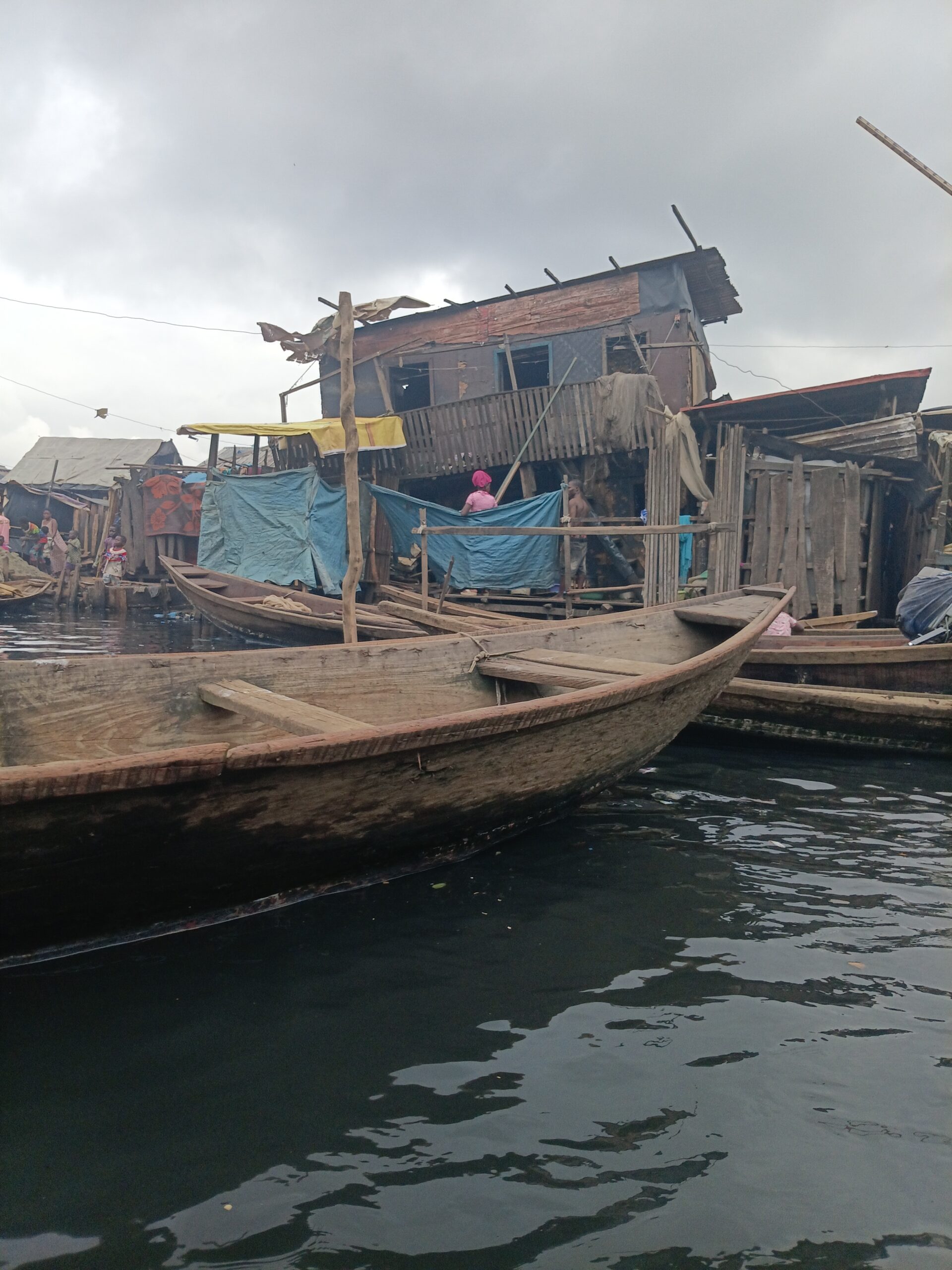
Nine months after the Lagos State Government began demolishing structures in Makoko, the scars of the exercise remain visible across the waterfront community.
Where homes once stood on stilts above the Lagos Lagoon, some residents have returned to rebuild with bamboo, wood and whatever materials they can afford. Others have turned their boats into temporary homes, shops and workplaces.
For many residents, the demolition did not simply destroy buildings. It disrupted businesses, separated families, interrupted children’s education and forced people whose lives have always revolved around the water to find ways of surviving with little or no assistance.
A visit to the community by JournalNG showed a population attempting to rebuild its life in the same environment from which it was removed.
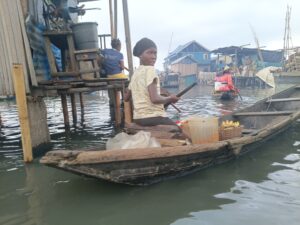
Makoko is a community where the canoe is more than a means of transportation. It is a taxi, a shop, a workplace and, for some families, a home. There are no conventional roads connecting many parts of the waterfront settlement. Residents move from one point to another by canoe, while fishermen, fish sellers, petty traders and boat builders depend on the waterways for their livelihoods.

The community also lacks a conventional sewagel system. Waste and wastewater are a persistent environmental challenge in an area where houses and businesses are built over or immediately beside the water. Yet, for generations of residents, the lagoon has provided both a home and a means of survival.
The Lagos State Government announced in December 2025 that it would remove structures located beneath high-tension electricity lines in Makoko and other communities along the Third Mainland Bridge corridor.
Government officials said the exercise was necessary because buildings and commercial activities within the restricted areas posed risks to lives and critical infrastructure. The government also cited environmental safety, urban planning and the need to prevent disasters associated with structures located around high-tension power lines and waterways.
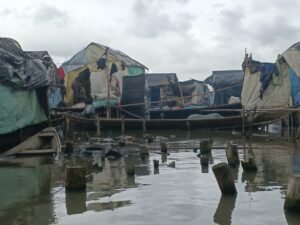

The demolition began on December 23, 2025, with residents initially understanding that structures within a specified safety setback from the power lines would be removed. However, residents later alleged that the demolition extended beyond the area they expected, with some saying buildings more than 100 metres from the power lines were also affected.
Residents described scrambling to rescue children and whatever belongings they could carry as demolition equipment entered parts of the community. Some residents alleged that security personnel used tear gas as people resisted or attempted to retrieve their belongings. Reports at the time also documented protests and clashes over the demolitions. Police subsequently confirmed that tear gas was used during protests, while denying some allegations that live ammunition had been fired.
Residents and civil society organisations later reported deaths and injuries connected to the eviction and its aftermath. Those casualty claims were disputed or not independently confirmed in all cases, making the precise toll difficult to establish.
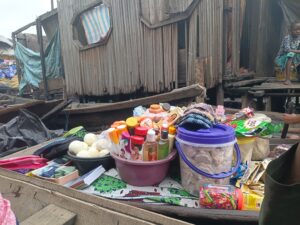
The demolition also generated protests outside the community, with displaced residents demanding an end to the exercise, compensation and resettlement. For those who lived through it, however, the argument over metres and regulations was overshadowed by one immediate question: where would they go?
For Kope Lucky, the answer was the boat. Lucky, a canoe maker who said he had lived in Makoko before the demolition, recalled moving his belongings into his large boat immediately after his house was pulled down. He crossed the water to Ereta and remained there for two days before returning to Makoko.
“When I came back after those two days, I was living in my boat,” he said.
His father later constructed a makeshift wooden structure where the family could sleep at night.
“It is just a place where we lay our heads at night and then in the day we come out to work,” Lucky explained.
For a man whose livelihood is tied to canoe construction, leaving Makoko permanently is not a simple option. Lucky said he buys planks and other materials from Bariga and neighbouring areas and can complete a canoe in about three days. A canoe can cost him up to N500,000 to produce, while he sells one for about N600,000.
“People come from other communities to buy boats from us here,” he said.
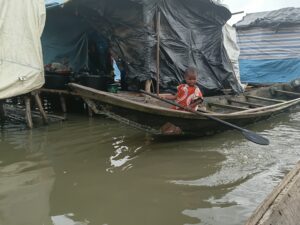
He believes the demolition was primarily connected to the power-line setback.
“The government asked us to stay 100 metres away from the power line. That is why they demolished our houses. If they can allow us to stay 100 metres away from the power line, I would appreciate it.”
Lucky said residents had now moved away from the power-line corridor and hoped they would eventually be permitted to rebuild properly.
For Hungbeji Janet, the demolition meant losing not only a home but also the ability to continue her small business.
Janet said she was inside her house with her family when the demolition began.
“When they came to demolish our houses, I was here with my family in our house. Our house was demolished and we all stayed on the canoe for some days.”
She said she could not retrieve many of her belongings.
“When our house was demolished, we couldn’t pick our belongings. Those people that came used tear gas to send us away, so we were running helter-skelter.”
Janet sold cooked rice from a canoe, moving around the community to reach customers, but the destruction of her property left her without the capital and equipment she needed to continue.
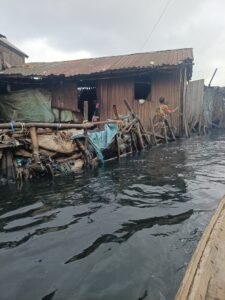
“Right now I’m not selling anything,” she said.
She also said her children had been unable to resume school normally following the displacement.
According to her, residents were not given a clear alternative place to relocate to, nor had they received permission to rebuild.
Yet, despite the uncertainty, Janet said the community remained home for the Ogu people who have historically lived around the water.
“We like living close to the water, and that’s the reason why we are still here,” she said.
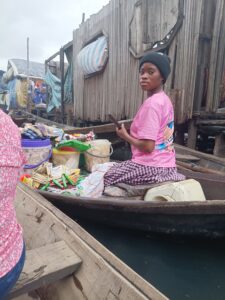
Nine-year-old Martha Akoyun remembers the demolition differently. She remembers crying.
“I wasn’t happy. I was crying. We went to stay with a family somewhere,” the Primary Three pupil recalled.
Martha said she had lived in Makoko since birth and enjoyed the community, despite its difficult conditions.
“When it rains, I don’t like it because everywhere is always filled with water and wet,” she said.
Her family eventually returned to Makoko, where they rebuilt a smaller structure with bamboo and other materials after their former building was demolished.
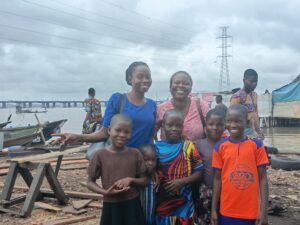
For children like Martha, the demolition was not simply the loss of a building. It meant leaving a familiar environment, temporarily moving elsewhere and having their education disrupted.
The community’s schools are located largely on the mainland, meaning many children already travel from the waterfront to neighbouring communities for education.
For some residents, the canoe has become the most reliable piece of property left to them.
One resident interviewed during the visit said she sells roasted fish within the community.
Another resident, Michael Akonu, works as a canoe transporter.
He does not own the canoe. Instead, he operates one belonging to another person and pays N8,000 every week as a remittance.
“I take people down to their places,” he said.
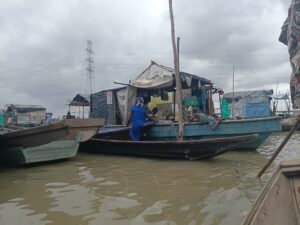
For Akonu, the water provides an income that is difficult to replace elsewhere.
“I prefer staying here because I make good money here.”
However, his account of the demolition carries a much darker memory.
Akonu said he had built his own house in Makoko and was living there with his family when the demolition occurred. He said he fled with others and has not been able to rebuild. He now lives with his father.
He also alleged that his one-year-old child died while the family was trying to escape during the chaos.
“My one-year-old child died,” he said.
Akonu said the incident also led to the breakdown of his family, with his wife eventually returning to Benin Republic, where he said they originated from.
His account is one of several casualty claims made by residents following the demolition. Such claims were widely reported at the time, although the precise circumstances and overall number of deaths have not been independently established.
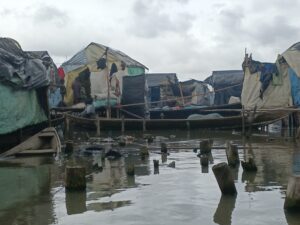
Rain also remains a major problem. Water enters the makeshift houses and leaves residents with few dry spaces in which to sleep or keep their belongings.
For residents, however, the decision to return is not necessarily a rejection of the government’s safety concerns. It is often a reflection of the absence of alternatives.
The Lagos State Government has maintained that its interventions are intended to protect lives and property, improve environmental safety and prevent dangerous development around high-tension power lines and critical infrastructure. Officials have also rejected the suggestion that the demolitions were targeted at poor residents, describing the exercise as part of broader urban safety and development measures.
Residents, however, say that if safety is the objective, the question of where affected families will live and how they will continue earning a living must also be addressed.
The people have returned to the water because the water is where their lives are.
Their homes may have been demolished, but their occupations did not disappear. Their canoes remain their means of transport and livelihood. Their children still need schools. Their families still need shelter. Their traders still need customers.
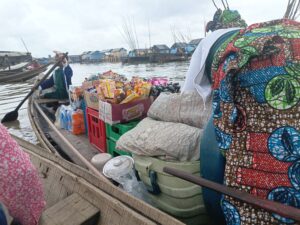
As Makoko rebuilds with bamboo, wood and determination, the community presents a difficult urban question for Lagos: how can a city pursue safety, environmental protection and modernisation without disconnecting vulnerable communities from the livelihoods that keep them alive?
For the residents of Makoko, the answer is not simply about rebuilding houses.
It is about rebuilding lives.






One Comment