
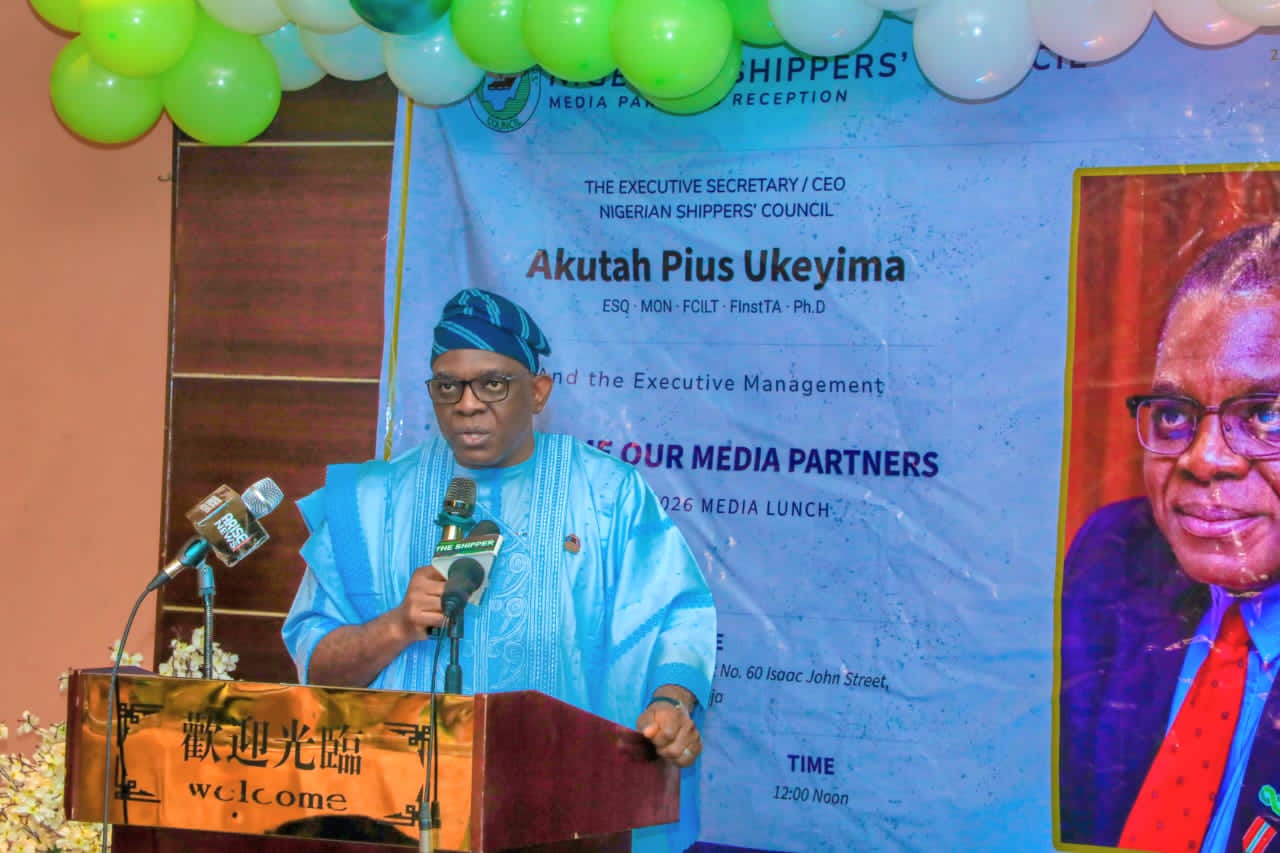
The Executive Secretary and Chief Executive Officer of the Nigeria Shippers’ Council (NSC) , Dr Pius Akutah has disclosed that between November 2023 when he assumed office and the second quarter of 2026, the Council protected over ₦90.60 billion and US$1.348 million in economic value through regulatory oversight, consumer protection initiatives and alternative dispute resolution.
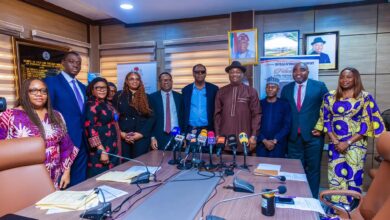
Akutah made the disclosure on 4th July, 2026 during a media luncheon with maritime editors and reporters in Lagos, where he presented a scorecard of the Council’s achievements.
According to him, the savings comprised ₦86.06 billion in unjustified demurrage payments prevented through regulatory interventions and ₦4.54 billion alongside US$1.348 million recovered through Alternative Dispute Resolution (ADR) and other regulatory actions.
The NSC boss said the achievements reflects the Council’s commitment to strengthening its role as Nigeria’s Port Economic Regulator in line with the Federal Government’s Renewed Hope Agenda and the policy direction of the Ministry of Marine and Blue Economy.

Akutah noted that one of the Council’s biggest milestones was the passage of the Nigerian Port Economic Regulatory Agency (NPERA) Bill by both chambers of the National Assembly, saying the legislation, once signed into law, would establish an independent port economic regulator with powers to regulate tariffs, service standards, competition and commercial conduct.

He also announced that the Council secured a statutory funding mechanism through the 2025 Appropriation Act for the first time since its establishment in 1978, while actively supporting the implementation of the National Single Window Project and resolving issues delaying the commencement of the International Cargo Tracking Note (ICTN).
On port economic regulation, Akutah said the Council reviewed and approved tariff requests submitted by shipping companies, terminal operators and Inland Dry Ports after rigorous assessments, while also confirming the reasonableness of freight rates, charter party fees and vessel demurrage for foreign exchange transactions.
He added that terminal operators had been directed to publicly display approved tariffs, while shipping companies were mandated to establish holding bays outside the ports to ease the return of empty containers and reduce traffic congestion along port corridors.
The Executive Secretary further disclosed that the Council abolished unauthorised surcharges imposed by some shipping companies, developed minimum service standards for terminal operators and shipping firms, and collaborated with the Nigerian Ports Authority (NPA), the Federal Competition and Consumer Protection Commission (FCCPC), the Nigeria Customs Service (NCS) and the Federal Ministry of Marine and Blue Economy to strengthen compliance across the sector.
The Council also harmonised bonded terminal invoice charges, reducing charge categories from 18 to six to eliminate duplicate billing and improve transparency.

On dispute resolution, Akutah said the Council received 558 complaints between the fourth quarter of 2023 and the second quarter of 2026 and successfully resolved 295 commercial disputes involving container deposits, demurrage, detention charges, terminal charges, cargo claims and export fraud.
“Alternative Dispute Resolution remains one of the Council’s most effective mechanisms for protecting Nigerian shippers and reducing the cost of doing business.”
He revealed that the Council concluded out-of-court settlements involving APM Terminals Nigeria Limited, CMA CGM and Maersk Nigeria Limited over charges collected above approved tariffs, thereby protecting shippers, reducing litigation and strengthening confidence in its dispute resolution framework.
Beyond regulation, the Council said it continued to advance trade facilitation through the development of Inland Dry Ports, Vehicle Transit Areas and Border Information Centres.
According to Akutah, operational Inland Dry Ports in Kaduna, Kano and Funtua are improving cargo movement and supporting economic activities in the hinterland, while new Border Information Centres are under construction in Jigawa, Benue, Borno and Kebbi states following the completion of the Idiroko Centre in Ogun State.
He added that the Council has prioritised the reconstruction of the Jibia Border Information Centre in Katsina State after it was destroyed by heavy rainfall in June 2026, while discussions were ongoing with state governments to secure land for permanent border information complexes to facilitate trade under the African Continental Free Trade Area (AfCFTA).

On institutional reforms, the NSC boss said the Council had deployed an Enterprise Content Management System to digitise records, automate workflows and improve operational efficiency.
He said other initiatives include the Leadership and Succession Planning Project, strengthened performance management, staff training, organisational restructuring and enhanced staff welfare to prepare the organisation for its transition to the Nigerian Port Economic Regulatory Agency.
Akutah also announced that preparations had been substantially concluded for the 18th International Maritime Seminar for Judges, scheduled for July 22 to 24, 2026, in Abuja.
He said the seminar, organised in collaboration with the National Judicial Institute and the Nigerian Maritime Law Association, would bring together judges, maritime law practitioners, regulators and experts from Nigeria and across Africa to promote legal certainty and harmonise maritime business laws.
Looking ahead, he said the Council would continue to deepen port economic regulation, accelerate digital transformation, strengthen consumer protection, expand trade facilitation infrastructure and support the implementation of the National Single Window and ICTN projects.
“Our objective is clear: to build a transparent, efficient and globally competitive port economic regulatory system that protects Nigerian shippers, promotes fair competition, improves port efficiency, attracts investment and supports Nigeria’s emergence as the leading maritime and logistics gateway in West and Central Africa.”
He reaffirmed the Council’s commitment to working with government, industry stakeholders, development partners and the media to sustain reforms aimed at making Nigeria’s ports more transparent, competitive and investment-friendly while unlocking the full potential of the country’s marine and blue economy.






z9wuhd
https://shorturl.fm/hyvKE
PlayVirexo casino, PlayVirexo Buenos Aires ofrece una selección de
juegos emocionantes para todos. Se puede aprovechar de recompensas especiales que refuerzan tu trayectoria.
aqm694
66zalq