
By Elizabeth Toyon, Maria Yusuf, Feyisola Adeyeha & Hannah Tedunjaye

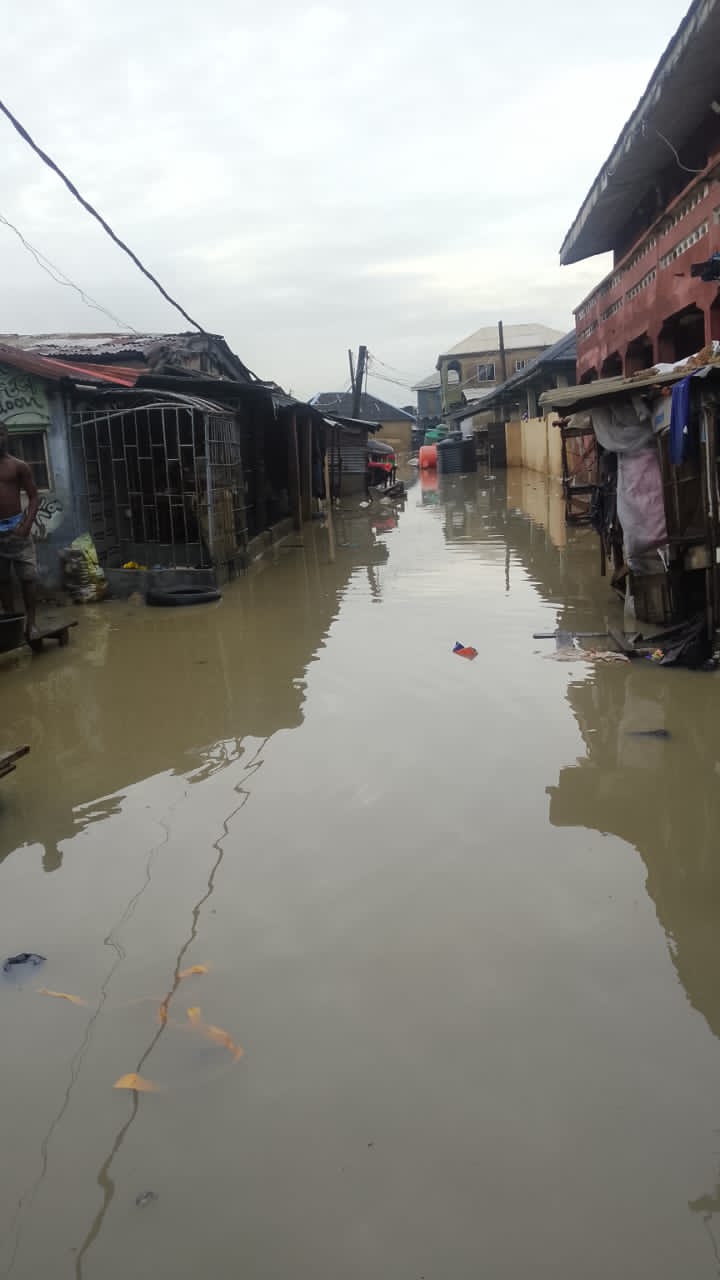
Persistent rainfall across Lagos has caused flooding in several communities, leaving residents stranded and disrupting daily activities.
The flooding, which followed hours of heavy downpour, submerged roads and affected movement in many areas. Students were among the worst hit, as many were unable to get to school due to flooded routes.
In Badagry, transportation costs increased as commercial drivers adjusted fares to reflect the difficult road conditions and longer travel times caused by the flooding. Commuters heading to work experienced significant delays, with many arriving late to their destinations.
Residents have expressed concerns over the recurring flooding, especially in low-lying communities, and called for improved drainage infrastructure to mitigate the impact of heavy rains during the rainy season.

The incident highlights the challenges posed by seasonal rainfall in Lagos, where flooding continues to affect transportation, education, and economic activities in vulnerable communities.

The rainfall on Tuesday brought life to a standstill in Tolu Community, Ajeromi-Ifelodun Local Government Area of Lagos State, as widespread flooding submerged homes, rendered roads impassable and left hundreds of residents stranded.
Several streets were overtaken by floodwater, forcing residents to wade through knee-deep water while others remained trapped indoors as the deluge entered their homes. Furniture, household appliances and other valuables were reportedly damaged as water inundated living spaces.
The flooding also disrupted transportation, with commercial buses and other public vehicles unable to access the community due to the submerged roads. Many commuters were forced to abandon their journeys, while workers, traders and students struggled to leave the area.
Residents of Tolu Community have watched this unfortunate cycle repeat itself every rainy season. What should be a normal downpour quickly turns into a nightmare as homes are flooded, roads become impassable and daily life comes to a halt. The persistent flooding reflects the poor state of drainage infrastructure in the community and the urgent need for lasting intervention.
The latest incident has once again highlighted the vulnerability of many low-lying communities in Lagos during the rainy season, raising concerns over public safety, property damage and the economic toll of recurring floods on residents and businesses.
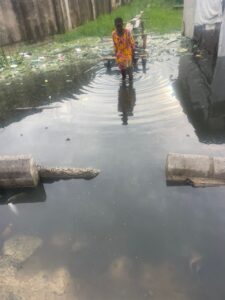
The rainfall disrupted movement along the Alagbole-Akute road, effectively cutting off the Ogun-Lagos boundary and impacting commuters, traders, and schoolchildren across the corridor.
On Tuesday, the downpour started around 6:00 a.m., and by 7:15 a.m., several sections of the boundary road were submerged. Water levels in low-lying areas reached knee-height, rendering the route impassable for small cars and motorcycles. Potholes were hidden underwater, while refuse, sand, and debris were washed across the asphalt, further complicating conditions for road users.
Commercial transport was brought to a standstill for over an hour. Danfo and mini-bus operators suspended services, while some drivers who operated raised fares to double the normal rate.
Motorcycle and tricycle operators charged between ₦400 and ₦500 per trip. Many commuters heading to offices in Ikeja, Ogba, Ojodu Berger, and other parts of Lagos were either badly delayed or forced to abandon their journeys. Ride-hailing apps recorded multiple cancellations, with drivers reporting that the road was not accessible.
Trading activities at the Alagbole boundary market were also heavily affected. Customer turnout from Lagos residents dropped significantly. Traders of perishable goods hurriedly covered their wares with tarpaulins to protect them from water damage, while POS operators and food vendors struggled to conduct business.
Schools in the area advised students and parents to exercise caution as children navigated the flooded sections on their way to and from school.
Residents blamed the flooding on blocked drainage systems and culverts along the boundary, compounded by poor drainage infrastructure , a recurring issue during heavy rains in the area. Many noted that accumulated refuse and silt had obstructed water channels, preventing proper runoff and worsening the flood situation.
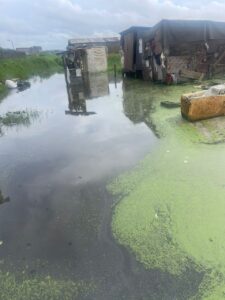
Thankfully, no casualties have been reported. Water levels began to recede by 11:30 a.m. as the rain eased, allowing movement to gradually resume. Motorists have been advised to avoid the corridor during heavy downpours until drainage channels are properly cleared and the road infrastructure is improved.
Authorities are urged to urgently address the drainage blockage to prevent future occurrences.
Ijora area was severely flooded, disrupting transportation, businesses, schools, and other daily activities across the community.
By 6:45 a.m., roads in Ijora had disappeared beneath floodwater, forcing residents to wade through knee-deep water to reach bus stops. Hidden drainage channels made movement dangerous as commuters struggled to navigate submerged streets. Public transportation was delayed, while commercial bus operators increased fares, citing the difficult road conditions. Many commercial motorcycle riders also refused to enter flooded areas to avoid damaging their bikes and risking accidents.
The flooding also affected schoolchildren, with some returning home because the water was too deep. Others continued their journey in soaked uniforms. In one frightening incident, a young primary school pupil fell into a gutter hidden beneath the floodwater before residents quickly rescued him.
Roadside traders, including food vendors and provision sellers, were forced to shut down after floodwater invaded their stalls, destroying goods and causing financial losses. Several homes in Ijora were flooded, damaging furniture and forcing some families to seek shelter with neighbours. Residents are now calling on the government to improve drainage systems and implement lasting measures to prevent future flooding.








One Comment