

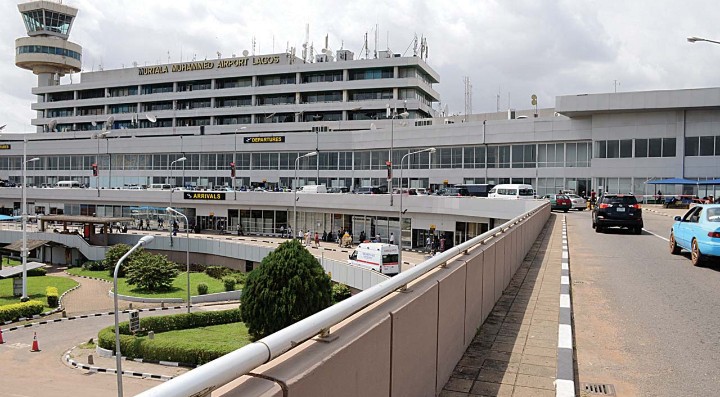
Flight delays, cancellations and prolonged refund disputes are increasingly testing the patience of Nigerian air travellers, with many passengers recounting experiences of financial losses, disrupted plans and poor customer service despite existing consumer protection regulations. While airlines continue to cite operational challenges ranging from aircraft shortages to airport infrastructure limitations, affected travellers say the burden of these disruptions is often transferred to passengers who are left stranded, forced to purchase expensive alternative tickets or wait weeks for refunds.

The Nigeria Civil Aviation Authority (NCAA) has repeatedly warned airlines against violating passenger rights, insisting that refunds for cancelled flights must be processed within 14 days and that carriers are obligated to provide compensation and care in certain cases of delays and cancellations. The regulator has also intensified consumer protection enforcement, recently reporting that airlines refunded more than N1 billion to over 5,000 passengers in a bid to improve compliance with aviation regulations.
Industry experts, however, argue that persistent complaints from passengers suggest a gap between regulatory provisions and actual enforcement. Aviation analyst and former commandant of the Murtala Muhammed International Airport, Group Captain John Ojikutu (rtd), has previously noted that recurring flight disruptions are often linked to fleet limitations, inadequate operational planning and infrastructure deficiencies, while consumer rights advocates maintain that airlines must improve communication, customer care and contingency arrangements when disruptions occur.
From delayed luggage deliveries and last-minute schedule changes to cancelled flights and refund delays, the experiences of passengers such as Damilola Lawal, Olugbenga Sunday and Chioma Ifeanyieze highlight the growing concerns over service delivery in Nigeria’s aviation sector and the continuing challenge of balancing operational realities with passengers’ rights.
For Damilola Lawal, what was meant to be a straightforward trip to attend a family function in eastern Nigeria turned into a frustrating ordeal marked by a cancelled flight, additional travel costs, and a prolonged wait for a refund.
Lawal said he booked his flight three weeks in advance to ensure he could attend the event. However, the airline reportedly cancelled the flight just three days after the booking was made.
Following the cancellation, he requested a refund and was asked by the airline’s customer service team to complete a form providing his bank details and other necessary information.
More than a month later, Lawal said he is still waiting for the refund despite making repeated efforts to follow up. According to him, weekly reminder emails and calls to the airline’s customer service department have yielded the same response: that the matter is being processed.
The delay forced him to purchase a replacement ticket with another airline at a higher fare to avoid missing the family event.
“I had a family function in the East and booked my flight three weeks ahead of time, only for it to be cancelled three days later,” Lawal said.

“I asked for a refund so I could book another airline, but after filling the required forms and providing my bank details, I have been waiting for over a month.
Lawal said the airline’s failure to process the refund promptly placed an unexpected financial burden on him.
“I had to use money I didn’t plan to spend to buy another ticket at a more expensive price just so I wouldn’t miss the event,” he added.
Despite his repeated follow-ups through emails and phone calls, he said there has been no clear timeline for the refund.
“Every week, I send reminder emails and call customer care, but all I hear is, ‘We are working on it’,” Lawal said.
Describing the impact of the experience, he said the airline’s handling of the situation had left him feeling frustrated and disrespected.

“They’ve cost me money I don’t have, caused me inconvenience, and shown blatant disrespect to a customer,” he lamented.
For Olugbenga Sunday said a scheduled return trip from Uyo became an experience he described as frustrating and disappointing after his flight was first delayed and later cancelled, leaving passengers stranded at the airport late at night.
According to Sunday, his return flight, originally scheduled for 5 p.m., was rescheduled to 8:45 p.m. He said passengers had completed the check-in process and were expecting to board when the airline announced that the flight had been cancelled.
“My return ticket was booked for 5 p.m., but it was shifted to 8:45 p.m. I arrived at the airport and checked in, only for the airline to casually announce that the flight had been cancelled,” he said.
The passenger expressed concern over what he described as the airline’s inadequate response to the disruption, noting that stranded passengers were left without transportation or accommodation arrangements.
“The flight was cancelled and the airline could not arrange even a bus to convey us back to Uyo city. We are not even talking about hotel accommodation, which was absolutely necessary,” Omotayo stated.
He said many passengers remained stranded at the airport at about 10 p.m. with little information on what assistance would be provided.
“I saw passengers stranded at about 10 p.m. There was no damage control, no provision for passengers, no sympathy, just nothing,” he lamented.
According to him, the airline attributed the cancellation to a runway lighting failure that prevented the aircraft from landing.
“The reason given was that the runway light went off and our aircraft could not land,” he said.
Sunday further revealed that the disruption was not his first unpleasant experience with the airline. He recalled that on a previous trip to Uyo, his checked baggage was delayed for several days.
“I flew the same airline to Uyo the previous week and it took me three days to receive my luggage,” he added.
The passenger questioned whether airlines are giving sufficient attention to customer service and contingency planning when disruptions occur.
“When airlines develop their standard operating procedures and service designs, what exactly are they doing about customer service?” he asked.
Reflecting on the experience, Sunday argued that increased competition on the Uyo route could help improve service delivery and provide passengers with more travel options.”We need additional airlines on the Uyo route,” he said.
For Chioma Ifeanyieze, what should have been a routine international trip turned into a costly and exhausting experience marked by a flight cancellation, multiple schedule changes, financial losses and prolonged delays.
Ifeanyieze said the ordeal began when her scheduled flight was cancelled, prompting her to purchase a replacement ticket with another airline at a cost of N1.8 million to avoid disrupting her travel plans.
“First, the flight was cancelled, so we bought another ticket for N1.8 million from another airline,” she recalled.
However, she said the original airline later reinstated the flight, forcing her to seek a refund from the second carrier. According to her, the refund process resulted in a loss of N400,000.
“When the airline reinstated the flight, we went back to request a refund from the other airline, but we lost N400,000 in the process,” she said.
The travel challenges continued on the day of departure. Ifeanyieze said passengers arrived at the airport ahead of a scheduled 4:30 p.m. flight, only to be informed that the departure time had been moved to 8:50 p.m.
“We arrived at the airport around 2 p.m. for a 4:30 p.m. flight, only to be told that the departure time had been shifted to 8:50 p.m.,” she said.
After waiting for more than six hours, passengers were reportedly informed of another delay.
“We were hoping to board at 8:50 p.m., but another one-hour delay was announced. Then there were more delays after that,” Ifeanyieze recounted.
According to her, passengers eventually boarded the aircraft at about 10:50 p.m., several hours behind schedule.
“We finally boarded at 10:50 p.m. It was such a hectic and tiring trip,” she said.
While acknowledging that operational challenges can occur, Ifeanyieze expressed disappointment with what she described as a lack of empathy and communication from airline personnel throughout the disruption.
“The painful part is that no staff member offered an apology or even a kind word to passengers,” she said.
She alleged that passengers seeking information were often told to wait without receiving clear updates on the situation.
“You arrive at the counter and they ask you to go and sit down and come back later for check-in. No one is apologising, no one is smiling and no one is showing empathy,” she said.
For the traveller, the issue extends beyond flight delays and cancellations to how airlines respond to passengers affected by disruptions.
“It is understandable if airlines cannot completely control delays and cancellations, but they can at least train their staff to be warm and kind. That would help suffering passengers feel a little better,” Ifeanyieze added.
For many passengers, the issue is no longer just about arriving at their destinations on time, but whether airlines and regulators can deliver a travel experience that respects consumer rights and places passengers at the centre of service delivery. Until that happens, flight disruptions are likely to remain a recurring source of frustration for thousands of Nigerian travellers.








¡Buen artículo! CV Builder Free en me ha servido para temas parecidos. CV Builder Free
The tips and predictions here are spot on. It has helped me make much better decisions with my bets lately. A must visit for any sports fan. palpitos24