

President Bola Tinubu on Wednesday said the successful completion of Nigeria LNG Limited’s Train 7 project is central to the country’s plan to turn its gas reserves into exports, jobs, industrial growth and lasting economic value.
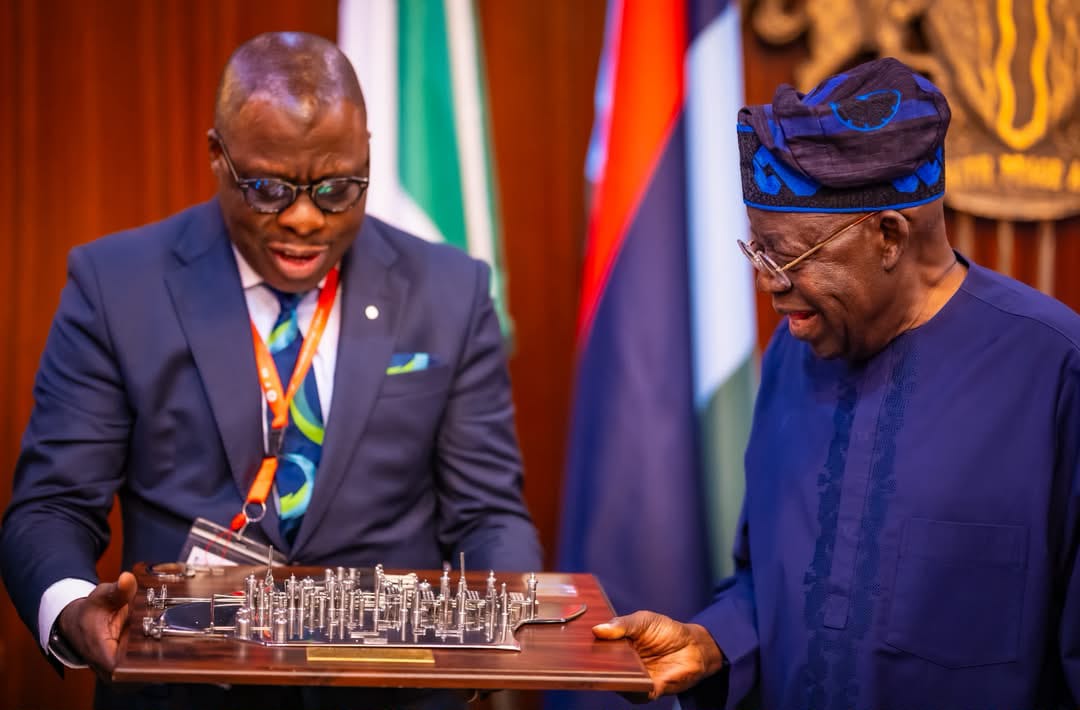
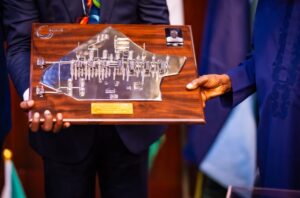
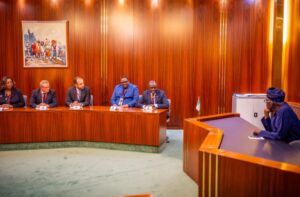
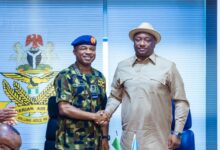
Tinubu spoke at the State House after receiving an NLNG delegation led by Managing Director and Chief Executive Officer Adeleye Falade, who briefed him on the project’s progress and the company’s wider role in Nigeria’s gas programme.
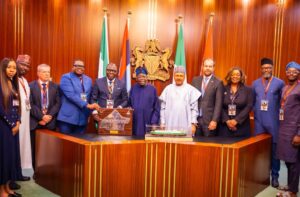
The President’s comments were contained in a press releases issued by Sophia Horsefall, spokesperson for the NLNG
The company said Train 7 is now more than 90 per cent complete. Falade, who took over as NLNG chief executive in April, told the President that the remaining work would be finished safely and to the required standard, while the plant is prepared for reliable operations.
“I congratulate you, Leye, on your appointment. Train 7 is at the centre of our national gas agenda. Its success matters not only to NLNG, but to Nigeria’s economic future,” Tinubu said.
The President described the project as a test of delivery, partnership, Nigerian content and investor confidence. He pledged that the Federal Government would keep improving the business climate, offer clearer regulation and remove bottlenecks facing major oil and gas investments.
“Nigeria is open for business, but it must be business that creates value at home — building capacity, supporting communities, protecting the environment and contributing to national prosperity. NLNG must continue to lead by example,” he said.

Falade thanked the President for the administration’s support and said Train 7 was a “strategic national undertaking.”
He said the project would raise Nigeria’s LNG production, support export growth, create work for Nigerian staff and contractors, deepen local participation and extract more long-term value from the country’s gas.
Public updates from NLNG and industry partners earlier this year put Train 7 on course for commissioning in 2027. When completed, the expansion is expected to lift NLNG’s production from about 22 million tonnes a year to 30 million tonnes — a rise of roughly 35 per cent. The company has also reported thousands of direct jobs on the Bonny Island site and high local-content participation during construction.
LPG supply and operating costs
The briefing also covered liquefied petroleum gas (LPG) pricing and availability, LPG trucking along the Bonny–Bodo Road, NLNG’s contribution to public revenue, its investment in the Bonny–Bodo Road and social-impact projects, and the need for a more predictable operating environment.
Falade restated NLNG’s commitment to the domestic LPG market and to cleaner cooking fuel for households and businesses. He called for coordinated action by government, regulators and operators to expand supply, improve storage and distribution, cut avoidable costs and make the market more transparent.
“Improving LPG accessibility is important to Nigeria’s energy transition and to the wellbeing of millions of Nigerian households. NLNG remains committed to supporting the domestic market, but improving affordability requires coordinated action across the entire LPG value chain,” he said.
He also asked the President to help ease doing business, citing overlapping taxes, levies, charges and regulatory demands from different tiers and agencies of government. Those multiple obligations, he said, raise costs, create uncertainty and can discourage both current operations and new investment.
Falade said NLNG was ready to align more closely with the administration’s development agenda and to look at further partnership with the Federal Government.
The meeting ended with both sides pledging to keep momentum on Train 7 in its final phase and to strengthen the partnership between the government and NLNG



The graphics are amazing and the gameplay is so immersive. I hit a nice win yesterday. Go to 777brasino and try your luck.
I really appreciate the customer support here, they answered my questions almost instantly. It makes the whole experience feel very secure. Shoutout to bd88xbajee!