


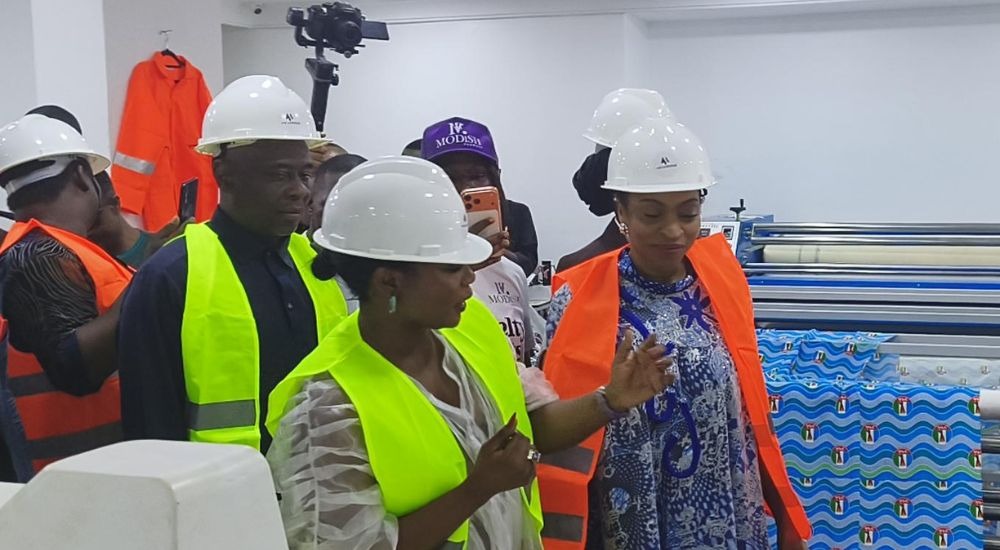
Mo’Afrique, a leading Nigerian fashion house, has launched Modish, a new umbrella brand aimed at the mass garment market, alongside the commissioning of a multi-million naira garment manufacturing facility in Abuja.
The company unveiled Modish Formals, a sub-brand dedicated to the production of professional wear and uniforms, as part of efforts to meet growing demand for structured, high-quality garments at scale.
The launch coincided with Mo’Afrique’s 10th anniversary, marking what industry observers describe as a significant expansion from bespoke fashion into large-scale manufacturing.
Speaking at the event, the Founder and Creative Director of Mo’Afrique, Omobolanle Olawole, said the move was driven by evolving market demands and the need to serve a largely underserved segment.
“This expansion is a direct response to market demand. Over the years, our corporate clients have required more than bespoke fashion—they need structured, high-quality garments that reflect their brand identity and can be delivered at scale. Modish is our answer to that need,” she said.
Also speaking, the Minister of Industry, Trade and Investment, Mrs Jumoke Oduwole, who commissioned the facility, commended the company for strengthening local production capacity through the establishment of the factory.
She described the anniversary and factory inauguration as a “double celebration” symbolising both achievement and a new phase of growth, while urging the company to expand beyond Nigeria’s borders.
Oduwole noted that the Federal Government remains committed to supporting entrepreneurs to overcome business climate challenges and enhance productivity.
“It is not easy, and nobody says it is. But a journey of a thousand miles starts with a step. A business that started 10 years ago in a bedroom is today commissioning a factory. That is industrialisation,” she added.
The minister further stated that initiatives such as the Modish factory would boost job creation, stimulate economic growth and strengthen Nigeria’s position in the textile and garment value chain.
She also encouraged the company to leverage opportunities under the African Continental Free Trade Area (AfCFTA) to expand its footprint across the continent.

“We expect you to have your garments across Africa and the rest of the world by leveraging the African Continental Free Trade Area. This is what generates jobs, employment and contributes to GDP,” she said.
According to her, the facility represents more than a production hub, describing it as a model of innovation and sustainability capable of positioning Nigeria as a competitive player in the global garment manufacturing industry.







u2w9mz