

The freight forwarding industry has a critical role to play in Nigeria’s economic development, particularly as the Federal Government pursues its $1 trillion economic ambition by 2030. With the sector facilitating the movement of most goods entering and leaving the country, the Council for the Regulation of Freight Forwarding in Nigeria (CRFFN) says greater professionalism, effective regulation and stronger accountability are needed to unlock its full potential.
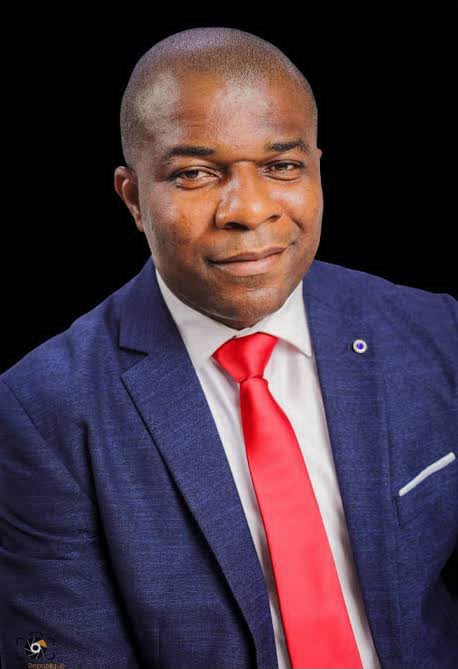
In this interview, the Registrar/Chief Executive Officer of CRFFN, Dr Kingsley Igwe, speaks on the council’s mandate, the professionalisation of freight forwarding, its nationwide staff training programme, the new licensing regime and the measures being taken to tackle illegal charges on cargo.
Q: Can you tell us about yourself and your role at CRFFN?
A: I am the Registrar/CEO of the Council for the Regulation of Freight Forwarding in Nigeria, CRFFN. I am passionate about this industry and its operations because it runs through from my birth to my retirement. It is a highly under-regulated industry, and that is why the role of the council is very important.
Q: What exactly is the mandate of CRFFN?
A: The government, in its wisdom, established the Council for the Regulation of Freight Forwarding in Nigeria in 2007 by Act No. 16 of 2007, Laws of the Federal Republic of Nigeria.

CRFFN was mandated to professionalise practitioners and operators in the industry, determine standards for the practice of freight forwarding in Nigeria, issue licences to intending practitioners and control the practice of freight forwarding in line with global best practices.
Q: Why is CRFFN also focusing on training its own staff?
A: As a regulator, there is a need for us to also professionalise our own workforce. That is primarily what has informed the training of CRFFN staff.
This training is happening nationwide. This is the maiden session, beginning in Lagos. It will move to Port Harcourt for the South-South and South-Eastern zones, Abuja for the North-Central zone and Kano for the North.
We have to do this because the industry itself is a managed business and it requires a sound workforce to regulate it adequately. Our own staff have therefore been upskilled and exposed to relevant areas of professional skills in order to meet expectations and deliver high-level services.
Q: How important is freight forwarding to Nigeria’s economy?
A: This industry is capable of contributing significantly to the $1 trillion economic ambition of Mr President by 2030 because it is an industry that generates over N2 trillion to N3 trillion annually. As a matter of fact, that is just an estimate, and we know it does more than that.
About 90 per cent of international trade cargo goes through the sea, while many others move through the air. If you combine all this movement of cargo from overseas into our local economy, you will understand the value of freight forwarding.
Without the freight forwarder, those cargoes cannot safely, professionally and efficiently move from exporting countries and land at the warehouse of the importing country.
This movement requires a high level of professional handling, beginning with the preparation of documentation, which requires sound knowledge of global conventions guiding international trade, bills of lading, airway bills and many other matters.
It is not an industry a quack can conveniently operate. That is why it is highly professional.
Q: What is the current situation regarding the registration and licensing of freight forwarders?
A: Registration and licensing of freight forwarders is continuous. Currently, we have close to 10,000 registered freight forwarders, both individuals and corporate entities.
However, we started the new licensing regime this year, and over 1,000 applications have been processed under the new licensing scheme.
We estimate that this will grow over the next five years to between 20,000 and 25,000 licences administered to corporate entities, while more than 40,000 individual practitioners will be certified in the industry within the same period.
A total revenue of more than N30 billion is projected annually from this exercise.
Q: Illegal and multiple charges have continued to affect the cost of doing business. What is CRFFN doing about illegal fees on cargo?
A: Two weeks ago, I issued a circular banning all illegal imposition or collection of illegal fees on cargo entering or leaving Nigeria.
Any fee imposed on cargo entering or leaving Nigeria that is not statutorily approved is illegal and contributes to making the cost of commodities in the market higher.
This is exactly where we are coming in to ensure that such practices do not happen, in order to reduce the logistics cost of operations in Nigeria.
There are statutory fees that are allowed, such as import duty and service charges by regulatory agencies. Any other fees outside these approved charges are not allowed.
We reiterate that all unofficial fees are hereby banned or suspended. Any culprits found collecting illegal fees, whether at the port or on the road, will be severely dealt with according to the law.
Q: How will CRFFN identify and deal with unlicensed operators?
A: We are licensing, and through licensing we will be able to fish out every operator that is not duly licensed and registered.
The licensing process will help us establish who is operating legitimately within the industry and enable the council to take appropriate action against those operating outside the regulatory framework.
Ultimately, our objective is to ensure that freight forwarding in Nigeria is practised by properly trained, licensed and accountable professionals who can meet international standards and contribute meaningfully to the economy.



One Comment