

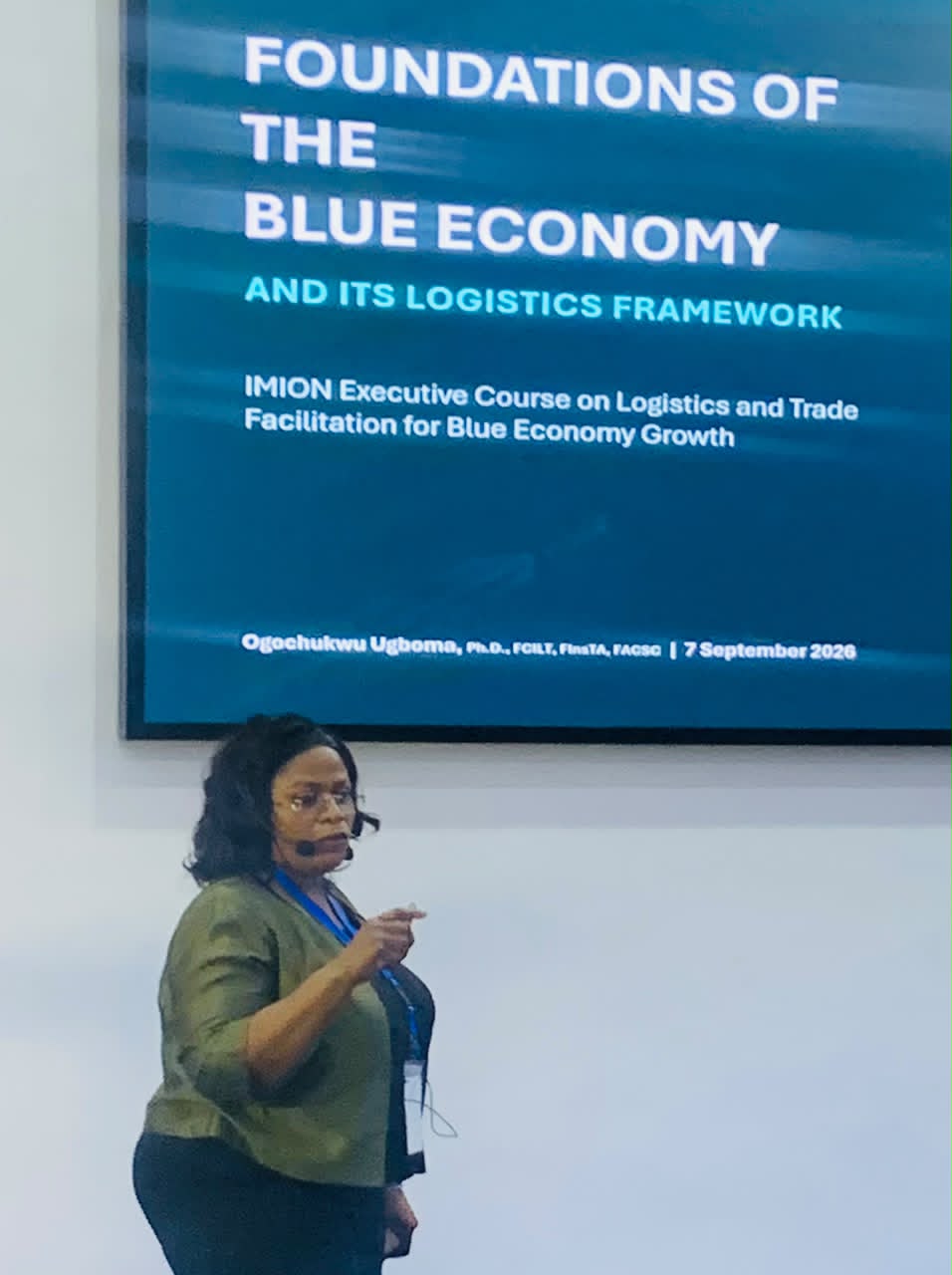
Professor Ogochukwu Ugboma, a facilitator at the International Maritime Institute of Nigeria (IMION) Executive Course, has said inadequate cold-chain infrastructure is a major challenge undermining Nigeria’s fisheries and aquaculture value chain.
Ugboma stated this in Lagos on Monday while delivering a presentation at the three-day executive course themed “Logistics and Trade Facilitation for Blue Economy Growth,” holding from September 7 to 9, 2026.
She said Nigeria has abundant fish resources and a large fishing population but is losing significant value because of poor temperature control, inadequate cold storage and inefficient transportation from landing sites to markets.
According to her, the quality of fish starts deteriorating immediately after it is removed from water, making an effective cold-chain system critical to preserving the quality and value of the product.
“The quality of fish starts deteriorating immediately you remove it from water,” she said, stressing that proper cold-chain infrastructure is necessary to maintain fish at the required temperature throughout its movement to consumers.
Ugboma said the challenge is not primarily a lack of fish production but the inability to preserve, transport and store the catch efficiently.
She noted that Nigeria’s domestic supply deficit in fisheries is being worsened by logistics gaps, forcing the country to rely heavily on imported fish.
She therefore called for investment in cold rooms, refrigerated transportation and other temperature-controlled facilities, particularly around fishing communities and landing sites.
Beyond fisheries, Ugboma said the importance of cold-chain logistics extends to other temperature-sensitive products, including health commodities and vaccines, stressing that logistics is a critical component of the wider economy.
She explained that logistics involves more than the physical movement of cargo, as information, finance, documentation, insurance and other processes must also move efficiently for the supply chain to function.
Ugboma also identified Nigeria’s extensive inland waterways as an opportunity that could support the movement of goods and reduce pressure on the country’s roads and ports.

She said Nigeria has about 10,000 kilometres of inland waterways, but only about 30 per cent are navigable, calling for greater investment in dredging and charting the waterways.
According to her, Nigeria’s natural advantages in terms of its coastline, inland waterways and regional market access would only translate into economic benefits if the various components of the logistics system worked together.
She stressed that sustainable blue economy development must balance people, profit and the planet, warning that economic activities should not destroy the marine ecosystem or undermine the livelihoods of communities that depend on it.
The facilitator also called for stronger collaboration among government agencies, private-sector operators, communities and other stakeholders, warning that fragmented operations could continue to create delays, higher costs and loss of value.
She said improving logistics across the entire value chain would make Nigeria’s blue economy more reliable, competitive and sustainable.
“Fragmented excellence still produces poor end-to-end performance,” Ugboma said, urging stakeholders to identify where value is being lost within the various blue economy value chains and develop practical solutions to address the bottlenecks.




Airport Transfer Dubai (ATD) make sure that your every trip is comfortable
The game selection is top notch and the graphics are crisp. I spent hours playing last night and didn’t have a single crash. Big thanks to phpisogame.
Finally found a site that doesn’t crash every five minutes. The interface is super user-friendly and the payouts feel fair. Highly recommend giving 65jililogin a try if you are into online gaming.
The community here is awesome and the rewards keep coming. It is rare to find a site that cares this much about its players. Love bdn444!
Finally found a home for my poker nights that actually delivers on quality. The tables are always active and the cash out process is dead simple. I appreciate how chill the whole environment feels even during big wins or tough streaks. See you all on the next hand 55555pkrgame