

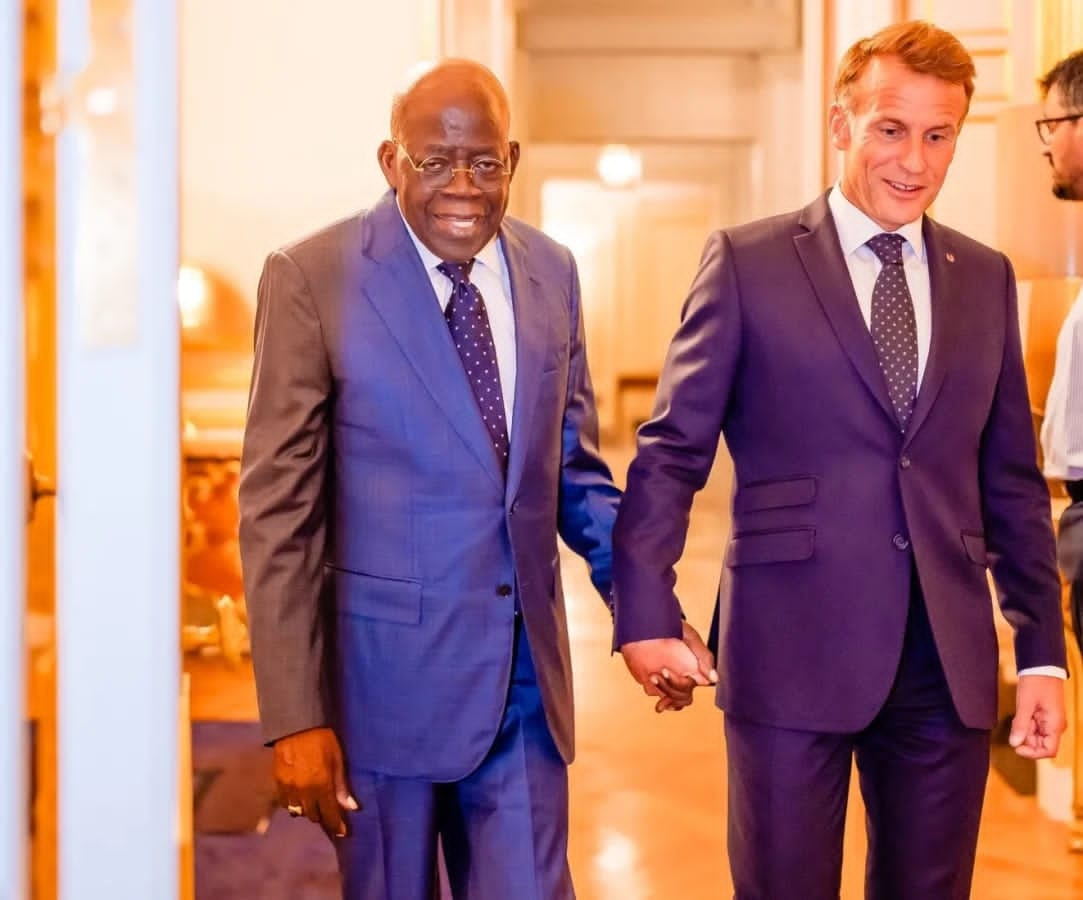
French President Emmanuel Macron has postponed his planned state visit to Nigeria, originally scheduled for late October 2026, until early 2027.

The decision follows an agreement with Nigerian President Bola Ahmed Tinubu amid intensifying domestic unrest in France.
The visit, initially set for around October 28–29 or extending into early November, formed part of efforts to deepen bilateral cooperation on trade, investment, energy transition, solid minerals, and economic ties. It was intended as a reciprocal engagement after Tinubu’s state visit to France in November 2024. Macron’s last trip to Nigeria occurred in 2018. Similar plans for Senegal were also deferred.
The postponement stems from a wave of social unrest across France. Protests that began with student demands over underfunded schools, staff shortages, and dilapidated buildings have broadened into wider discontent over rising living costs, inequality, and public services. Last weekend’s demonstrations turned violent in multiple cities, with public buildings damaged, shops looted, and more than 2,000–2,700 people arrested. Authorities deployed tens of thousands of officers, imposed curfews in several cities, and prepared for further action this weekend. Turnout on subsequent days reached hundreds of thousands, with additional arrests in the low hundreds as clashes continued in places such as Paris and Marseille.
French sources indicated that proceeding with overseas diplomatic travel while the country faced internal disorder risked appearing insensitive. Officials contrasted the Africa itinerary—a longer-term cooperation agenda—with a recent Gulf trip focused on immediate energy security needs. Macron’s final term ends in May 2027, adding political weight to the domestic priority.
The episode underscores the constraints domestic pressures place on French foreign policy at a sensitive moment. France has sought to rebuild influence in West Africa after setbacks in the Sahel, positioning Nigeria and Senegal as important partners for trade, investment, and security dialogue. Delaying high-level engagement may slow momentum on concrete deals, though underlying commercial and diplomatic channels remain open. For Nigeria, the postponement arrives months ahead of its own electoral calendar, reducing any perception of external involvement while bilateral relations continue through existing frameworks.
Analysts note that Macron’s choice prioritizes political survival and social stability at home over short-term diplomatic optics. Sustained unrest could further limit France’s capacity for ambitious Africa outreach in the coming months. Both sides have signaled that the visit will be rescheduled rather than abandoned, preserving the trajectory of improved France–Nigeria relations once conditions in France stabilize. The episode illustrates how internal governance challenges can quickly reshape external priorities for even established powers.







One Comment