

Serving , Succeeding in a Male-Dominated Institution Remain the Greatest Moment of my Career – SP Adebisi

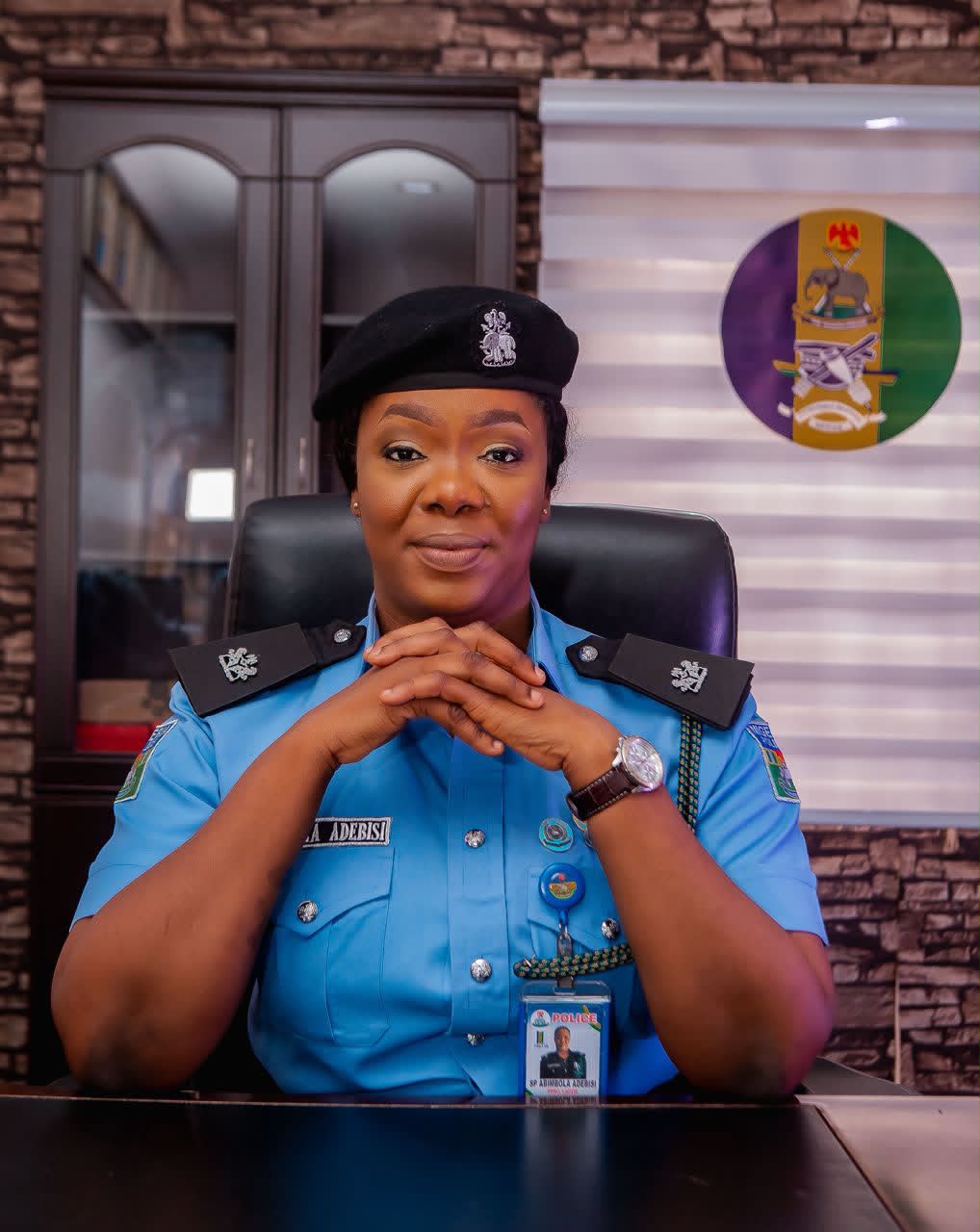
In an era where rebuilding public trust in law enforcement has become increasingly important, the role of a Police Public Relations Officer extends far beyond issuing statements and responding to media enquiries. It demands empathy, transparency, resilience and a commitment to bridging the gap between the police and the communities they serve.

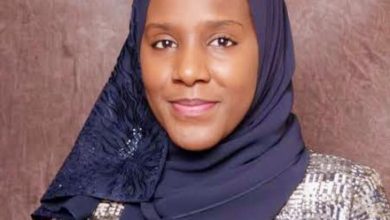
In this interview with JournalNG, Lagos State Police Public Relations Officer, Superintendent of Police (SP) Abimbola Adebisi, speaks with Feyisola Adeyeha about her journey from the classroom to policing, the inspiration behind her career choice, the demands of serving as the public face of the Lagos State Police Command, and her vision for a more people-centred police force.
Q: Can you tell us about your background and what inspired you to join the police force?
A: My name is SP Abimola Adebisi, the Police Public Relations Officer for the Lagos State Police Command.
I am from Abeokuta in Ogun State. I began my education at Ogun International Montessori Nursery and Primary School before proceeding to Abeokuta Grammar School. I later moved to Lagos, where I completed my secondary education at Jubilee-Model Grammar School.

I earned a degree in English Language and Literature from Tai Solarin University of Education. After graduation, I served under the National Youth Service Corps in Jigawa State before being redeployed to Oyo State.
My career began in the classroom. I taught at Mercyland International School and later at Kingdom Heritage Nursery and Primary School, both in Abeokuta. While teaching, I joined the Nigeria Police Force in 2016.
Q: What was your journey like after joining the police?
A: After completing my training, I was posted to Lagos State for a one-year attachment at Pen Cinema Division Headquarters in Agege. After the attachment, I was deployed to Abbatoir an Administrative Officer before moving to the Force Headquarters.
At the Force Headquarters, I served as a Staff Officer and later at the Special Protection Unit (SPU). I subsequently became the Personal Assistant to the Commissioner of Police in SPU and later served as Public Relations Liaison Officer. I held these roles for about six years before being transferred back to the Lagos State Command.
Q: Do you have any background in communication?
A: Apart from my academic background in English, I had no formal communication training before joining the role. However, after I was appointed Public Relations Liaison Officer at SPU, I underwent several in-service public relations courses.
I also received training through the Nigerian Institute of Public Relations (NIPR), where I became an Associate Member. In addition, all Police Public Relations Officers undergo regular annual retraining, as well as seminars and professional development programmes throughout the year.
Q: What specifically inspired you to join the police force?
A: Coming from an educational background, many people find it surprising. My inspiration came from watching the then Ogun State Police Public Relations Officer, DSP Olumuyiwa Adejobi, who is now a Deputy Commissioner of Police.
He hosted a programme on OGTV where he educated the public in Yoruba. Initially, I was drawn to the uniform, but as I continued watching him, I admired his intelligence, professionalism, and eloquence. That sparked my interest in policing. I began following police activities, achievements, and challenges, and eventually decided to join the Force. Thankfully, I succeeded.
Q: Looking back, what has been the defining moment that shaped your career and leadership style?
A: It started during training. We had a compulsory Citizenship and Leadership Training programme in Shere Hills, where instructors helped us identify our leadership qualities and build on them.
Since then, I have continued to grow by learning from mentors, asking questions, and constantly seeking opportunities to improve myself.
Q: As the Police Public Relations Officer for Lagos State, what does a typical day look like, and what do you enjoy most about the role?
A: The most fulfilling part of my job is being able to help people. Many people come to my office with complaints about police conduct or crime-related issues. Listening to them, assisting them, and receiving positive feedback afterwards gives me great satisfaction.
A typical day is extremely busy. Even without counting missed calls, I receive between 110 and 120 calls daily. There are also countless WhatsApp messages, some of which take two to three days to respond to due to the volume.
I have both an official and a personal phone line. My officers and Personal Assistant help manage the official line to ensure every complaint or enquiry receives attention. My work also requires me to be constantly on the move.
Q: You’ve become one of the public faces of the Lagos State Command. What impact do you hope your work has on the relationship between the public and the police?
A: I hope to make a significant impact. My office serves as a bridge between the police and the public. One of our biggest responsibilities is helping to rebuild public trust in the institution.
The police are part of the community, and the community is part of the police. We are all Nigerians. My responsibility is to help people understand the efforts the police are making while also ensuring that public complaints are communicated back to the police for necessary action.
With the support of the media, we can continue to strengthen that relationship and improve public confidence.
Q: What achievements in your policing career are you most proud of?
A: I still consider myself a learner. However, I am proud of the woman I have become. Serving and succeeding in a male-dominated institution, and eventually being appointed the Police Public Relations Officer for Lagos State, remains one of the greatest moments of my career.
I am grateful for the opportunity to serve and for the recognition that comes with the responsibility.
Q: How do you manage your family and your career?
A: It hasn’t been easy, but I thank God for giving me an understanding husband. He is my number one supporter. He helps with the children whenever duty calls and also keeps me grounded by offering honest advice whenever necessary. His support has been invaluable.
Q: What are your expectations for the future of policing in Lagos and Nigeria, especially in terms of community engagement and public trust?
A: I look forward to a Nigeria Police Force that is even more people-oriented and more committed to the rule of law, regardless of rank.
The public should never be seen as the enemy. Most Nigerians are law-abiding citizens, and when people raise concerns, we should listen and respond positively.
I also hope that more people will see the police as partners rather than oppressors. We regularly educate the public, especially young people, and we sanction officers who violate citizens’ rights. “Police is your friend” should not just be a slogan; it should be the reality.
Q: Many young women and men look up to you. What challenges did you face on your journey, and how did you overcome them?
A: Challenges are part of every profession. In policing, people will sometimes criticize your decisions or overlook your efforts.
There are days you give your best and still face criticism. I have learned to remain focused, continue improving myself, and trust God for strength to keep moving forward.
Q: If you could change one misconception people have about the police force, what would it be?
A: Many people believe every police officer is the same, and I would like to change that perception.
As I usually say, even among the twelve disciples there was Judas. One person’s wrongdoing should not erase the sacrifices and commitment of everyone else.
Q: What advice would you give to young people who want to join the police force or any other government service?
A: First, dream it. Then work towards it. With God, you can achieve your dreams.
Stay away from crime and criminality. Be focused, open to learning, and willing to embrace new ideas and innovation. Every individual has unique strengths; the key is discovering them and using them positively.
Be law-abiding and remember that everyone has a responsibility to contribute to a safer society. Security is a shared responsibility, not the duty of the police alone. Whenever you have information that can help keep your community safe, do not hesitate to speak up.



One Comment