
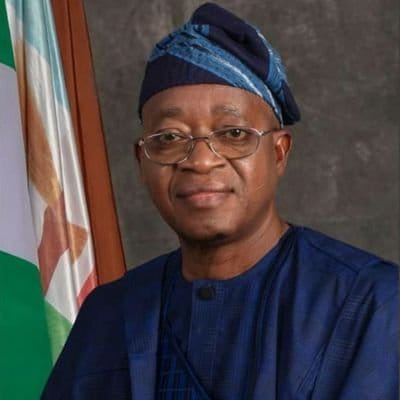
The Minister of Marine and Blue Economy, Adegboyega Oyetola, has called on Nigerian master mariners to deepen their involvement in policy development, seafarer training and maritime security to accelerate the growth of the country’s marine and blue economy.
Oyetola made the call through Dr. Bolaji Thompson, who represented him at the Annual General Meeting (AGM) of the Nigerian Association of Master Mariners (NAMM) held at Rockview Hotel, on 17 October, 2026.
The minister described master mariners as critical stakeholders whose professional expertise, commitment to safety and experience in ship operations would be essential to translating the Federal Government’s blue economy policies into tangible economic benefits.
He urged the association to strengthen its engagement with the Federal Ministry of Marine and Blue Economy in policy review, training standards, the fight against maritime crime and efforts to position Nigeria as a preferred maritime destination.
Oyetola said the establishment of the ministry under President Bola Ahmed Tinubu’s administration reflected a deliberate decision to place the marine and blue economy at the centre of Nigeria’s economic diversification strategy.
According to him, the sector offers significant opportunities for economic growth, employment generation and reduced dependence on oil, given Nigeria’s 853-kilometre coastline, extensive exclusive economic zone and more than 10,000 kilometres of inland waterways.
He identified the National Policy on Marine and Blue Economy, approved by the Federal Executive Council in May 2025, as the framework for coordinating activities across the sector and unlocking its economic potential.
The policy targets an annual growth rate of seven per cent and the creation of at least 100,000 jobs annually, with the goal of generating one million direct and indirect jobs by 2034.
Oyetola said the policy also prioritised inclusive participation, with provisions targeting 50 per cent of new jobs for youths aged 18 to 35 and 70% for women and people with special needs. He explained that the policy extended beyond shipping to cover fisheries and aquaculture, offshore energy, marine biotechnology, coastal tourism, renewable ocean energy and maritime security, creating opportunities across the maritime value chain.
On the ministry’s performance, Oyetola disclosed that revenue generated by agencies under its supervision rose from approximately ₦700 billion in 2023 to more than ₦1.83 trillion in 2025, representing an increase of about 160 per cent. He attributed the growth to ongoing reforms and improved confidence in the sector’s regulatory environment, adding that the government was working to strengthen the contribution of maritime activities to the national economy.
On maritime security, the minister said Nigeria had sustained a piracy-free record in the Gulf of Guinea for more than three years, attributing the achievement to the Deep Blue Project and the collective efforts of maritime stakeholders.

He noted that the country’s maritime security gains had helped restore international confidence in its waters and contributed to Nigeria’s election into Category C of the International Maritime Organisation (IMO) Council in November 2025, the country’s first election to the category in 14 years.
The minister also highlighted ongoing rehabilitation works at the Apapa and Tin Can Island ports, alongside improvements in fisheries production, which he said had increased from 1.1 million to 1.4 million metric tonnes. He added that the ministry was pursuing expanded sea-time training and certification partnerships to develop Nigerian seafarers capable of competing in the global maritime labour market.
Addressing the professional responsibilities of master mariners, Oyetola said their technical expertise and experience were indispensable to effective regulation, improved safety standards and the development of a skilled workforce for the sector. He urged members of NAMM to contribute to mentoring younger seafarers and promoting professional standards that would strengthen confidence in Nigerian shipping.
The minister reaffirmed the ministry’s readiness to collaborate with the association, stressing that the development of the blue economy required sustained cooperation between government, maritime professionals and other industry stakeholders. He maintained that the success of the national policy would depend not only on government commitments but also on the active participation of professionals with the knowledge and experience to implement its objectives.






One Comment