

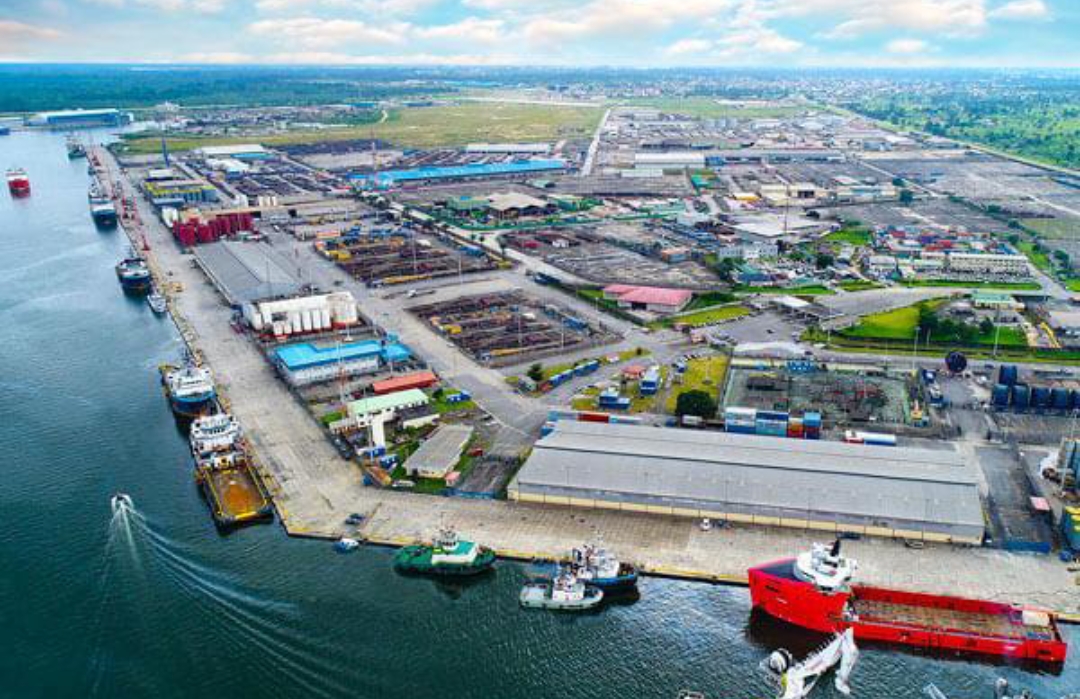
The Onne Port Complex is rapidly consolidating its position as one of Nigeria’s fastest-growing export gateways, with rising shipments of locally manufactured products, world-class logistics infrastructure and sustained investments by the Nigerian Ports Authority (NPA) boosting the country’s non-oil export drive.
At the centre of this transformation is the export of urea through OIS Indorama Ports Limited (OIPL), a subsidiary of Indorama Eleme Fertilizer & Chemical Limited. The company ships fertiliser to major international markets, including the United States, Latin America, Poland and India.
Figures made available during a facility tour by members of the Maritime Correspondents’ Organisation of Nigeria (MARCON) showed that urea exports through the terminal increased from 1.8 million tonnes in 2024 to two million tonnes in 2025. The company is targeting exports of more than three million tonnes in 2026.
The projected increase carries significance beyond the port. According to the Nigerian Export Promotion Council (NEPC), Nigeria recorded a historic US$6.1 billion in non-oil exports in 2025, with urea emerging as the country’s second-largest non-oil export commodity after cocoa, contributing about US$1.29 billion in export value.
NEPC data identified Indorama as Nigeria’s largest non-oil exporter in 2025, accounting for 13.13 per cent of total export value, while Dangote Fertilizer Limited ranked second with 8.41 per cent. The figures underscore the growing importance of fertiliser exports to Nigeria’s economic diversification strategy.
For Onne Port, which hosts OIPL within its industrial ecosystem, the projected export of more than three million tonnes of urea this year would further strengthen its role as one of West Africa’s leading fertiliser export gateways and enhance Nigeria’s standing in the global fertiliser market.
Speaking during the tour, the Port Manager of Onne Port Complex, Abdulrahmon Hussain, said sustained investments by the NPA in infrastructure and digital technology were improving operational efficiency and positioning the port for increased export activities.
Hussain, who was represented by the Traffic Manager, Surajudeen Abolade, said Onne’s strategic location, deep-water facilities and the presence of the Oil and Gas Free Zone continued to attract export-oriented industries.
“Onne’s strategic location, deep-water facilities and the presence of the Oil and Gas Free Zone have continued to attract export-oriented industries, making the complex a critical gateway for Nigeria’s non-oil exports,” he said.
He noted that while exports remain a major growth area, the port also serves as a strategic logistics hub for cargo destined for Nigeria’s eastern and northern markets, handling containers, general cargo, liquid bulk as well as oil and gas cargoes.
According to him, managing such diverse cargo streams requires efficient traffic coordination to eliminate operational conflicts and ensure seamless movement of cargo and vessels.

To improve efficiency, Hussain said the NPA introduced an electronic call-up system that has significantly streamlined truck movement into the port, reduced human interference and strengthened cargo security.
He explained that all trucks heading to the port are first required to report at a designated truck park outside the port corridor, where they are issued Radio Frequency Identification (RFID) tags before gaining access to the terminals.
The port manager added that cameras strategically installed across the complex monitor and record truck movements from entry to exit, providing real-time tracking of cargo and improving security across the logistics chain.
Beyond digital innovation, Onne’s operational model has also contributed to its growing competitiveness. The port operates on a 24-hour basis, ensuring uninterrupted cargo handling and faster vessel turnaround, while its deep-water channels enable it to receive some of the largest vessels ever to berth in Nigeria.
Hussain also disclosed that only about 49 per cent of the port’s land area has so far been developed, leaving more than half of the complex available for future expansion to accommodate new terminals, industries and logistics facilities as cargo volumes continue to grow.
With export volumes rising, industrial activities expanding and the NPA continuing to modernise infrastructure and automate operations, Onne Port is increasingly evolving beyond its traditional role as an oil and gas logistics hub into one of Nigeria’s most important gateways for non-oil exports and regional trade.





One Comment