

BUA Group is investing about $85 million to expand its Ports and Terminals facility in Port Harcourt, a move designed to handle more than two million tonnes of imported raw materials annually for the company’s rapidly growing food business.
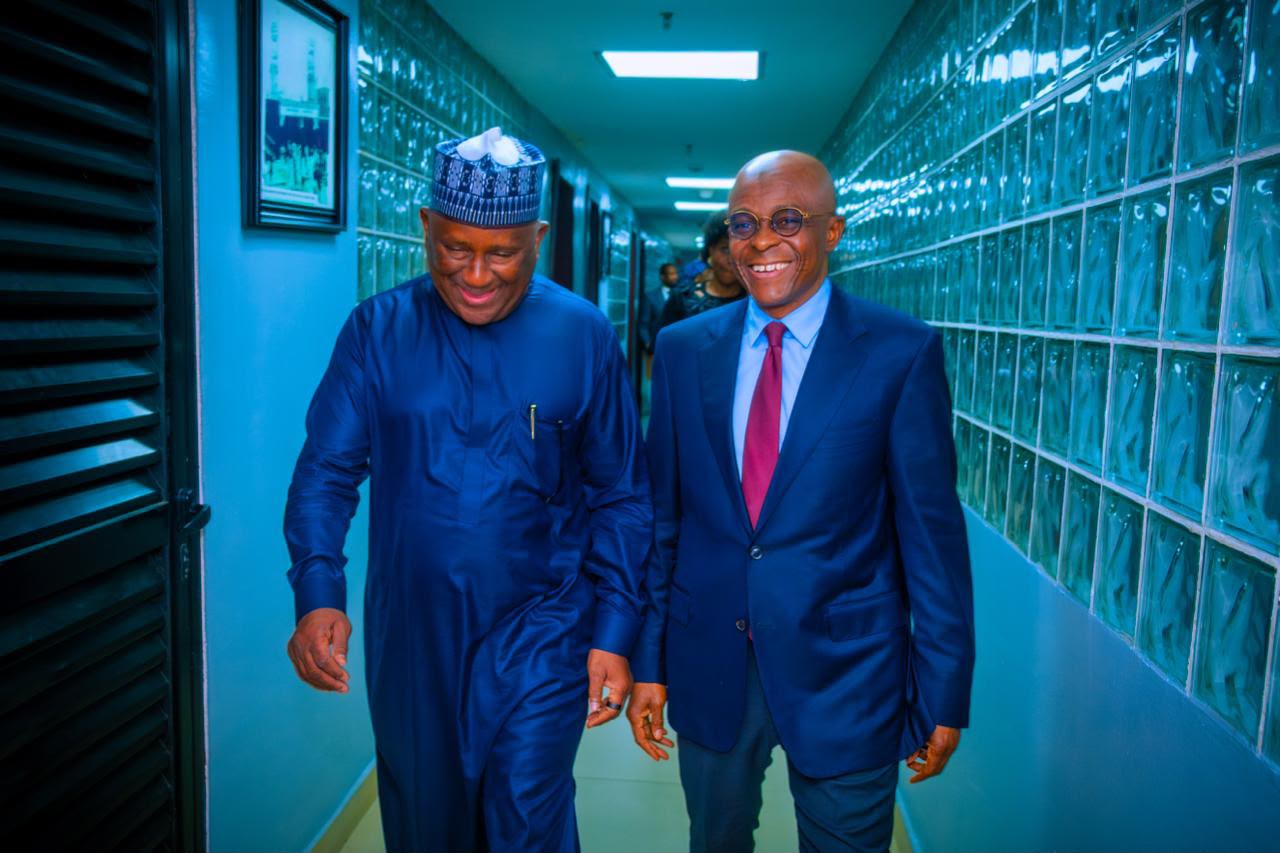
Chairman Abdul Samad Rabiu disclosed the figure during a visit to the Managing Director of the Nigerian Ports Authority (NPA), Dr Abubakar Dantsoho, at the Authority’s headquarters in Lagos. The meeting served both as an appreciation call and a progress briefing on the project.
“We’re here to, first of all, thank the MD and his team for the support we’re getting, and also to brief NPA and the management on the progress we’re making as regards the expansion of our BUA Ports and Terminals in Port Harcourt,” Rabiu said.
“We’ve gone very far, and we thought it’s important for us to come brief the management and also ask for additional support, and I’m happy that the MD and his team have promised that they’ll continue to give us all the necessary support.”
Rabiu explained that the expansion is critical to the major growth programme underway at BUA Foods. Once completed, the company expects to import nearly two million tonnes of raw materials into Port Harcourt each year.
“For that we need a terminal, we need a facility,” he stated. The port expansion alone is valued at about $85 million and will deliver roughly 600 metres of quay frontage, significantly increasing the company’s cargo-handling capacity.
The enlarged terminal, he noted, will strengthen BUA’s logistics backbone as the group expands across food, cement, mining, infrastructure and other industrial segments. Rabiu used the occasion to underline a broader national challenge: despite being Africa’s largest economy, Nigeria still lags in modern port infrastructure. He praised the current NPA leadership for its competence and thanked President Bola Tinubu for the appointments that made the present collaboration possible.
Reflecting on the facility’s history, Rabiu recalled that the terminal’s acquisition rights had once been under threat of revocation. “I remember that at a point even that terminal acquisition was revoked, but look at us, we are now here, and we’re getting all the support that we need from the management,” he said.
NPA Sees Double-Digit Growth Ahead
Responding, NPA Managing Director Dr Abubakar Dantsoho described the investment as a major boost to trade and the development of Nigeria’s eastern ports. He projected double-digit growth in cargo throughput and revenue once the expanded facility comes fully on stream.
“He’s a major stakeholder for many years,” Dantsoho said of Rabiu. “And what he’s doing for us is something that is naturally expected of us to put together, to collaborate with them… especially expanding in the eastern ports.”
The MD noted that BUA has already invested heavily in Lagos and is now committing substantial resources to Port Harcourt. Higher volumes, he said, would translate into greater export and import capacity and higher value for the government.
“We are going to expect that we are going to have more volumes. Once you have volumes, then you have more value, then more dollars and more naira will come,” Dantsoho stated. He estimated that the development could deliver growth in the region of 13–14 per cent, describing the figure as “a very fantastic thing to happen.”
Dantsoho also pointed to recent recognition of Nigerian ports. Just two months earlier, Tin Can and Apapa had been ranked by S&P and the World Bank among the 20 most improved ports in the world. Progress of this kind, he stressed, depends on closer collaboration between the Authority and private investors—an approach he said President Tinubu has actively encouraged.
Ports as Enablers of Special Economic Zones
The same theme of infrastructure as a strategic national asset featured prominently at the Maritime Correspondents’ Organisation of Nigeria (MARCON) 2026 Annual Conference held at Hotel Presidential in Port Harcourt. Speaking on the theme “Special Economic Zones as Catalysts to Sustainable Blue Economy,” Dantsoho ,represented by Rivers Port Complex Manager, Mrs Kenechi Okezie, stated that efficient ports are indispensable to the success of Special Economic Zones.
“A Special Economic Zone without an efficient port system is much like an airport without a runway: the vision may be compelling, but its potential can never be realised,” he said.
Ports, he insisted, should be viewed not merely as places where ships berth but as platforms that stimulate manufacturing, support exports, expand trade and create jobs.
The NPA is pursuing rehabilitation and modernisation of facilities, continuous channel maintenance, digital transformation through the Port Community System (a step toward the National Single Window), multimodal connectivity and public-private partnerships. Inland Dry Ports, he added, will help extend port services to inland industrial clusters and SEZs. The Lekki Deep Sea Port was cited as a successful model of the kind of collaboration needed.
“When our ports become more efficient, our industries become more competitive; when our industries become more competitive, investment grows; and when investment grows, jobs are created, exports expand, and national prosperity follows,” Dantsoho concluded.
Together, the BUA expansion and the NPA’s broader push for modern, investor-friendly port infrastructure signal a clearer focus on the eastern ports and their potential role in Nigeria’s industrial and blue-economy ambitions.





Finally found a reliable link that actually works without any lag. The login process is super straightforward and secure. Cheers to perabetcasinologin.