

How Awareness Gap , Poor Maintenance Culture Slow Down CNG Expansion in Nigeria — Imoukhuede

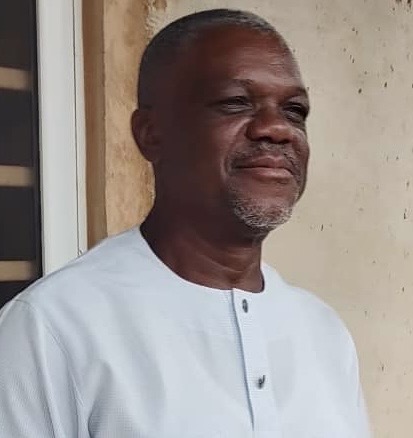
In this exclusive interview, the Chief Technical Officer of Portland Gas Compressed Natural Gas (CNG) Training and Refill Station, Mr. Daro Imoukhuede, shares deep insights into Nigeria’s growing CNG conversion programme. He reflects on key issues shaping adoption, including vehicle maintenance culture, financing models, and workforce development, which continue to influence the pace of CNG expansion in the country.
(Q) May we know you?
My name is Daro Imoukhuede. I’m the Chief Technical Officer for Portland Gas Limited.
(Q) Two years ago, so many Nigerians were skeptical about CNG.Also, looking back today, what would you say about those concerns, were they justified or misplaced?
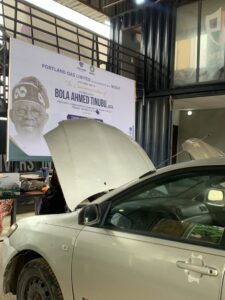
Most of it were misplaced. Most of the challenges we encounter stem from the condition of the vehicles brought in for conversion. Unfortunately, many of the cars presented for CNG conversion are already in poor mechanical condition, with some bordering on being unroadworthy.
After completing the conversion, we often find ourselves dealing with pre-existing mechanical issues that have nothing to do with the CNG system itself. These problems tend to recur, creating the impression that they are conversion related when, in reality, they originate from the vehicle’s underlying condition.
Another major concern is the lack of a strong maintenance culture among many vehicle owners and drivers. As a result, a significant number of the vehicles brought for conversion are not adequately maintained and in many cases, are not up to 80 percent suitable for CNG conversion without first undergoing necessary repairs and servicing.
(Q) The last time I was here, converting the car here costs a million naira and the center was converting about five to six cars daily. What is the current volume of conversion and how much does it cost now?
The current volume of conversions remains steady, with our center handling between four and six vehicles daily. Interest in CNG conversion continues to grow, driven largely by government intervention and support programs aimed at encouraging the adoption of alternative fuel solutions.
As a conversion center licensed under the Presidential CNG Initiative (Pi-CNG), we work closely with the government in implementing the programme. The government provides conversion kits and refers vehicle owners and drivers to licensed centers like ours for the installation process. This arrangement significantly reduces the financial burden on motorists.
If vehicle owners were to purchase the same conversion kits independently from the open market, the cost could range between ₦900,000 and ₦950,000 or more, depending on the vehicle type and kit specifications. However, through the government’s intervention, the cost to beneficiaries is substantially lower, making CNG conversion more accessible and affordable for a larger segment of the population.

(Q)At what percentage of converted cars return for adjustments, maintenance or troubleshooting after installation? What does this reveal about user practices and system reliability?
One of the biggest challenges we face is the lack of a strong vehicle maintenance culture among many motorists. We frequently receive complaints from customers who assume that every fault that develops after a CNG conversion is related to the CNG system. In reality, many of these issues have nothing to do with the conversion itself. For instance, we once had a customer who believed the CNG installation had caused his vehicle’s remote locking system to stop working, only for us to discover that the problem was simply a weak battery in the remote key fob.
Many drivers continue to operate their vehicles until a major fault occurs. As long as the car starts and moves, little attention is paid to routine maintenance. While vehicle owners regularly refill their fuel tanks, they often neglect other critical components of the engine that are essential for efficient performance and reliability.
Components such as spark plugs, ignition coils, filters, and other engine parts must work in harmony for the vehicle to function properly. These parts do not require daily maintenance, but they do need periodic inspection and replacement. Unfortunately, when these components are neglected, performance issues begin to emerge, and many motorists mistakenly attribute them to the CNG system.
As a result, vehicle owners often return to our center seeking solutions to problems that are unrelated to the conversion. Our diagnostic process frequently reveals underlying mechanical issues that existed before or developed independently of the CNG installation. We then advise owners on the repairs and maintenance their vehicles require, emphasising that proper vehicle upkeep is essential to achieving the full benefits of CNG technology and ensuring a smoother ownership experience.
(Q) Have you noticed any gap between government’s projection for CNG adoption and what is happening on the ground? If yes, where do you think the disconnect lies?
A major challenge facing the CNG conversion programme is low public awareness of government initiatives designed to support adoption. Many vehicle owners and drivers who visit our center do so simply to make inquiries, often with little or no understanding of the available schemes or eligibility requirements. Most of these individuals are unaware that the government has structured programmes to make conversion more accessible, particularly for commercial drivers and ride hailing operators.
During consultations, we typically engage visitors by asking questions about their occupation and how they use their vehicles. In many cases, we discover that they qualify for specific government support but were never informed about it. As a licensed conversion center, we do not collect payments on behalf of the government; rather, we are compensated for our labor, while the government provides the kits and manages the subsidy framework. Although the kits are no longer entirely free, the cost has been significantly reduced and can now be paid in installments, making the programme more affordable.
Despite these efforts, awareness remains limited, and many beneficiaries only learn about the initiative after physically visiting our center. Even among those who are informed, information is not always widely shared, as some prefer to secure their own benefits first before telling others. This situation highlights the urgent need for stronger publicity and public education to ensure that more people understand and can access the government’s CNG conversion support programme.
(Q) Looking ahead, what policy measures, investments, or incentive would you like to see from the government and stakeholders to accelerate Nigeria’s transition to CNG?
The government should consider allowing and actively encouraging financial institutions to participate more directly in the CNG conversion programme by introducing a structured “buy now, pay later” system. Through the banking and financial ecosystem, there would be proper documentation and tracking of beneficiaries receiving financing. In this model, financial institutions would pay upfront for the conversion kits and all required components, while the end users repay the institutions over an agreed period.
This approach would significantly accelerate adoption, as many vehicle owners do not have the capacity to make full upfront payments. However, if they are given the option of flexible installment payments, more people are likely to embrace the transition to CNG. Improved accessibility through financing would remove one of the key barriers currently limiting wider participation.
While the government’s current initiative has already made important progress in supporting conversion, there is a growing expectation that over time, it will transition away from direct involvement. Eventually, financial institutions and private sector players are expected to take over greater responsibility in financing and scaling the programme sustainably.
(Q) What does the future of CNG look like in Nigeria and in the next five years, what role do you think Portland Training Centre will be playing?
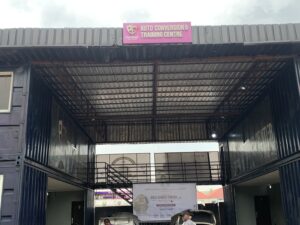
The future of CNG in Nigeria looks very promising, especially as the country continues to explore cleaner, more affordable alternatives to petrol and diesel. In the next five years, I see Portland Training Centre playing a central role in developing a skilled workforce for the CNG sector.
When people walk into the center expressing interest in training, they are immediately guided into the process and introduced to the practical requirements of CNG conversion work, but here’s something important to understand: not everyone learns at the same pace.
Some trainees are naturally fast learners. If you are attentive and committed, you can complete the training within five to six days. However, if you need more time to fully grasp the process, an additional week may be required.
For example, I once had a trainee who already had some basic mechanical knowledge. Within just three to four days, he was able to understand the system thoroughly. I even assigned him an old vehicle to work on independently, and since then, he has successfully handled two vehicles on his own. On the other hand, some trainees require two to three weeks before they are fully confident and competent.







osmctz