
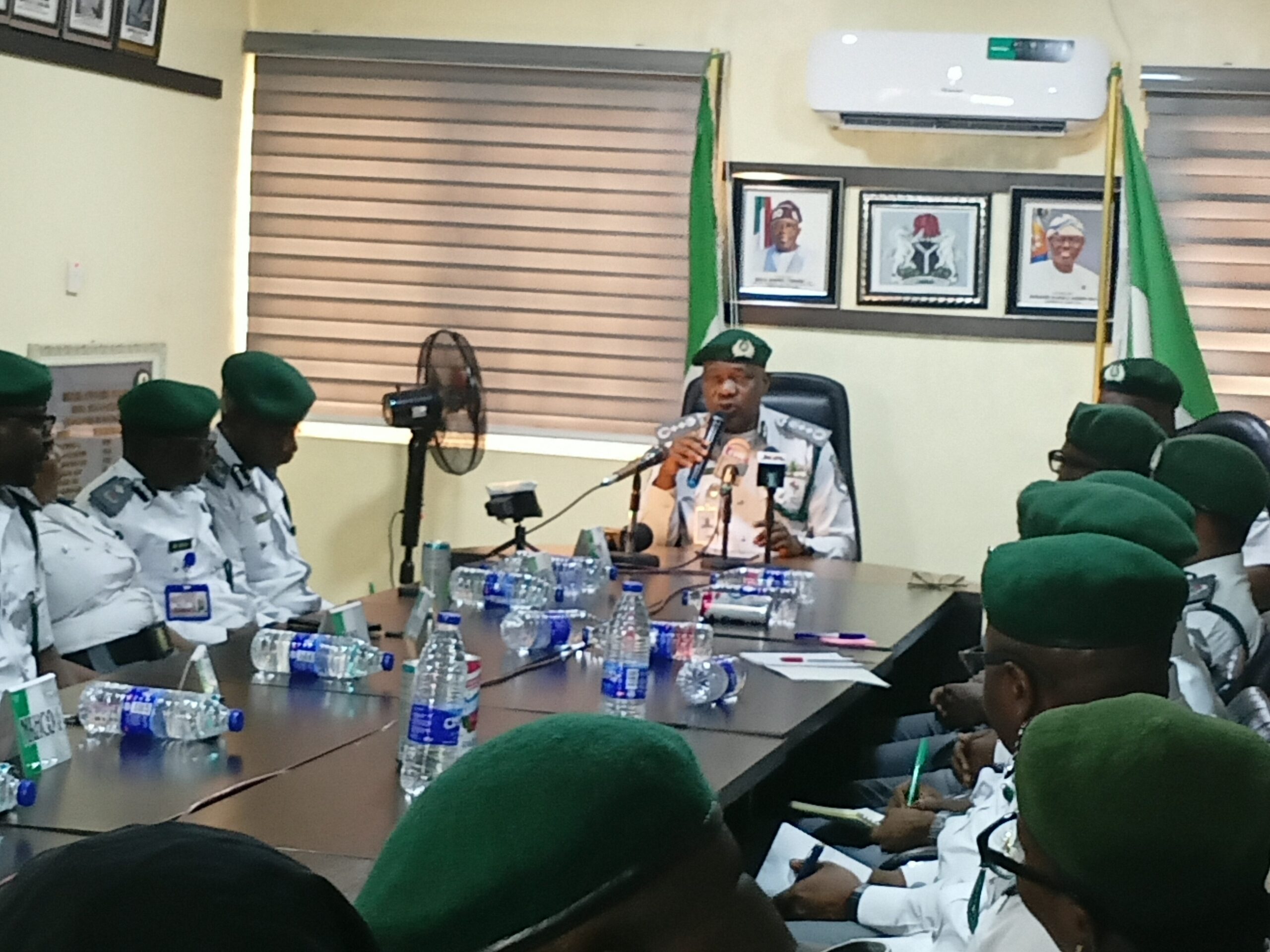
The Comptroller-General of the Nigeria Customs Service (NCS), Bashir Adewale Adeniyi, has announced plans to strengthen monitoring of outbound cargo and passenger baggage at Nigeria’s international airports to curb the export of illicit and non-compliant goods.
Adeniyi made this known during a working visit to the Murtala Muhammed Area Command of the Service in Ikeja, Lagos, where he was warmly received by officers and men of the command.
While interacting with journalists during a visit to the airport cargo facility, he expressed concern over repeated incidents in which goods exported from Nigeria were intercepted abroad for violating regulatory requirements or posing risks to public health.
According to him, such incidents have damaged Nigeria’s reputation in international trade and raised questions about the country’s export control mechanisms. He recalled a case about a year ago in which a Nigerian traveller was arrested in the United Kingdom for transporting smuggled cigarettes from Nigeria, a development that attracted global attention after it was reported that the goods had been cleared for export.
Adeniyi noted that Nigeria’s international airports have become increasingly important to global supply chains due to the growth of non-oil exports and expanding air cargo logistics.

“These gateways connect Nigerian businesses to markets across Africa, Europe, Asia and the Americas,” he said, adding that protecting the integrity of these routes is essential for the country’s economic interests.
He reiterated that the NCS remains committed to facilitating legitimate trade while ensuring that criminal networks do not exploit outbound cargo routes and passenger baggage channels.
According to him, intelligence reports and cooperation with international enforcement partners have revealed attempts by illicit actors to move regulated items through Nigeria’s air transport routes.
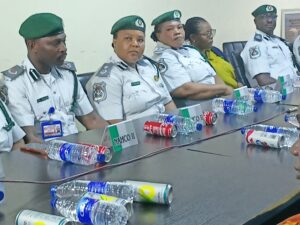
He listed some of the sensitive goods often targeted by traffickers to include protected wildlife species and derivatives, precious minerals, cultural artefacts and other regulated commodities.
The CGC also pointed to the growing problem of counterfeit and substandard products, particularly cigarettes, tobacco products and alcoholic beverages produced in Nigeria but exported in violation of international standards.
Although some of these items may not fall under Nigeria’s export prohibition list, he explained that they often violate import regulations in destination countries. To address the challenge, Adeniyi said the Service is strengthening its monitoring and risk-management frameworks across international airports.
He added that Customs is enhancing scrutiny of cargo declarations, export documentation and passenger baggage to ensure compliance with international best practices. The Service is also expanding cooperation with global enforcement bodies such as the World Customs Organization, Interpol and mechanisms under the Convention on International Trade in Endangered Species to tackle transnational smuggling networks.
“These interceptions outside Nigeria’s jurisdiction highlight the need to strengthen export controls at the point of departure,” he said.
He explained that exporters, freight forwarders, logistics operators and travellers must comply fully with all customs procedures and export regulations. The CGC also reminded international travellers that duty-free allowances for items such as cigarettes and alcohol are limited, stressing that quantities beyond the approved limits must comply with customs regulations.
Adeniyi issued a stern warning to officers and other stakeholders against involvement in illegal export activities. He said any officer found to have aided or colluded in the unlawful export of goods would face severe sanctions, while other parties involved would also be investigated and prosecuted.
The Customs boss further noted that the Service would hold discussions with cargo terminal operators to ensure the deployment of modern non-intrusive inspection technologies, including scanners, at terminals where they are currently unavailable. He said the move would strengthen cargo screening processes and improve enforcement at Nigeria’s international airports.
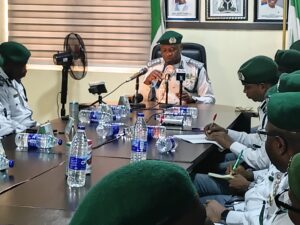
While welcoming the CGC, the Customs Area Controller of the command, Comptroller Godwin Otunla described the visit as a significant demonstration of Adeniyi’s commitment to effective leadership, operational efficiency and closer engagement with personnel across various commands of the Service.
According to the Controller, the visit provided officers of the command the opportunity to interact directly with the Comptroller-General, receive strategic guidance and further align their operations with the policy direction and reform agenda of the Service under his leadership.
He noted that since assuming office, Adeniyi has continued to reposition the Nigeria Customs Service through strategic modernisation initiatives, improved stakeholder engagement and stronger collaboration with other government agencies.
He added that these reforms have enhanced trade facilitation, boosted revenue generation and strengthened the Service’s capacity to secure the nation’s borders and safeguard the economy.






One Comment