

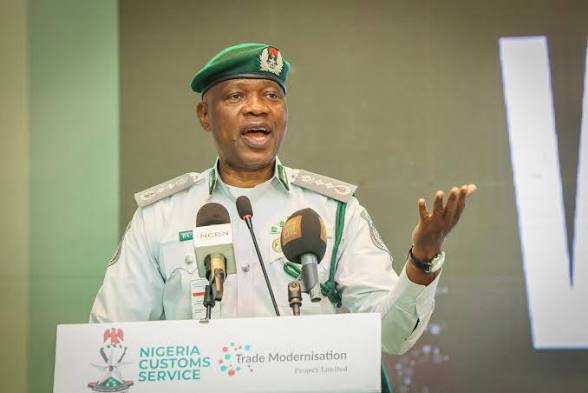
The extension of the tenure of the Comptroller-General of Customs, Bashir Adewale Adeniyi, by President Bola Ahmed Tinubu, has been widely interpreted as a vote of confidence in the transformative reforms currently underway in the Nigeria Customs Service (NCS).
Since assuming office in June 2023, Adeniyi has pursued an ambitious agenda centred on trade facilitation, revenue generation, technological innovation, stakeholder engagement and institutional modernisation. Through a combination of strategic reforms, digital transformation and intelligence driven operations, the Service has recorded significant milestones that have strengthened its contribution to national economic development and enhanced Nigeria’s standing within the global customs community.
The tenure extension comes at a critical period when the Service is consolidating reforms that have redefined customs administration and positioned the NCS as a key enabler of trade and economic growth.
Record Breaking Revenue Performance
One of the most notable achievements of Adeniyi’s administration has been its exceptional revenue performance.
In 2024, the Nigeria Customs Service generated a historic ₦6.105 trillion, surpassing its annual revenue target by more than 20 per cent and setting a new benchmark in the history of the Service. The achievement reflected the effectiveness of reforms aimed at improving compliance, blocking revenue leakages, strengthening intelligence driving operations and enhancing transparency across customs processes.
The momentum continued into 2025. During the first quarter of the year, the Service collected approximately ₦1.75 trillion from trade transactions valued at about ₦36.3 trillion, exceeding its quarterly benchmark by more than ₦100 billion.
These impressive figures underscore the growing impact of customs reforms on revenue mobilisation and economic management. They also demonstrate increasing confidence among importers, exporters, freight forwarders, shipping companies and other port users who now operate within a more transparent and efficient customs environment.
Transforming Trade Facilitation
Recognising the vital role of trade in national development, Adeniyi’s administration has prioritised initiatives aimed at simplifying customs procedures and accelerating cargo clearance.
Under his leadership, the Service has introduced measures designed to improve the ease of doing business and align Nigeria’s customs processes with international best practices. Among these initiatives is the Authorised Economic Operator (AEO) Programme, which rewards compliant businesses with faster cargo clearance and other trade benefits.

The administration also conducted Nigeria’s first comprehensive Time Release Study (TRS), a globally recognised tool for assessing cargo clearance efficiency. The study identified operational bottlenecks and provided a framework for improving trade facilitation across ports and border stations.
Advancing the National Single Window Initiative
Another major component of the Customs modernisation agenda under Adeniyi’s leadership is the advancement of the National Single Window initiative, a digital trade facilitation framework designed to connect relevant government agencies involved in import and export processes on a unified platform.
The initiative is aimed at simplifying trade procedures by enabling traders and other stakeholders to submit information and access regulatory services through a single electronic channel, reducing duplication, delays and unnecessary bureaucracy within the cargo clearance process.
Through improved data exchange and stronger collaboration among Customs and other regulatory agencies operating within the trade ecosystem, the National Single Window is expected to enhance transparency, strengthen risk management and promote faster cargo movement across Nigeria’s ports.
For the Service, the initiative aligns with Adeniyi’s vision of building a technology-driven customs administration where automation, information sharing and intelligence based decision making become central to operations.
The integration of digital systems such as the National Single Window, alongside other platforms, reflects a broader effort to create a seamless, efficient and globally competitive trade environment capable of attracting investment and supporting Nigeria’s economic growth.
Driving Customs Modernisation Through Technology
Perhaps the most defining feature of Adeniyi’s administration has been its commitment to customs modernisation through technology and innovation.
A major milestone was the introduction of the indigenous Unified Customs Management System, known as B’Odogwu. Developed as a homegrown digital solution, the platform is designed to automate customs procedures, improve efficiency, enhance transparency and reduce reliance on manual processes.
The deployment of B’Odogwu represents a significant step towards the full digital transformation of customs operations and reflects the administration’s commitment to leveraging technology to improve service delivery.
Harnessing Artificial Intelligence and Geospatial Technology
Beyond B’Odogwu, Adeniyi’s administration has embarked on one of the most ambitious technological transformations in the history of the Nigeria Customs Service through the adoption of artificial intelligence, geospatial intelligence and predictive analytics.
Recognising the limitations of traditional border surveillance methods, the Service has embraced advanced technologies including Geographic Information Systems (GIS), satellite imagery, drones, remote sensing and AI-powered monitoring tools to strengthen border security and combat smuggling.
These innovations have significantly enhanced Customs’ ability to monitor Nigeria’s vast and often porous borders. Through geo-fencing and digital mapping systems, officers can track activities around high-risk locations in real time, identify unapproved routes frequently used by smugglers and respond more effectively to emerging threats.
The deployment of drone technology has further improved surveillance capabilities by providing real-time aerial monitoring of difficult terrains, including forests, waterways and remote border communities. Combined with satellite imagery, these tools provide Customs with a comprehensive picture of activities across land, sea and air borders.
A major milestone in this regard was the development and pilot implementation of the Geoportal and n-Ceen platforms. These innovative systems integrate satellite feeds, drone imagery, intelligence reports and operational data into a unified digital framework that enables real-time monitoring and intelligence sharing across Customs commands.
The platforms have transformed enforcement operations from a largely reactive process into a predictive intelligence system capable of identifying suspicious patterns and anticipating smuggling activities before they occur. This shift towards intelligence-led enforcement has strengthened border security while improving operational efficiency and protecting government revenue.
In furtherance of its commitment to innovation, the Service also commenced specialised training programmes on Artificial Intelligence-driven revenue generation, remittances and reconciliation. The initiative reflects Adeniyi’s vision of a modern Customs administration powered by technology, transparency and data-driven decision-making.
By combining technological innovation with strategic capacity building, Adeniyi has positioned the Nigeria Customs Service as one of the leading technology-driven customs administrations in Africa, setting new standards for border management, trade facilitation and revenue administration.
Elevating Nigeria’s Profile on the Global Customs Stage
A defining moment in Adeniyi’s leadership came in June 2025 when he was elected Chairperson of the Council of the World Customs Organization (WCO), becoming the first Nigerian to occupy the prestigious position.
The election was a landmark achievement for both the Nigeria Customs Service and Nigeria as a whole. As the highest decision-making body of the World Customs Organization, the WCO Council plays a critical role in shaping international customs policies and standards governing global trade.
Adeniyi’s emergence as Chairperson was widely viewed as international recognition of the reforms being implemented within the Nigeria Customs Service and a reflection of the growing credibility of Nigeria’s customs administration on the global stage.
Beyond the prestige attached to the office, the appointment has positioned Nigeria to attract greater international interest in its maritime and trade infrastructure. It is expected to facilitate stronger technical cooperation, increased foreign investment, enhanced capacity-building opportunities and deeper collaboration with international partners seeking to support Nigeria’s trade modernisation agenda.
Strengthening Stakeholder Engagement
A key feature of Adeniyi’s administration has been its commitment to stakeholder engagement and collaboration.
Through regular consultations with freight forwarders, importers, exporters, terminal operators, government agencies and development partners, the Service has built stronger relationships and fostered greater cooperation in addressing challenges within the trade ecosystem.
This inclusive approach has improved compliance, enhanced transparency and strengthened public confidence in Customs operations.
Investing in Human Capital and Institutional Growth
Adeniyi’s reform agenda has also prioritised human capital development. Through training programmes, professional development initiatives and welfare focused policies, the administration has sought to equip officers with the skills required to operate effectively in an increasingly digital and technology driven trade environment.
This investment in capacity building has played a vital role in supporting the successful implementation of reforms and ensuring the sustainability of ongoing modernisation efforts.
A Vote of Confidence in Reform
President Tinubu’s decision to extend Adeniyi’s tenure reflects confidence in the transformative agenda currently underway within the Nigeria Customs Service.
The extension provides an opportunity for the Comptroller General to consolidate key reforms, deepen automation initiatives, strengthen trade facilitation measures, expand technology-driven enforcement strategies and sustain the impressive revenue performance recorded under his leadership.
His leadership has not only redefined the role of the Nigeria Customs Service in national development but has also positioned the institution as a model of modern customs administration in Africa and beyond.






mma9fl