
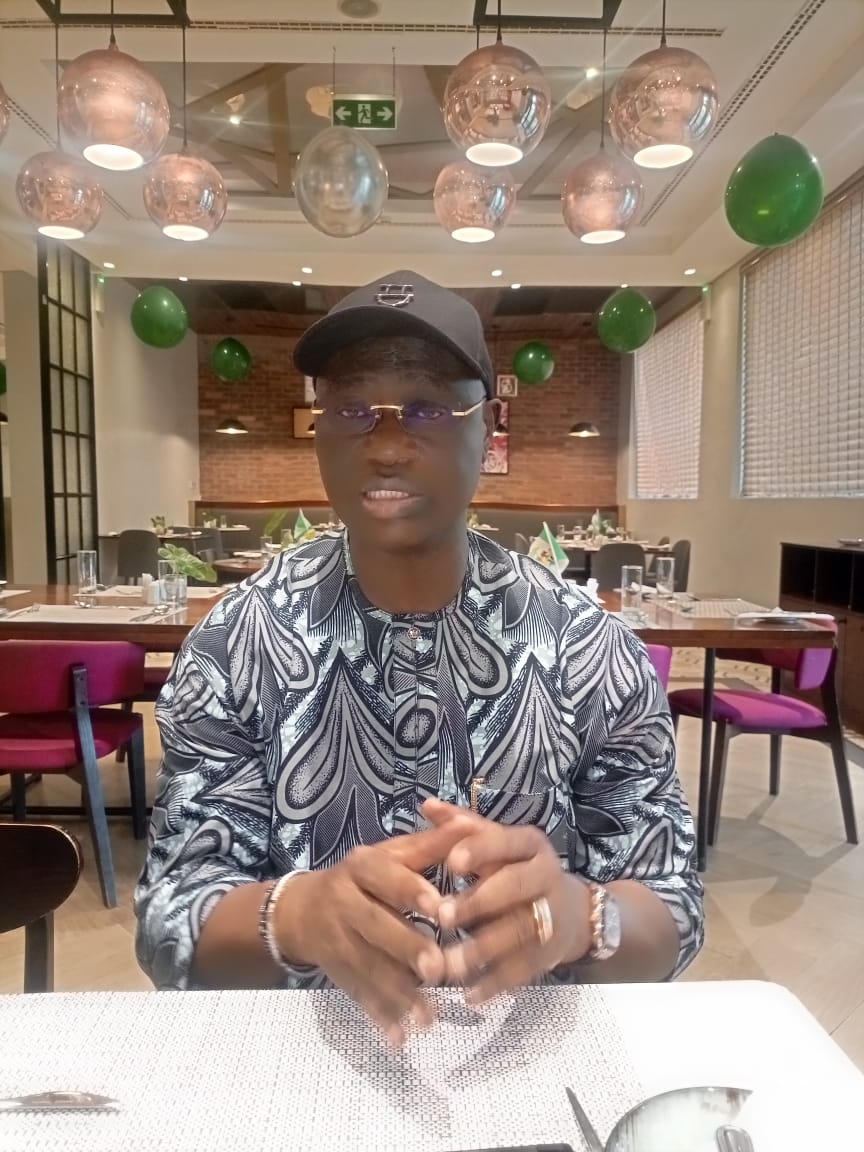
Comrade Adewale Adeyanju, former President-General of the Maritime Workers’ Union of Nigeria (MWUN) and Deputy President of the Nigeria Labour Congress has called President Bola Tinubu and Marine and Blue Economy Minister, Adegboyega Oyetola to prioritise solving the unpaid benefits of Nigeria’s aged seafarers
Speaking during a media interview interview in Lagos, Adeyanju expressed sadness over the plight of the abandoned senior citizens, who according to him, has contributed greatly to maritime growth and development in the country.
He said “I am very unhappy about this delay which has affected a lot of senior citizens that are our fathers and mothers in the union. Many of them have died while waiting for the money and more are still dying.
“I urge the federal government and all it’s concerned agencies to treat this issue as a national emergency.
“The payment only makes better meaning when it is received by the aged workers while they are still alive.
“I am using this medium to plead with the President, Asiwaju Bola Tinubu, the minister and all concerned with this matter to see it as a matter of life and death for the old and helpless seafarers who have served this great country”
He described the Minister of Marine and Blue Economy as a silent achiever after three years, while urging that port concession uncertainty, weak fishing oversight and foreign dominance of Nigerian waters are holding the sector back.
The ministry was carved out of the former Ministry of Transportation in August 2023. Reviewing its record from August 2023 to August 2026, Adeyanju credited Minister Adegboyega Oyetola and the ministry’s technocrats with Nigeria’s return to the Council of the International Maritime Organization after years outside it.
“That was a very big achievement,” he said. “For years we had not been on the Council of the IMO. He is a silent achiever, and it is a silent but great job.”
He said the praise should not be mistaken for satisfaction. The blue economy, he argued, can raise more revenue than many other ministries if shipping, fishing and related trades are properly supervised. Too many stakeholders, he said, still treat the ministry as a rebranded transport department and do not understand what the blue economy is.
“There should be more stakeholder engagement. I think they did some, but it did not go down well.”
On fisheries, Adeyanju said foreign operators are “killing” Nigeria’s fishing business while licences are issued without enough monitoring. He asked the minister to set up a stakeholder task force to raise revenue from the trade, and pointed to Morocco, which exports fish while Nigeria remains, in his words, “sea-backward.”
“God has given us land and sea. People are just saying ‘blue economy.’ They don’t even know what it is.”
He was sharper on port concessions. Some terminal-operator licences are due, he said, and extensions of four or five years have also run out, yet operators and their foreign partners do not know whether agreements will be renewed, reviewed or terminated. Workers who have spent ten, fifteen or twenty years with one operator now fear for their jobs.
He recalled the 2006 port concession, when assurances that Nigerian Ports Authority staff would be retained later gave way to layoffs after private operators said they could not match NPA pay. In his account, almost 30,000 NPA workers lost their jobs, alongside workers in shipping companies. Dockworkers who put in long service, he said, were earning about ₦200,000, and many have since been trained — including overseas, on reach-stackers and cranes — only to face fresh uncertainty.
“The morale is gone. Their fate is hanging,” he said. “If you don’t want me, tell me to go. If you want me, let’s renew it and sign a fresh agreement that favours Nigeria. The port belongs to Nigerians.”
He said indigenous terminal operators who have worked the ports for nearly twenty years should not be discarded without a clear decision, and that foreign partners may join them only on terms the government sets as owner of the ports. Without a public position, he warned, anxiety will keep eroding performance.
He credited the current MWUN President-General with steadying members and heading off protests, but said government must review and sign the contracts. After oil, he said, the ports are among Nigeria’s strongest revenue sources and should not be toyed with.
On the International Transport Workers’ Federation, Adeyanju thanked Oyetola for approving land for a multinational seafarers’ centre, and NIMASA Director-General Dayo Mobereola for seeing the allocation through.
He said the land on Marine Road was finally approved recently, and that ITF has released a grant first discussed about three years ago so foundation work can begin. He put the original grant at £400,000 and said Nigeria has pressed ITF to review the figure upward for what he described as a near-billion-naira project — the first of its kind granted to an African country, in his telling, because of Nigeria’s standing in the federation.
The centre, he said, is not an ITF project alone. Government and industry stakeholders are expected to join it, after which Nigeria should draw more ITF training for seafarers, dockworkers and trainers.
Adeyanju, long associated with calmer industrial relations in the ports, said that the approach was learned from earlier MWUN leaders and carried into ITF work over twenty to thirty years. He credited a predecessor, Tony, with opening overseas training — Dubai, South Africa and the United Kingdom — and said he built on that by dropping old styles
“Everything is not about violence. Without peace there will not be good things to come,” he said. “Anybody trying to introduce violence now in maritime will be shown the way out.” He said he remains in touch with the union he handed over, advises from outside the office, and is satisfied with the current executives.
MWUN’s four arms — NPA, dockworkers, shipping and seafarers — have different characters, he said, and the President-General must study them before speaking.
As an NLC deputy president, he described the congress as the umbrella for its affiliates, now about fifty-five, up from the high thirties. MWUN’s gain, he said, is the right to table a ports dispute and receive public support, not day-to-day interference. “If the shoe I wear is pinching me, I want them to help. If I have no problem, there is no need to tell NLC anything.”
The labour leader also addressed the transfer of fisheries departments from the Ministry of Agriculture into Marine and Blue Economy. Moving the department, he said, does not automatically place fisheries workers under MWUN. The union lost a jurisdictional case it inherited and appealed. Some workers, he said, now want to return to the maritime union. The ministry has intervened, and the NLC is ready to call a roundtable if direct talks fail — the same route used when MWUN and a food-and-beverage union settled out of court.
“We cannot poach into each other’s unions, but we can work together. A father has to judge what belongs to A and what belongs to B.”
On fleet ownership, he said Nigeria cannot claim to be the giant of Africa while foreigners dominate ships and fishing trawlers despite the cabotage rule.
He recalled that one administration left close to thirty-nine vessels which, after waiver periods of a year or two, ended up grounded. He urged the minister to sit with Nigerian shipowners , not a crowd assembled for television, and franchise even two to four vessels to them so seafarers have berths.
“If they are encouraged, more Nigerians will have jobs. It should not be politicised.”
He compared Nigeria with Morocco, Rwanda and Ghana, and said Tema and Takoradi still show what smaller maritime states do with their ports.
Nigeria, he said, has heard for three years that rehabilitation funds have been approved, including a claim by former NPA managing director Mohammed Bello-Koko of about one billion dollars, with work meant to start at Tin Can Island. Little has happened to show for this, he said.
President Bola Tinubu, he added, “means well for maritime” and has again approved modernisation of Calabar, Warri and other ports, as promised in the campaign. His worry is sequence. Lagos is the gold mine and should not be idled or endangered while it is rebuilt. Calabar and Warri, long stagnant and in need of dredging, should come first, alongside expansion, not only modernisation, and with security good enough to bring cargo back.
“You can start from the port that everybody agrees needs proper dredging. When the port is secure for business, people will come. If it is not, nobody will.”





One Comment