

Adalikwu Advocates Regional Maritime Technology Initiative as Africa Navigates Digital Transformation


The Secretary General of the Maritime Organisation of West and Central Africa (MOWCA), Dr. Paul Adalikwu, has called on African governments, maritime institutions and industry stakeholders to prioritise technology capacity building as a strategic imperative for maritime security, economic growth and regional integration.
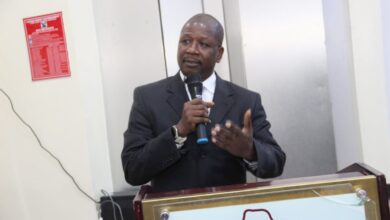
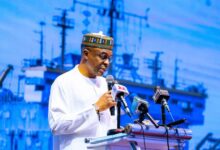
Delivering a presentation titled Future Trends in Emerging Maritime Technology Capacity Building at the 2026 Sea Power for Africa Symposium organised by the Nigerian Navy on 3rd June 2026 , in Lagos, Dr. Adalikwu said the maritime sector across West and Central Africa stands at a critical crossroads where emerging technologies are reshaping the future of shipping, trade, port operations and maritime security.
He noted that the Gulf of Guinea and the wider West and Central African maritime domain remain central to global trade but continue to face complex and evolving security threats, including piracy and armed robbery at sea, illegal, unreported and unregulated fishing, trafficking, transnational organized crime and increasing cyber threats targeting ports, shipping operations and maritime infrastructure.
According to him, the region is simultaneously witnessing an unprecedented wave of technological transformation driven by artificial intelligence, autonomous surveillance systems, smart ports, digital logistics and integrated maritime domain awareness platforms. He described the convergence of these risks and opportunities as a defining moment that requires strategic planning and coordinated action.
Dr. Adalikwu stressed that while governments and maritime agencies are increasingly investing in advanced technologies, the effectiveness of such investments would ultimately depend on the capacity of institutions and personnel to utilize, manage and sustain them. He argued that sustainable maritime security and operational efficiency are rooted in human and institutional capability rather than technology acquisition alone.
Speaking on emerging technology trends, he explained that artificial intelligence is increasingly being deployed to support predictive security operations, enabling maritime authorities to anticipate threats and improve decision-making. He noted that this development requires investment not only in technological systems but also in data governance frameworks, analytics capabilities and decision-support mechanisms.
On autonomous and unmanned systems, including drones and unmanned vessels, he said the technologies are transforming maritime surveillance and reducing operational costs. He urged policymakers to address issues relating to regulation, integration into national and regional frameworks and the development of local technical expertise needed to sustain such systems.
The MOWCA SG also emphasised that cybersecurity can no longer be treated merely as an information technology concern. He warned that the growing digitalisation of ports, vessels and logistics chains has exposed the maritime sector to new vulnerabilities and called for cybersecurity to be elevated to a strategic governance priority.
He further identified smart ports and digital trade corridors as critical drivers of efficiency, transparency and competitiveness within the global maritime industry. According to him, future capacity building programmes must extend beyond security agencies to include port authorities, customs administrations and maritime logistics operators responsible for facilitating trade and cargo movement.
A major focus of his presentation was the need to redefine maritime capacity building beyond conventional training programmes. He maintained that capacity building should no longer be viewed as periodic workshops or short-term interventions but rather as a comprehensive process of systems transformation capable of preparing maritime institutions for future challenges.
To achieve this objective, Dr. Adalikwu proposed a five pillar strategy for strengthening maritime technology capacity across West and Central Africa. The framework is designed to address human resource development, institutional modernisation, regional cooperation, strategic partnerships and policy leadership.

The first pillar focuses on human capital development through the integration of digital and technological competencies into maritime education and training institutions, the upskilling of existing maritime personnel and the development of interdisciplinary expertise that combines maritime knowledge with technology driven competencies.
The second pillar centres on institutional readiness through the modernization of governance structures, the establishment of technology and innovation units within maritime administrations, stronger inter-agency coordination mechanisms and the institutionalisation of data-driven decision-making processes.
The third pillar emphasises regional cooperation. Dr. Adalikwu noted that MOWCA provides a unique platform through which member states can pool expertise and resources, establish regional centres of excellence and harmonize standards and operational frameworks to address common maritime challenges.
The fourth pillar focuses on strategic partnerships involving the private sector, technology providers, academic and research institutions, development partners and international organizations, including the International Maritime Organization (IMO). He noted that such partnerships would be critical in bridging both the technology gap and the capacity gap facing many countries in the region.
The fifth pillar addresses policy and regulatory leadership. He advocated the development of forward looking regulatory frameworks covering autonomous maritime systems, data sharing and protection, cybersecurity standards, innovation governance and local content development, stressing that policy must lead technological advancement rather than lag behind it.
Adalikwu proposed for the establishment of a Regional Maritime Technology and Capacity Building Initiative under the Nigerian Navy. The initiative, he said, could support the creation of Centres of Excellence across sub-regions, facilitate standardized certification programmes, promote joint training and simulation exercises and encourage research and innovation tailored to African maritime realities.
He further emphasised that maritime technology capacity building extends beyond security concerns and is closely linked to economic transformation. According to him, strengthening technological capabilities across the maritime sector would help unlock the blue economy, enhance trade facilitation, attract investment, create employment opportunities for young people and deepen regional integration.





m6cmjv