

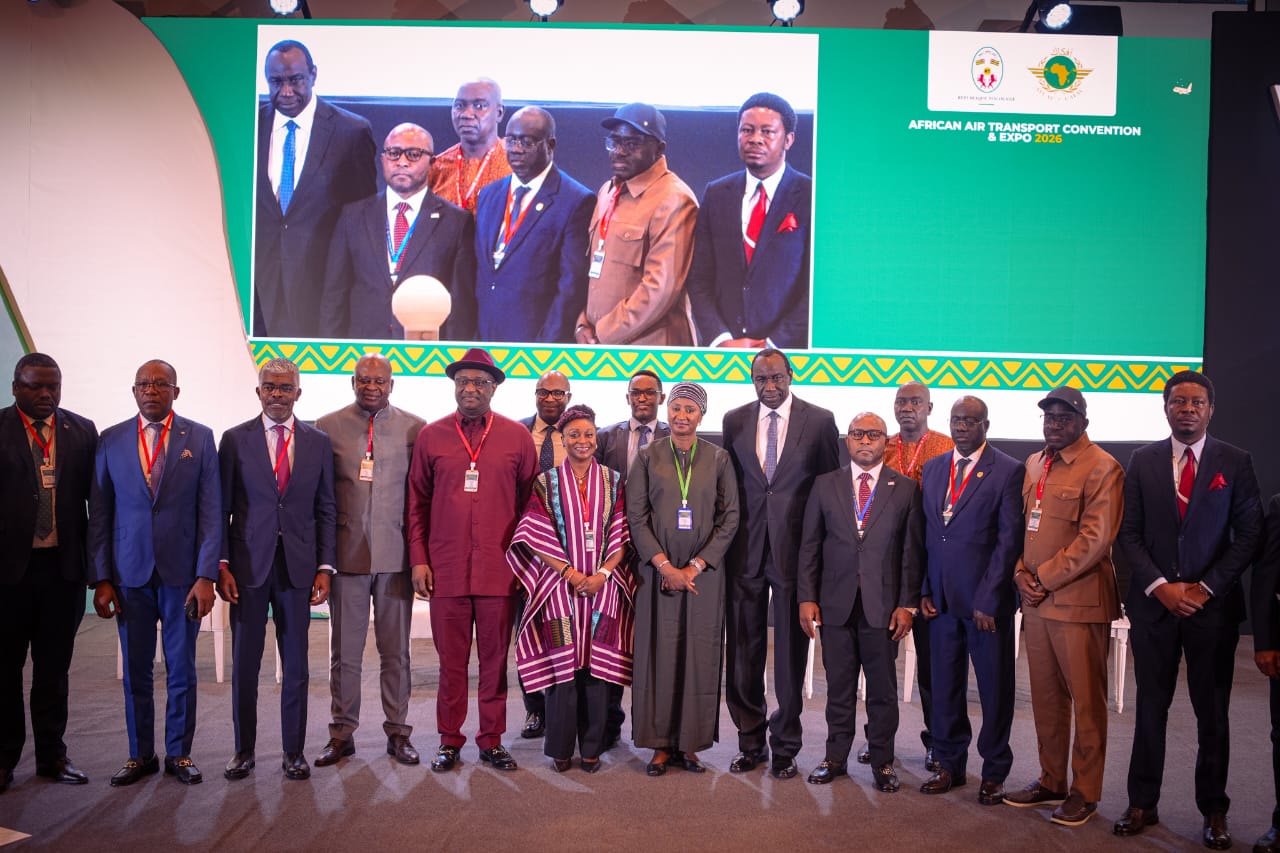
Nigeria has unveiled an ambitious plan to accelerate the implementation of the Single African Air Transport Market (SAATM), with Minister of Aviation and Aerospace Development, Festus Keyamo, declaring that the country will work over the next two years to transform West Africa into a more integrated air transport market.
Tunde Moshood, the Minister’s Special Adviser on Media and Communications who disclosed this in a press release said while speaking at the African Air Transport Expo 2026 in Lomé, Togo, Keyamo said African countries must move beyond signing aviation agreements and begin implementing measures that allow airlines to enjoy unrestricted access across the continent.
The declaration was one of the highlights of the continental aviation gathering organised by the African Civil Aviation Commission, where policymakers, regulators, airline operators and industry stakeholders discussed strategies for improving air connectivity and affordability across Africa.
Keyamo’s remarks came against the backdrop of a proposed $7 billion aviation transformation funding package announced by the African Development Bank, aimed at strengthening aviation infrastructure and connectivity on the continent.
Addressing a high-level panel on market access and SAATM implementation, the minister argued that enhanced connectivity remains central to achieving the African Union’s vision of economic integration and regional development.
According to him, easier movement of airlines across African countries would stimulate trade, tourism, investment and broader economic growth.
He stressed that the success of SAATM would depend not on the number of agreements signed but on the practical removal of restrictions that continue to limit air travel within Africa.
On the issue of air transport affordability, Keyamo reiterated Nigeria’s commitment to reducing operational costs for airlines and making air travel more accessible to passengers. He described aviation as a catalyst for economic development rather than a revenue-generating tool for governments.


The minister’s commitments were widely welcomed by participants at the expo, many of whom viewed Nigeria’s position as a significant step towards accelerating the implementation of SAATM and fostering a more competitive African aviation market.
Industry stakeholders said the proposed reforms, particularly the plan to treat West Africa as a single aviation market under the Banjul Accord Group framework, could significantly improve connectivity, reduce travel costs and increase passenger traffic across the sub-region.
The African Air Transport Expo brought together ministers, regulators, airport operators, airline executives and development finance institutions from across Africa to explore ways of transforming the continent’s aviation industry into a major driver of economic growth and regional integration.
“We must move from signatures to actual traffic rights. Over the next 24 months, Nigeria will streamline permits for African carriers, align air agreements, and lead the Banjul Accord Group (BAG) to progressively treat West Africa as a unified domestic market.
“The real test of our success is no longer how many declarations we adopt, but how many African routes we open, how many restrictions we remove, and how many passengers actually benefit.
“Aviation is an economic enabler, not a revenue collection point,” he said, noting that the Federal Government has approved a 30 per cent discount on statutory charges for domestic airlines, while efforts are ongoing to achieve VAT neutrality and eliminate multiple levies within the sector.”, he said.








r8y371