
By Feyisola Adeyeha
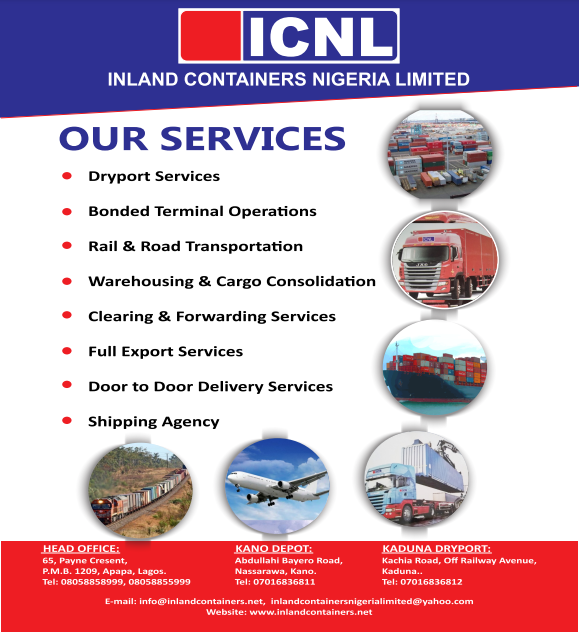
The Minister of Marine and Blue Economy, Adegboyega Oyetola has reiterated the need for seamless multimodal connectivity across Nigeria’s transport network, highlighting ongoing efforts to modernise ports, strengthen maritime security, and improve links between ports, roads, rail lines and inland waterways to drive economic growth.
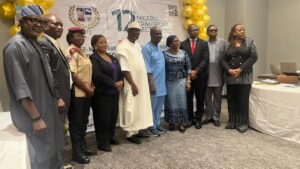
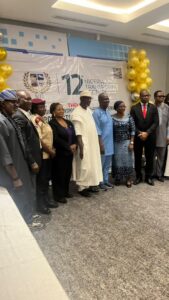
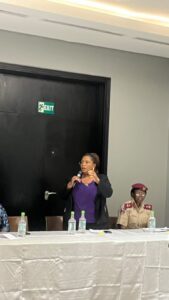
Speaking at the 12th Nigeria Transport Lecture held in Lagos on Thursday, Mrs. Abiodun Rasheedat, who represented the Minister underscored the strategic role of integrated transportation systems in enhancing efficiency, safety and national development.
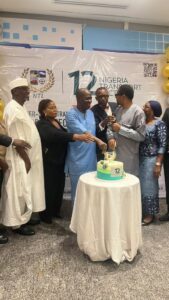
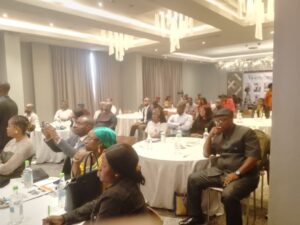
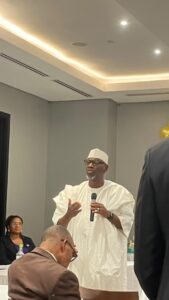
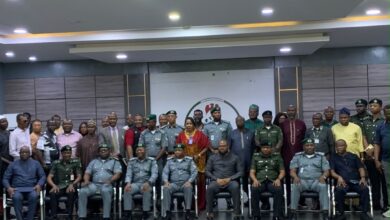
The lecture, organised by Transport Day Media at the Radisson Blu Hotel, Ikeja, brought together policymakers, regulators, industry leaders and stakeholders to deliberate on the theme, “Intermodal Transportation Safety in Nigeria: Prospects, Challenges and Contribution to National Growth.”
Rasheedat said the ministry is making significant progress in maritime security, port modernisation and the digitalisation of operational processes, while pursuing initiatives aimed at ensuring efficient connections between seaports, road networks, rail infrastructure and inland waterways.
According to her, improved multimodal connectivity remains critical to unlocking the full economic potential of Nigeria’s transport sector and creating a more efficient movement of goods and passengers across the country.
She noted that expanding inland water transportation offers multiple benefits, including reducing pressure on overstretched road networks, lowering transportation costs, creating employment opportunities and stimulating economic activities in coastal and rural communities.
The minister’s representative called for stronger public-private partnerships, wider adoption of technology and closer collaboration among stakeholders to address infrastructure deficits, capacity constraints and coordination challenges confronting the transport sector.
The Chief Executive Officer of the Council for the Regulation of Freight Forwarding in Nigeria (CRFFN), Mr. Kingsley Igwe, described efficient intermodal transportation as a necessity for a country of Nigeria’s size and strategic location.
He said integrated transport systems would strengthen connections between production centres, markets and consumers, thereby promoting regional development and sustainable economic growth.
Igwe highlighted the enormous investment requirements needed to transform Nigeria’s transport infrastructure, noting that a modern smart port capable of handling between 25,000 and 30,000 TEUs could cost as much as $20 billion.
Despite the challenges, he said Nigeria possesses significant potential to become a logistics hub for West and Central Africa, particularly for landlocked countries such as Niger and Chad, through which thousands of heavy-duty vehicles transit daily.
He also stressed the importance of technology in improving safety and operational efficiency, citing the deployment of Artificial Intelligence, the Internet of Things, GPS tracking systems, blockchain technology and advanced surveillance solutions.
According to him, these innovations have contributed to reducing piracy in Nigerian waters to near-zero levels while enhancing cargo monitoring and last-mile delivery operations.
Igwe advocated the adoption of a National Integrated Transport Policy to harmonise the country’s fragmented transport sub-sectors, eliminate regulatory overlaps and improve infrastructure planning, maintenance and data management.
Chairman of the event, Dr. Segun Musa, lamented that Nigeria loses an estimated ₦3.2 trillion annually to transport inefficiencies and infrastructure gaps.
He noted that road crashes account for more than 90 per cent of transport-related fatalities, while safer alternatives such as rail and inland waterways remain largely underutilised.
Musa urged stakeholders to move beyond identifying problems and focus on implementing practical solutions capable of transforming the transport sector into a catalyst for economic development.
Former Corps Marshal of the Federal Road Safety Corps, Boboye Oyeyemi, also spoke on road safety reforms, highlighting ongoing initiatives in Lagos and emphasising the need for modern, responsive regulatory frameworks that reflect operational realities.
At the end of the lecture, participants reached a broad consensus on the need to accelerate investments in rail and inland waterways, strengthen institutions, adopt technology-driven safety systems and implement a comprehensive national integrated transport policy.
Stakeholders expressed optimism that a more coordinated and interconnected transport network would improve safety, boost trade and support sustainable economic growth across the country.


aph0ln