


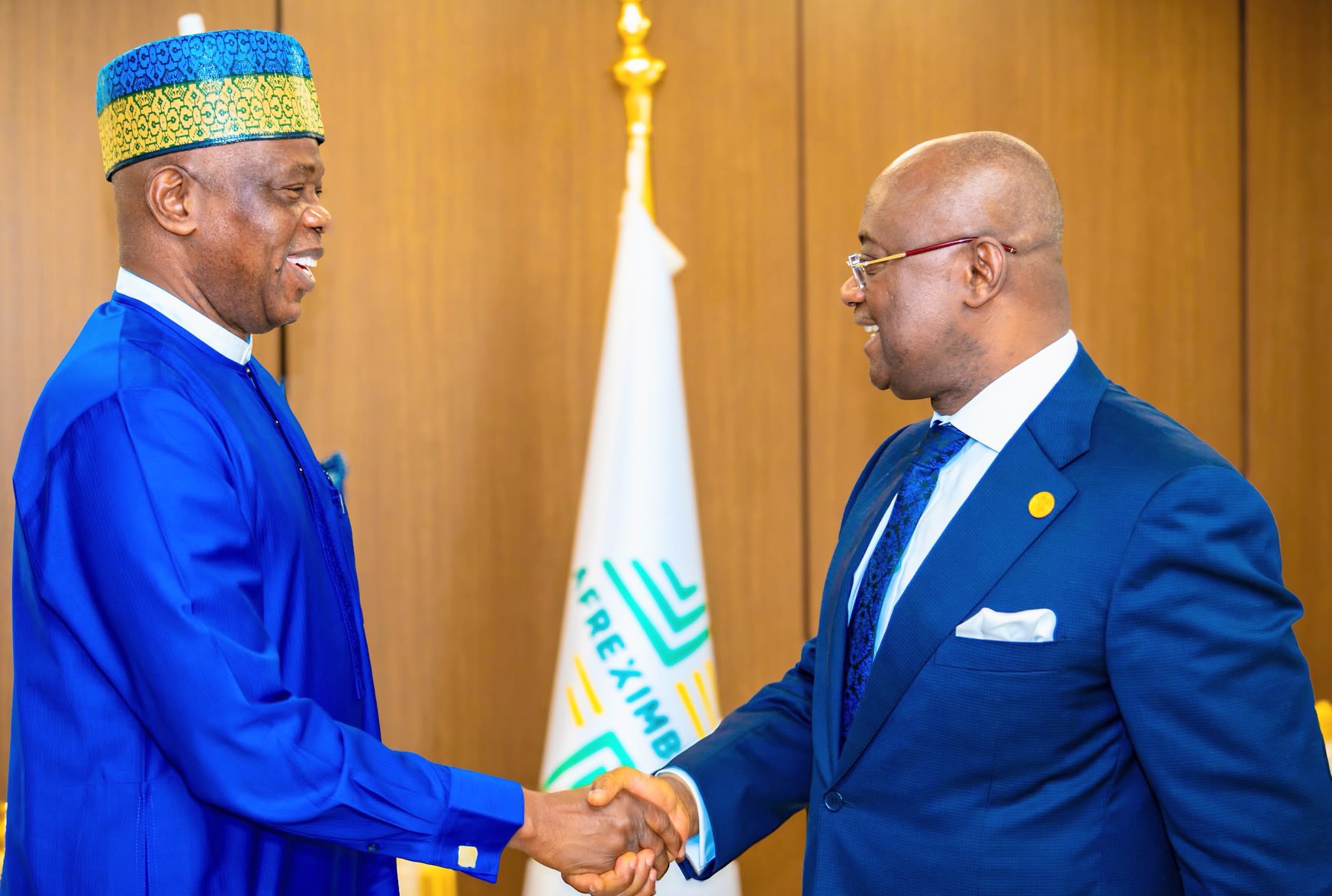
The Nigeria Customs Service (NCS) has intensified discussions with the African Export-Import Bank (Afreximbank) and the Customs administrations of Benin Republic and Cameroon on plans to modernise strategic border corridors to facilitate cross-border trade and advance the African Continental Free Trade Area (AfCFTA).
The discussions, led by the Comptroller-General of Customs, Bashir Adewale Adeniyi, held at Afreximbank’s headquarters in Cairo, Egypt, on October 12, 2026, followed a joint benchmarking mission to Beitbridge Border Post in Zimbabwe and technical assessments of the Mfum–Ekok and Sèmè–Kraké border corridors.
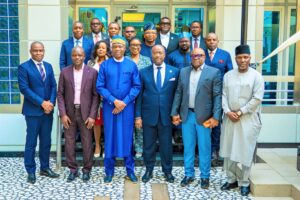 According to a press statement issued by Deputy Comptroller Abdullahi Maiwada, and National Public Relations Officer of the NCS, the initiative seeks to improve border infrastructure, harmonise Customs procedures, strengthen digital information exchange and enhance the efficiency of cargo movement across the three countries.
Participants examined priority interventions, including the provision of cargo scanners, weighbridges, access roads, reliable electricity, internet connectivity, traffic management systems and modern border-processing facilities.
The meeting also considered Afreximbank’s potential participation in the next Customs Partnership for African Cooperation in Trade (C-PACT) and progress towards regional and continental transit-guarantee arrangements.
A key component of the proposed modernisation programme is the Customs Declaration Exchange System (CDES), designed to facilitate secure information sharing among Nigeria’s B’Odogwu platform, Benin’s Customs Webb and Cameroon’s CAMCIS.
The system is expected to enable export information originating in one country to support the advance preparation of import-manifest information in the receiving country, reducing duplication and improving the predictability of cross-border transactions.
However, the receiving Customs administration will retain responsibility for validating information, conducting risk assessments, applying national regulations and authorising cargo clearance.
Although development and technical testing of the system have been undertaken, further configuration, technical integration, security checks and pilot acceptance are required before deployment. The assessments also identified operational challenges requiring urgent attention at the two border corridors.
At Mfum–Ekok, the identified gaps include unreliable electricity supply, inadequate connectivity and information technology equipment, cybersecurity concerns, limited technical support, scanner commissioning challenges and the need for improved coordination of single-stop border operations.
At Sèmè–Kraké, the challenges include incomplete joint procedures, inadequate real-time data exchange, non-functional cargo scanners and weighing facilities, traffic congestion, inconsistent operating hours and unclear responsibilities for maintaining shared infrastructure.

Drawing from the July 2026 benchmarking mission to Beitbridge, Zimbabwe, participants stressed the importance of integrating digital systems, pre-arrival processing, risk-based controls, cargo scanning, transit monitoring, electronic payments and effective institutional coordination into border operations.
To advance the initiative, Afreximbank proposed a two-stage approach beginning with independent engineering assessments and investment-cost studies at the two border posts.
This would be followed by the preparation of separate bankable project packages for the Nigeria–Benin and Nigeria–Cameroon corridors.
The proposed project-preparation process would include legal due diligence, financial modelling, transaction advisory services and the identification of appropriate financing and implementation arrangements.
Afreximbank also indicated that its Project Preparation Facility could potentially support the process, while technical partners TMP and Bergmans Security Consultants and Supplies Limited expressed willingness in principle to consider self-financing the preparatory work.
However, no final project cost, lending commitment, financing arrangement or implementation contract was established at the meeting.
Participants agreed on the need for direct site inspections, designated technical focal points and a one-, three- and six-month implementation roadmap, supported by a dated action matrix to guide subsequent engagements.
The Nigeria Customs Service reaffirmed its commitment to working with its counterparts in Benin and Cameroon, Afreximbank and other technical partners to develop sustainable solutions for the two border corridors.
The initiative is expected to improve cargo visibility, strengthen coordinated border management, reduce procedural bottlenecks and facilitate legitimate trade across regional borders, supporting the broader objectives of AfCFTA.
The statement was signed by the National Public Relations Officer of the Nigeria Customs Service, Deputy Comptroller of Customs Abdullahi Maiwada, PhD, mnipr, mniia, on behalf of the Comptroller-General of Customs.





One Comment