

Indorama MD, Mundra Points at Why Nigeria Must Convert Hydrocarbon Wealth into Industrial Power


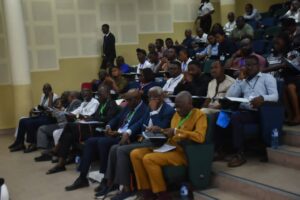
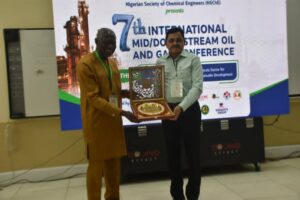
Nigeria possesses Africa’s largest natural gas reserves and the continent’s second-largest oil reserves, yet continues to import the bulk of its plastics, fertilizer intermediates and specialty chemicals. That paradox must end if the country is to industrialise, Manish Mundra, Managing Director of Indorama Eleme Fertilizer & Petrochemicals Ltd, told delegates at the 7th International Mid/Downstream Oil and Gas Conference.
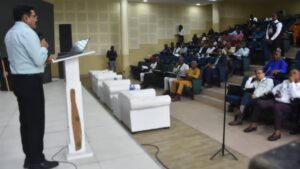
Speaking on 25 August 2026, Mundra argued that the arithmetic of midstream and downstream economics has shifted decisively in Nigeria’s favour. The Petroleum Industry Act of 2021, the removal of fuel subsidies and the rapid expansion of domestic refining capacity have reset investment signals. At the same time, population growth across West and Central Africa is lifting demand for polymers and fertilizers, while geopolitical disruptions east of Suez are making African production more attractive.
Mundra who was represented by Mr Upendra Singh, head of Fertiliser Manufacturing at Indorama Fertiliser,said “The question is no longer whether Nigeria has the resources to industrialise, It is whether we can convert them fast enough, at home.”

For decades the country exported raw hydrocarbons and imported finished goods made from them elsewhere. The value chain remains shallow. Vast volumes of gas and natural gas liquids are still flared, exported or under-processed instead of feeding domestic crackers. Limited polymer, fertilizer and specialty-chemical capacity forces heavy reliance on imports. Low research intensity and slow technology adoption further constrain efficiency and local content. Global buyers and lenders now price emissions and circularity into investment decisions, adding urgency to the need for cleaner industrial design.
Indorama Eleme itself offers a working demonstration that the transition is possible. The Eleme Petrochemicals complex was commissioned by the Nigerian National Petroleum Corporation in 1995 but never operated near design capacity. Privatised in 2006 and acquired by Indorama, the plant was turned around within a year. Polyethylene capacity has risen from 270,000 to 325,000 tonnes a year and polypropylene from 80,000 to 100,000 tonnes. Three world-class ammonia-urea fertilizer lines have been built in thirteen years; a fourth is under way. Capacity utilisation, which stood at just 5 percent in 2006, has reached near 100 percent. Domestic market share of polymers has climbed from 4 percent to roughly 34 percent, sustaining hundreds of Nigerian micro, small and medium enterprises that convert resin into packaging, pipes and other finished goods.
Mundra outlined four pillars for sector-wide repositioning. First is deeper integration: securing reliable gas feedstock through long-term sales agreements, debottlenecking existing plants, expanding converter capacity and improving pipeline and port logistics. Second is innovation treated as a plant-floor discipline—reliability engineering, digital twins, predictive maintenance, product diversification beyond commodity grades, and systematic building of Nigerian technical talent. Third is sustainability by design: ending routine flaring, cutting emissions intensity and creating circular pathways for plastics. Indorama has already completed eighteen of twenty-one greenhouse-gas reduction schemes that together will cut more than 480,000 tonnes of CO₂ a year, with further projects scheduled through 2027. Fourth is enabling policy: predictable gas pricing, full implementation of the Petroleum Industry Act, coordinated regulation and investment in shared infrastructure.

Petrochemical-grade gas is still constrained by availability, pricing and pipeline reliability. Power, roads and ports add cost and delay. Currency volatility raises the price of long-tenor capital. Policy consistency across agencies is incomplete. Security of pipelines and personnel in the Niger Delta continues to demand attention, while the technical skills pipeline struggles to keep pace with new capacity.
Mundra closed with a practical agenda. Government should sustain Petroleum Industry Act implementation and predictable gas-pricing frameworks while accelerating port and road access to industrial clusters. Regulators should streamline feedstock and expansion approvals. Development finance institutions and private investors should bring blended, long-tenor capital to de-risk integrated projects. Industry peers should co-invest in shared infrastructure rather than duplicate it.
Looking ahead, Indorama plans further expansion between 2026 and 2031: a fourth fertilizer line of 1.4 million tonnes of urea a year, a 1.75-million-tonne methanol plant, debottlenecking of the cracker to 500,000 tonnes of ethylene and a new 300,000-tonne high-density polyethylene unit, underpinned by additional gas-treatment capacity.
Nigeria,Mundra concluded, should power its industrialisation—not merely its export earnings. Coordinated action across policy, capital, technology and skills can convert natural endowment into lasting industrial value. The moment, he argued, will not wait.







One Comment