

The Nigeria Police Force has reaffirmed its commitment to enhancing safety and security across the nation’s waterways, stressing the need for stronger collaboration, technology deployment, and public compliance with safety regulations.
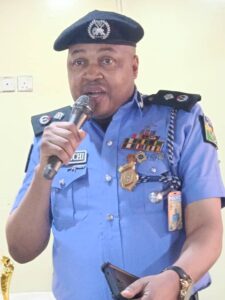 Speaking at the Annual Conference of the Association of Maritime Journalists of Nigeria (AMJON), a representative of the Assistant Inspector-General of Police, Maritime Police Command, DCP Udu Moses Ogechi, said Nigeria’s waterways remain critical to economic activities but are increasingly challenged by security threats and safety concerns.
He described rivers, creeks, lagoons, and coastal corridors as vital national assets that support commerce, transportation, and livelihoods, noting that their protection is essential for economic stability.
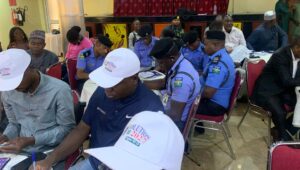 According to him, the Maritime Police Command has intensified collaboration with key agencies, including the Nigerian Navy and the National Inland Waterways Authority (NIWA), to tackle crimes such as kidnapping, piracy, armed robbery, and illegal trafficking.
He disclosed that the partnership with the Nigerian Navy has strengthened intelligence-driven operations and improved the capacity of Marine Police personnel through specialized training.
The police also highlighted recent investments by the Federal Government aimed at boosting maritime security. Among these is the deployment of 31 gunboats equipped with modern navigation and communication systems to enhance patrol and rapid response capabilities.
In addition, the activation of the Lagos CCTV Surveillance Centre in January 2026 was cited as a major milestone. The facility enables real-time monitoring of critical infrastructure, including waterways around the Third Mainland Bridge, thereby improving crime detection and prevention.
On safety regulation, the police commended NIWA for introducing stricter measures, including the deployment of water marshals at jetties and enforcement of the Inland Waterways Transportation Code. These measures mandate the use of life jackets, licensing of operators, and restriction of activities to approved loading points.
DCP Ogechi emphasized that despite these efforts, challenges such as kidnapping, boat accidents caused by negligence, and illegal operators persist, calling for greater public cooperation.
“Safety on our waterways is a shared responsibility. Passengers and operators must comply with safety protocols, especially the use of life jackets and patronage of authorized jetties,” he said.
He reaffirmed that the Nigeria Police Force, under the leadership of the Inspector-General of Police, will continue to prioritize maritime security as a key component of national safety and economic development.

While noting that progress has been made, he cautioned against complacency, urging stakeholders to remain vigilant and proactive in safeguarding Nigeria’s waterways.





One Comment