


The Chairman of the Nigerian Ports Consultative Council (NPCC), Bolaji Sunmola, has called for the urgent adoption of emerging technologies to address inefficiencies in Nigeria’s port system and reposition the country as a leading maritime hub in West Africa.

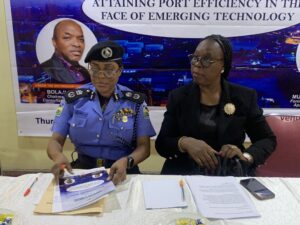
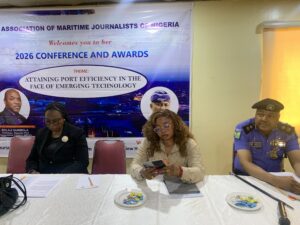
Sunmola who was represented by Mrs Chiazor Jean Anishere , at the 2026 Annual Conference and Award Ceremony of the Association of Maritime Journalists of Nigeria (AMJON), held on 30th April 2026, said the theme, “Attaining Port Efficiency in the Face of Emerging Technology,” reflects the critical moment Nigeria’s maritime sector currently faces.
He noted that while Nigeria possesses vast maritime potential, persistent challenges such as high cargo dwell time, lack of transparency in port charges, and infrastructure deficits have continued to undermine efficiency. According to him, these issues have diverted cargo traffic to neighbouring ports in countries like Togo, Benin, and Ghana.
Sunmola, however, acknowledged ongoing reforms, particularly the introduction of the Eto Electronic Call-Up System by the Nigerian Ports Authority and the implementation of the National Single Window System, which he said are already improving operational order and reducing bottlenecks.






He stressed that deeper technological integration is necessary, highlighting Artificial Intelligence (AI) and Big Data Analytics as tools that can enhance vessel scheduling, berth allocation, and customs risk management, while reducing human interference that often breeds corruption.
The NPCC chairman also advocated for the deployment of blockchain technology to ensure transparency in port documentation and transactions, noting that it could significantly curb fraud and eliminate unofficial charges.
He also outlined the Internet of Things (IoT) as a means of achieving real time cargo tracking, and called for increased investment in automated port equipment such as stacking cranes and remotely operated ship-to-shore cranes. He cited the Lekki Deep Sea Port as a model for modern, technology-driven port infrastructure.
On maritime security, Sunmola commended the Nigerian Maritime Administration and Safety Agency (NIMASA) for progress under its Deep Blue Project, while urging the adoption of advanced surveillance technologies, including AI-powered monitoring systems, satellite tracking, and drones.
He emphasised that technology alone cannot drive change without strong governance and regulatory support. He therefore called on key agencies, including NPA, NIMASA, and the Nigerian Shippers’ Council, to accelerate digitalisation, enforce compliance, and create incentives for private sector investment in smart port systems.
Sunmola also charged maritime journalists to sustain objective reporting and hold stakeholders accountable, noting that informed public discourse is essential to reform.

In her opening remarks, President AMJON, Vera Osokpo, set an assertive tone, describing the annual gathering as more than a routine event but a decisive platform where the maritime media shapes national discourse. She emphasised that port efficiency is not limited to industry stakeholders alone but remains a broader economic concern that directly impacts Nigeria’s trade and development.
Osokpo underscored the urgency of embracing innovation, noting that global trade has evolved rapidly with countries deploying advanced technologies to streamline port operations. She pointed out that while ports in Singapore and Rotterdam are leveraging artificial intelligence and blockchain for cargo clearance and tracking, and Ghana operates a 24-hour port system, Nigeria continues to grapple with inefficiencies that undermine its competitiveness.
Highlighting the economic implications, she referenced data showing that the vast majority of Nigeria’s trade moves through its ports, while persistent delays significantly erode trade value and national revenue.
Reaffirming AMJON’s role, Osokpo said the association would continue to act as a bridge between policymakers, operators, and the public, maintaining a commitment to factual and fearless reporting. She urged regulators and industry players to ensure transparency, provide access to information, and demonstrate sincerity in reform efforts, noting that the media would both amplify progress and hold stakeholders accountable where necessary.








One Comment