

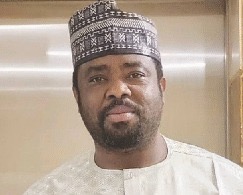
Dr Patrick Agbator, Chairman of Chosen Cargo Services Ltd. and its subsidiaries, has witnessed significant changes in Nigeria’s trade and border management landscape. Speaking with JournalNG, Agbator examines the changing business environment in Kano and the role of the Nigeria Customs Service (NCS) in facilitating legitimate trade.
(Q) Shall we start by getting to know you? Could you introduce yourself and tell us a little about what you do here in Kano?
My name is Dr Patrick Agbator, Chairman, Chosen Cargo Services Ltd. and its subsidiaries. By God’s grace, I have been in the cargo and Customs business for over 30 years.
I started my career as a cargo clerk, but today, I am the Chairman of several companies. I see Customs as part of the same family as those of us operating in the industry. I developed an interest in the service from a very young age, and God has helped me to grow in the business over the years.
In all my years of doing business with Customs, I have maintained a strong record of compliance. I have never been flagged by Customs as a revenue risk, whether in Kano, Abuja, Lagos or Port Harcourt. For me, compliance has always been very important because you cannot know where your business will take you tomorrow. Proper documentation and adherence to procedures are essential to sustaining a credible business relationship with Customs.
From my experience of more than 30 years, Kano Command has also come a long way. The era of doing things the wrong way has passed. Even before the arrival of the Acting Controller, DC Usman Adamu, compliance was something we constantly emphasised to our staff because we understand that proper documentation and adherence to Customs procedures protect both the business and the government’s revenue.
To the best of my knowledge, I have had no major issues with Customs throughout my years of operation across Kano, Abuja, Lagos and Port Harcourt. My philosophy has always been simple: it is better to comply with the rules than to disregard them. A consistent history of compliance builds trust and makes it easier to do business with Customs.
(Q) Talking specifically about timelines under the present controller, have you noticed any improvement?
There has been a significant improvement, especially in the area that used to give us serious concern like the Free Trade Zone. It was a major headache for the Command in the past.
From the inception of the Acting Controller, DC Usman Adamu, we began to see a different approach. The law provides certain concessions for businesses operating within the Free Trade Zone, including provisions that allow them to move their goods and settle their obligations in line with the applicable procedures. However, some operators took advantage of these concessions and compliance became a major concern.
Since DC Usman Adamu assumed responsibility, there has been a much stronger emphasis on compliance. You cannot move goods out of the zone without meeting the necessary Customs requirements and obligations. This has significantly improved compliance and, as a result, the revenue generated from the zone has continued to grow.

We have made recommendations to various quarters that DC Usman Adamu should be considered not just as an Acting Controller, but for a substantive appointment in the future. He is a good trade facilitator and someone who understands both revenue generation and the importance of supporting legitimate businesses.
He has also been very responsive whenever we encounter challenges. On one occasion, we had a problem that required intervention in Abuja. He personally followed up on the matter and ensured that it was resolved. He continued to engage with the relevant authorities until the issue was addressed. So, I have no problem with him, and I believe the business community in Kano appreciates his efforts. He is a young man who is doing well, and I wish him success as he continues in the service.
(Q) Beyond his individual efforts, how would you assess the Acting Controller’s relationship with stakeholders? How frequently does he engage with you, and would you say these engagements are mainly in response to challenges, or does he also proactively meet with stakeholders to identify and prevent potential problems?
From time to time, he calls meetings to promote better understanding and strengthen relationships with stakeholders. We attend these meetings with all the relevant stakeholders, and he gives everyone a listening ear. He is very vibrant and intelligent, and he understands what he is doing. Whenever we raise an issue, he listens carefully, engages with us and reassures us that there will be no problem. More importantly, he follows through to ensure that the issue is actually resolved.
That is why the stakeholders appreciate him. Personally, you hardly see me at the Command office in Bompai anymore. Whenever I have an issue, I simply call him, and once he says it will be handled, he makes sure it is done.
So, the stakeholder meetings are held from time to time, and I believe that is the mark of a manager who understands how to manage time and human resources effectively to achieve results. Whenever there is anything you do not understand, he takes the time to explain it and put you on the right path. In that regard, I think he has distinguished himself as a very effective manager and a good trade facilitator.
(Q) With what you have said so far, Kano is widely regarded as a major commercial hub in Nigeria. Do you think the current approach of the NCS, particularly its focus on trade facilitation, can help Kano further strengthen that position as a commercial nerve centre?
By God’s grace, I believe Kano has the potential to experience significant economic growth with the reforms and initiatives currently being introduced by the government. There are certain developments I may not want to discuss in detail because this interview is being conducted online, but generally, I believe the direction is encouraging not only in Kano, but across other parts of the country.
If everyone embraces compliance and plays their part by following the rules, it will create a better environment for legitimate trade. Smuggling can never be completely eliminated, but it has reduced significantly. The smuggling of vehicles and goods through the borders, which was more prevalent in the past, is no longer at the same level.
Today, goods are moving more through formal channels. For instance, many of our containers come from Port Harcourt, Onne, Apapa, Tin Can and other major ports. If not for some of the logistical challenges, particularly the condition of roads and other infrastructure issues, I believe we would have even fewer difficulties moving goods to Kano.
With the improvements we are seeing and the level of compliance being encouraged, businesses are becoming more comfortable operating within the formal system. I believe that if these efforts are sustained, Kano will be in a stronger position to attract more trade and experience the kind of economic growth we are talking about.




One Comment