

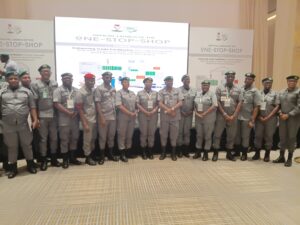
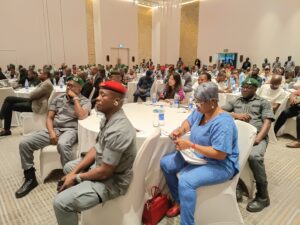
With a firm commitment to go fully paperless by the end of the second quarter of this 2026, the Nigeria Customs Service (NCS) has officially launched the One-Stop Shop (OSS) platform aimed at eliminating bureaucratic bottlenecks, reducing cargo clearance time, and strengthening transparency in border management
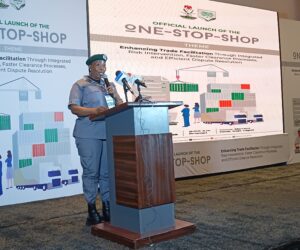
Speaking during the launch on 13th February, 2026 in Lagos, the Comptroller-General of Customs, Bashir Adewale Adeniyi who was represented by the Deputy Comptroller-General (DCG), Enforcement, Inspection & Investigation, Timi Bomodi said the initiative marks a decisive shift from fragmented clearance processes to a unified, technology-driven system that centralises risk management and documentation within a coordinated digital framework.
He disclosed that the Service has concluded arrangements to begin the first phase of its transition to a paperless environment, covering core clearance documentation and approval processes.
According to him, once implemented, traders will no longer be required to present printed Single Goods Declarations (SGDs) or other physical documents, as all transactions and approvals will be processed digitally. The platform, he added, will be accessible through mobile and desktop interfaces, significantly reducing physical contact and enhancing audit trails.
The Comptroller-General explained that the OSS initiative aligns with broader business environment reforms under Executive Order 001 and the Business Facilitation Act, both designed to promote transparency, service timelines, digitisation and inter-agency coordination.
The new system consolidates valuation, customs processing centres, intelligence, enforcement, compliance monitoring and gate operations into a single workflow supported by digital tracking and automated alerts. Multiple checkpoints, he said, have been collapsed into one coordinated decision space to eliminate duplicated reviews and discretionary interventions.

With the integrated framework, the Service is targeting a 48-hour cargo clearance timeline, improved revenue assurance through enhanced profiling and intelligence integration, and reduced compliance costs for traders. The platform also introduces clear escalation paths and digital audit trails to enhance accountability and prevent allegations of victimisation or targeted interventions.
Adeniyi stressed that the move toward a fully paperless customs environment forms part of a broader institutional reform agenda that includes process re-engineering, structured officer training and change management programmes.
He reaffirmed Customs’ support for the National Single Window initiative, expected to be formally launched by the end of the first quarter of 2026, noting that it will complement the OSS by extending coordination across the entire trade ecosystem.
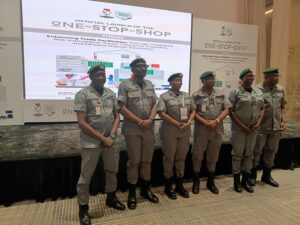
He urged stakeholders to embrace the digital transformation, emphasising that sustained collaboration between Customs and the trading community remains critical to achieving faster, more predictable and transparent border processes.
The OSS, he said, represents a deliberate shift from discretion to data-driven governance and from isolated actions to collective institutional responsibility, positioning the Service as a solution-driven agency committed to supporting lawful trade and national economic growth.
“I am pleased to inform stakeholders that the first phase of this transition covering core clearance documentation and approval processes is scheduled for rollout by the end of the second quarter of this year. By the end of the second quarter of this year, Customs is going to go totally paperless.”, he said.
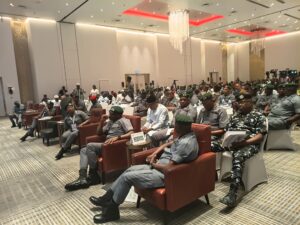
While delivering her welcome address, the Deputy Comptroller-General of Customs in charge of Tariff and Trade, Caroline Kemen Niagwan, said the OSS platform aligns with global best practices that mandate governments to engage stakeholders before introducing significant trade policies.
She noted that efforts to establish a unified intervention platform dated back to 2018 but were hampered by coordination challenges among relevant agencies and stakeholders.
Niagwan explained that the newly introduced platform consolidates risk management interventions into a single digital interface, removing the multiple layers of checks that previously delayed cargo clearance and increased the cost of doing business.
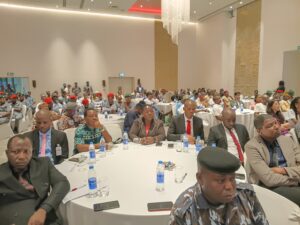
She observed that years of fragmented interventions and repeated inspections had disrupted business operations, stressing that the One-Stop-Shop now harmonises the activities of all relevant units within a coordinated framework to deliver faster and more predictable clearance processes.
The Deputy Comptroller-General also called on customs officers and industry stakeholders to fully embrace the initiative, emphasising that its effectiveness will depend on strict adherence to procedures and sustained collaboration.
A member of the OSS implementation team, Superintendent of Customs Francis Edejor, explained that countries such as New Zealand and Singapore have successfully implemented similar integrated clearance platforms, significantly reducing processing delays and enhancing inter-agency coordination.
He added that Nigeria’s initiative is in line with global trade facilitation principles promoted by the World Trade Organization, which maintains that streamlined border procedures can substantially lower trade costs in developing countries.
Edejor further outlined that Nigeria’s platform is designed to: shorten cargo clearance timelines, lower administrative and bureaucratic expenses, enhance transparency and operational predictability, foster stronger collaboration among border control agencies and harmonise procedures with international best practices
He also disclosed that pilot operations are already underway at key ports, with plans to scale up nationwide following further optimisation.









One Comment