
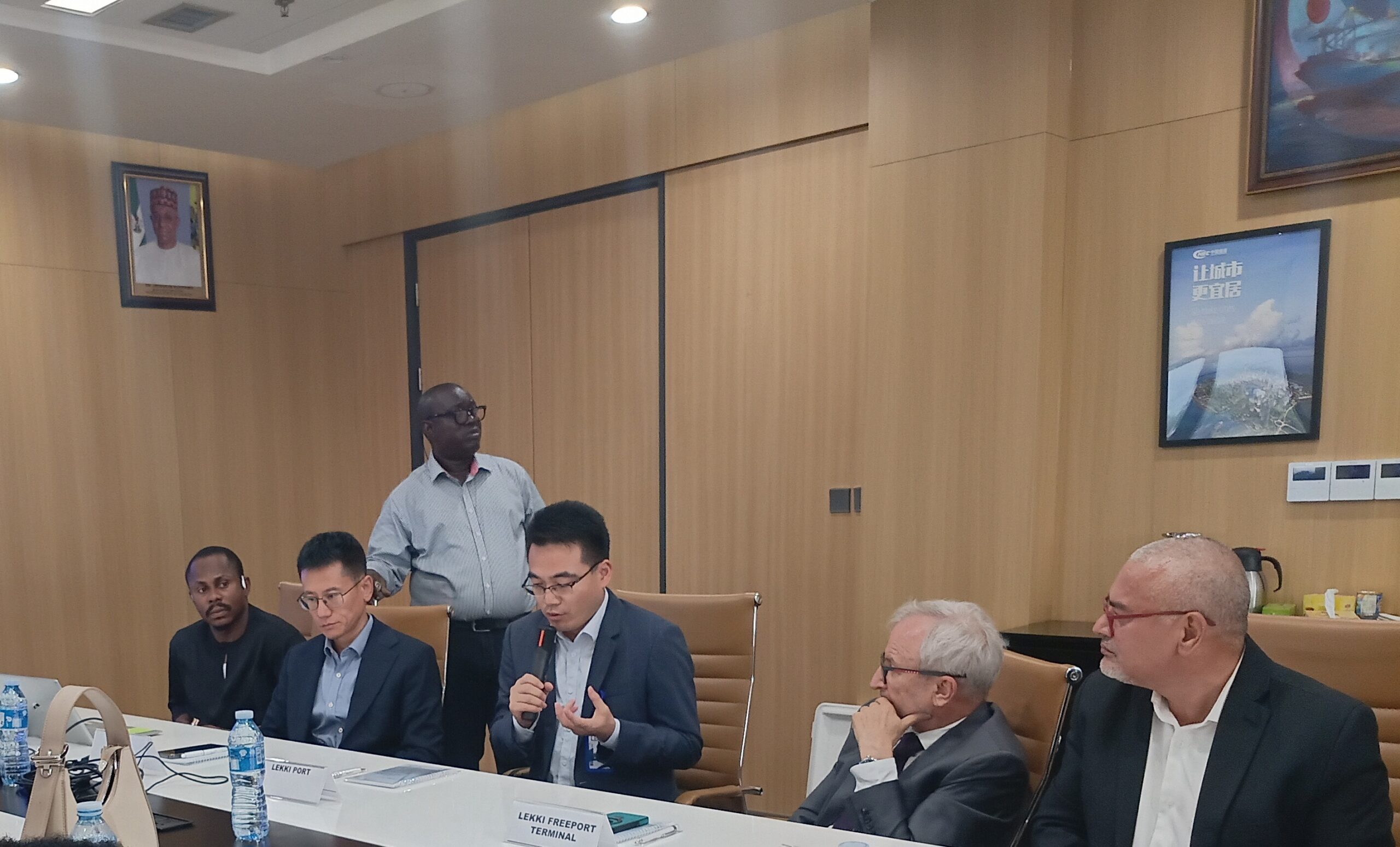
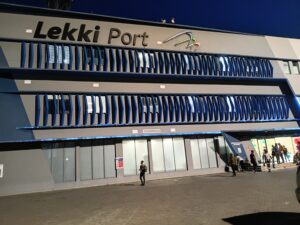
The Chief Executive Officer of Lekki Deep Sea Port ,Wang Qiang has highlighted the strategic importance, operational capacity and growing economic impact of the port, describing it as a key driver of Nigeria’s industrial and maritime future as it attracts over $2 billion investment.
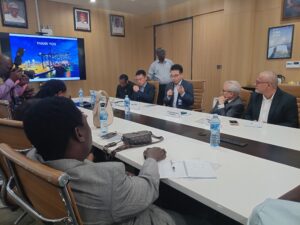
Speaking during a presentation on the port’s development and operations, during a media tour of the facility, Qiang said Lekki Port is strategically located within the Lagos industrial corridor, one of Nigeria’s most vibrant manufacturing and commercial hubs. The port, developed under a Build, Own, Operate and Transfer (BOOT) model, has a concession period of 45 years.
According to him, Lekki Deep Sea Port sits on 90 hectares of land and boasts a total quay length of 1,523 metres, comprising three container berths, three liquid berths and one dry bulk berth. With a channel length of about 10 kilometres and a quay depth of 16.5 metres, the port is Nigeria’s first deep sea port and one of the deepest multi-purpose ports in West Africa.
He explained that the port’s development is being executed in phases, with Phase One already completed. This phase includes a breakwater, a 680-metre quay wall and modern port infrastructure designed to accommodate large vessels. Plans for subsequent phases are already in place to expand capacity in line with growing demand.
On ownership structure, the CEO noted that Lekki Port was established as a Special Purpose Vehicle with three major shareholders: the Lagos State Government, the Nigerian Ports Authority (NPA) and Lekki Port Investment Holding Company. The investment holding company includes international partners such as China Harbour Engineering Company, ensuring the project meets global standards while aligning with government objectives.
He added that Lekki Port Terminal, operated by CMA CGM through a sub-concession arrangement, currently manages container terminal operations at the port.
The CEO disclosed that the project has attracted direct port investments of over $2 billion within five years. Beyond infrastructure, the port has generated significant economic benefits, including job creation, increased revenue for both state and federal governments, and broader catalytic impacts on trade and industrial growth.
Providing operational details, terminal operators said construction of Phase One was completed on October 22, 2022, after 47 months. The terminal covers 45 hectares, with a storage capacity of 35,000 TEUs and a designed annual throughput of 1.2 million TEUs. Since commencement of commercial operations on April 1, 2023, the port has created over 1,000 direct jobs and handled close to half a million TEUs.
Lekki Port is equipped with state-of-the-art facilities, including six Super Post-Panamax ship-to-shore cranes, rubber-tyred gantry cranes, container scanners and an integrated power plant to ensure uninterrupted operations. The terminal can handle single vessel exchanges of up to 7,000 TEUs and is designed to accommodate vessels of up to 25,000 TEUs in the future.
Operational performance data presented showed a 435 per cent growth between the first and second years of operation, driven by imports, exports and the introduction of transshipment services. The port has since positioned itself as a regional transshipment hub, competing with established ports in neighbouring countries such as Benin and Togo.
In terms of cargo evacuation, the port currently relies on road and barge connectivity, with capacity to handle up to 60 trucks per hour. Average truck turnaround time is about one hour and 30 minutes, significantly lower than many terminals within the region. A dedicated truck park with capacity for 157 trucks has also been provided to ease logistics and documentation processes.
The management disclosed that future plans include rail connectivity and improved road infrastructure, including access via the Lekki-Epe Expressway and the ongoing coastal road project, to further enhance cargo movement and efficiency.
The CEO reaffirmed Lekki Port’s commitment to operational efficiency, global best practices and positioning Nigeria as a major maritime and logistics hub in West and Central Africa.
The Chief Operating Officer of Lekki Port, Weilian Zhong also reaffirmed the company’s commitment to strong community relations, highlighting a range of Corporate Social Responsibility (CSR) initiatives implemented in 2025 across education, health, environment and skills development.
According to the COO, Lekki Port designs and executes a structured CSR plan annually, with a focus on improving the capacity and wellbeing of host communities. As part of this year’s programme, the port awarded educational grants to 60 students drawn from its surrounding communities, with each beneficiary receiving ₦200,000 to support their studies. The company disclosed that the scholarship scheme will be sustained on a yearly basis.
The COO also cited a cross-industry collaboration with the University of Lagos, where students were engaged in a creative project to interpret Lekki Port’s values and culture through art. Selected artworks from the initiative, including the top three entries, are currently displayed at the port facility as part of efforts to share the organisation’s values with the wider society.
In furtherance of cultural exchange and capacity building, Lekki Port runs a Chinese language class every Friday, facilitated by a Nigerian-Chinese instructor. The programme is aimed at fostering mutual understanding and cultural integration between Nigerian and Chinese stakeholders working within and around the port ecosystem.
The COO noted that the company also conducted several training programmes in 2025 and has continued to attract significant media attention over the years. He emphasised that effective media communication remains a key pillar of Lekki Port’s engagement strategy, helping to promote transparency and public awareness of its operations and community initiatives.
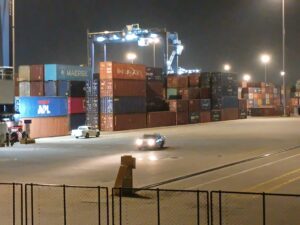
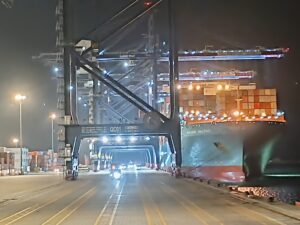
Journalists also experienced operations at the port at night to witness the 24 hour operation.
Night at Lekki Port is active, brightly lit, and technologically organized with cranes working, ships being serviced, and trucks moving in scheduled slots. The port’s automation and lighting make night work both practical and safe.







One Comment