
CVFF Portal Activation Signals New Era for Indigenous Shipping – Founder, Blue Economy Academy, Essien

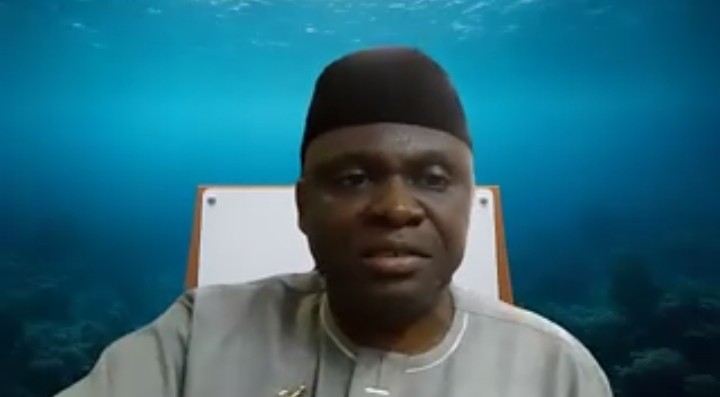
The founder of the Blue Economy Academy, Ubong Essien has said the activation of the Cabotage Vessel Financing Fund (CVFF) portal signals a renewed commitment by government to grow indigenous shipping capacity, reduce dependence on foreign vessels and deepen Nigeria’s blue economy.

During the monthly Code Blue Intelligence Brief held by the Academy on 27th January, 2025 , he described the CVFF as a “critical turning point” for Nigeria’s shipping and maritime sector as the Federal Government has launched a digital portal to enable indigenous shipowners access vessel financing after nearly two decades of delays.
Under the CVFF framework, the Nigerian Maritime Administration and Safety Agency (NIMASA) is expected to provide 50 per cent of vessel acquisition funding, while participating lending institutions contribute 35 per cent, with indigenous shipowners required to provide 15 per cent equity. The loan tenor is eight years at a single-digit interest rate of about 8 per cent.
Essien noted that while the terms remain less competitive compared to global shipping finance benchmarks, the launch represents a crucial first step toward reclaiming Nigeria’s coastal and inland shipping trade for local operators.
He stressed that indigenous vessel ownership would unlock massive employment opportunities, particularly for youths in coastal and riverine communities, adding that ships function as “floating communities” with roles ranging from engineering and catering to logistics and healthcare.
Beyond the CVFF, Essien underscored the broader potential of the blue economy, describing Nigeria as a “blue nation” with over 853 kilometres of coastline, vast inland waterways and enormous untapped marine resources.
He explained that the Blue Economy Academy is driving awareness through what it terms 10 key inclusion buckets, designed to make the sector accessible beyond traditional maritime professionals. These include blue commerce, blue governance, blue climate, blue talent, blue ventures, blue cities, blue finance and innovation.
According to him, unlike the oil and gas sector which he described as capital-intensive but job-poor, the blue economy can generate hundreds of thousands of jobs with comparatively lower investment, spanning logistics, fisheries, aquaculture, technology, real estate and climate resilience.
Essien also pointed to Nigeria’s recent return to the International Maritime Organization (IMO) Council (Category C) as a governance milestone, alongside improved maritime security credited to inter-agency collaboration and the Deep Blue Project.
He urged Nigerians, especially investors and young professionals, to actively engage the CVFF process, form shipping consortia and explore opportunities across the maritime value chain.

Essien said while confidence is building, success will only be fully confirmed when the first CVFF beneficiaries receive disbursements.
He disclosed ongoing collaboration between the Blue Economy Academy and the Nigerian chapter of the Federation of International Real Estate Practitioners (FIABCI) to promote coastal real estate development.
He said discussions with the Nigerian Navy and state governments aim to ensure that security considerations are integrated from the planning stage of coastal developments, rather than addressed after crises emerge.
Providing an overview of recent developments under the Academy’s “Code Blue” intelligence brief for December 2025 to January 2026, Essien cited improved port performance, increased export-led cargo throughput reported by the Nigerian Ports Authority (NPA), and renewed efforts by the Federal Government to modernize ports and maritime corridors.
He also referenced Nigeria’s collaboration agreement with Abu Dhabi’s AD Ports Group on ports, logistics and digital trade infrastructure, as well as growing government focus on fisheries and aquaculture as priority growth sectors.
While acknowledging progress, Essien stressed the need for sustained advocacy, skills development and private sector participation to fully realize Nigeria’s blue economy potential.
He disclosed that the Blue Economy Academy is also preparing to launch a dedicated media platform, Blue Economy TV, to mainstream conversations and raise public awareness.
“The CVFF is not just a low-hanging fruit; it is an unpicked fruit. For the first time, we are seeing tangible movement after years of accumulation.
“If we get this right, we can end the era of endless waivers that allow foreign vessels dominate our waters. Nigerian-owned ships crewed by Nigerians should be transporting offshore equipment, food supplies and cargo for oil companies and other operators.
“This is the best time to come in. Whether as investors, professionals, activists or entrepreneurs, there is a space for everyone in the blue economy.We will celebrate properly when the first cheque is presented. Until then, we must keep pushing. This is our economy, our waters and our collective future.
“The outlook for Nigeria’s blue economy is positive, with growing momentum in policy, infrastructure and international partnerships. This is the time for Nigerians across sectors to get involved, so that we are not spectators but beneficiaries of this transformation.”, he said.



Wonderful beat ! I wish to apprentice while you amend your web site, how could i subscribe
for a blog (Mariam) site?
The account aided me a acceptable deal. I had
been a little bit acquainted of this your broadcast provided bright
clear concept