

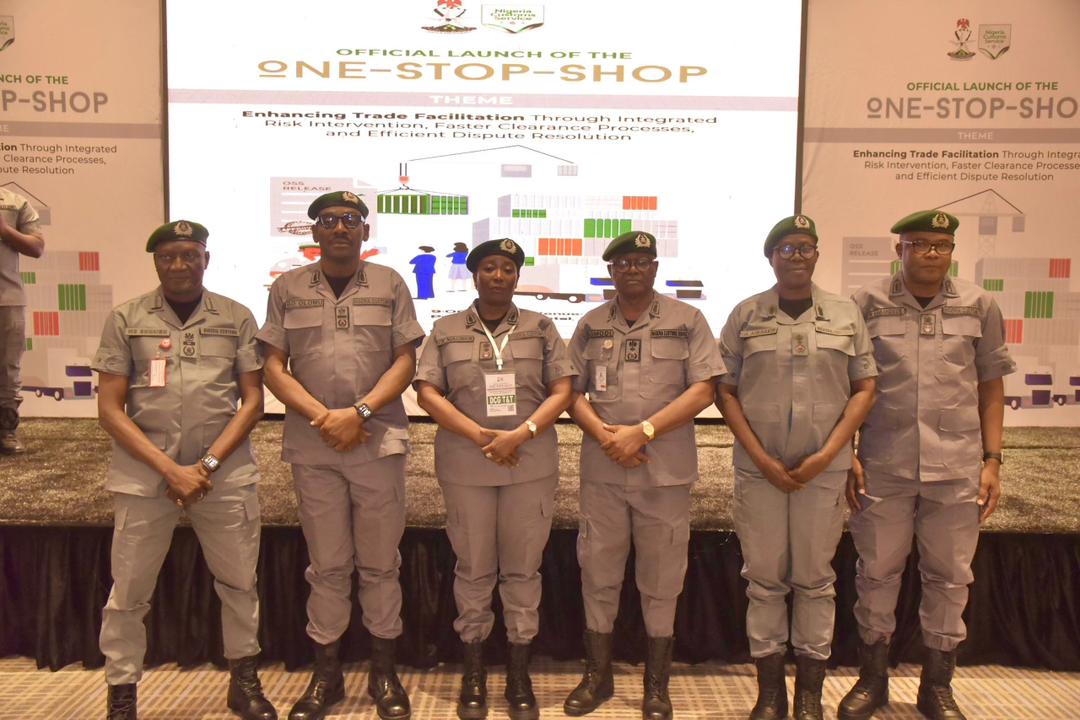
The Nigeria Customs Service (NCS) has launched a new digital One-Stop-Shop (OSS) platform designed to eliminate bureaucratic bottlenecks at Nigeria’s ports and significantly reduce cargo clearance time to 48 hours.
Speaking at the launch ceremony in Lagos on Friday, 13 February 2026, the Comptroller-General of Customs (CGC), Adewale Adeniyi, described the initiative as a major structural reform aimed at modernising border operations and enhancing Nigeria’s trade competitiveness.
Adeniyi noted that the platform aligns with the Federal Government’s broader business reform agenda under President Bola Tinubu, as well as global best practices under the World Trade Organisation (WTO) Trade Facilitation Agreement.
He cited WTO estimates indicating that efficient border reforms can reduce trade costs in developing economies by more than 14 percent.
The Customs boss further announced that the Service is progressing toward a fully paperless customs environment, with the first phase of digital clearance and documentation processes scheduled for rollout by the end of the second quarter of 2026.
“This platform is a deliberate shift from fragmented interventions to coordinated governance, from discretion to data, and from isolated actions to collective responsibility,” Adeniyi said.
“Through this reform, we continue to build systems that support lawful trade, protect national interests, and serve the economy with professionalism and integrity.”
Also speaking at the event, the Deputy Comptroller-General of Customs in charge of Tariff and Trade, Caroline Niagwan, explained that the OSS platform consolidates all risk interventions into a single electronic interface, thereby streamlining multiple checks under a unified digital framework.
“Today, the NCS is introducing the One-Stop-Shop digital platform, an innovative system designed to consolidate all risk interventions at the port into a single electronic interface,” she said.
“We have listened to stakeholder feedback and recognised how multiple checkpoints and risk interventions affect business processes. Your involvement in this engagement is crucial to the success of this reform.”
A technical presentation by the NCS Trade Facilitation Unit outlined strategies to reduce cargo clearance time from an average of 21 days to about 48 hours, detailing implementation timelines and anticipated operational challenges.

Stakeholders at the engagement expressed strong support for the initiative, describing it as a critical step toward facilitating legitimate trade and improving port efficiency. An interactive session also provided clarifications on operational procedures and expectations for the OSS rollout.