
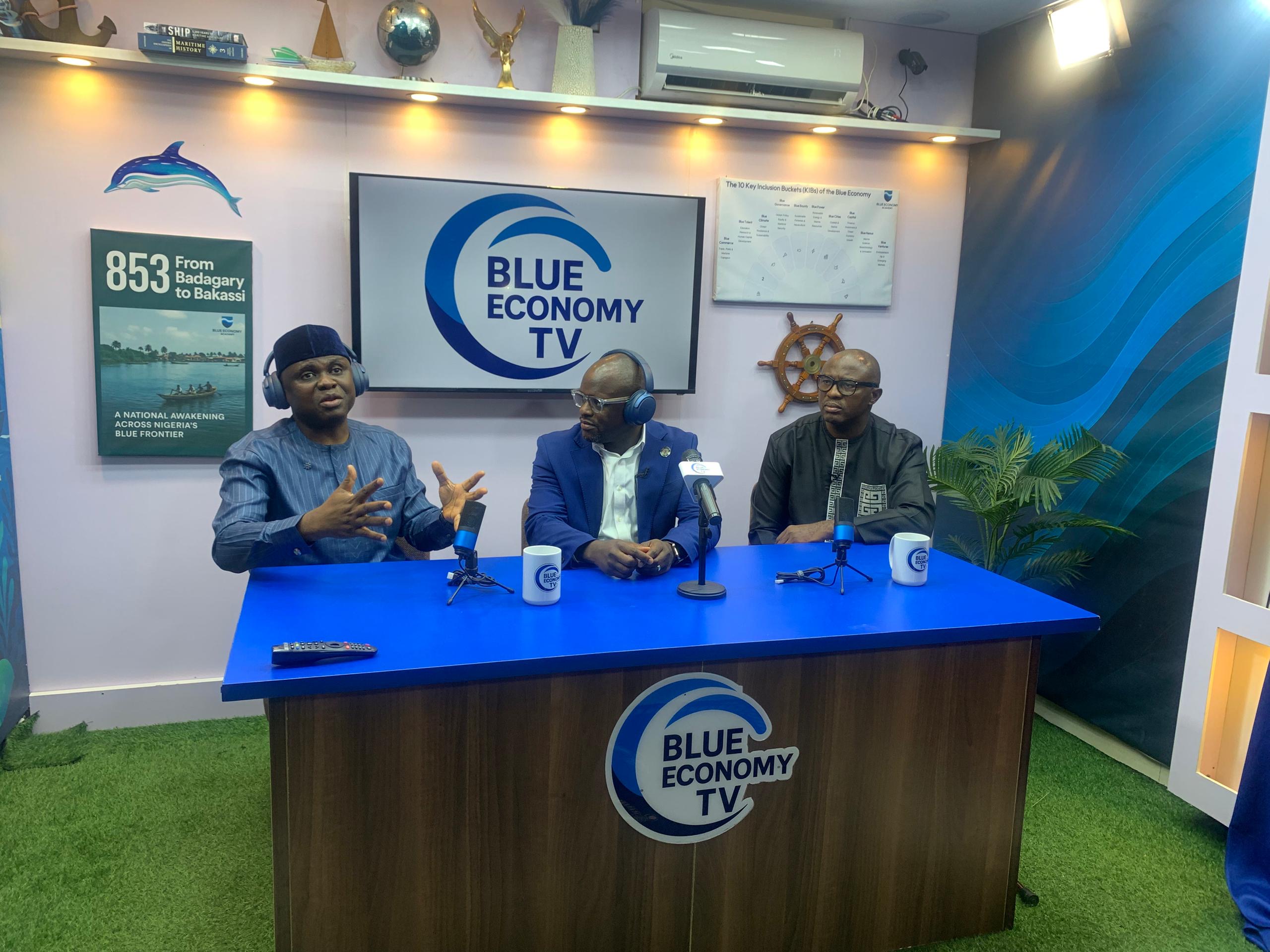
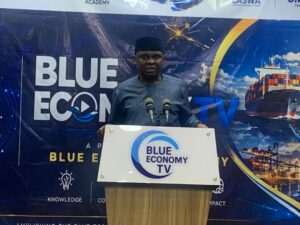
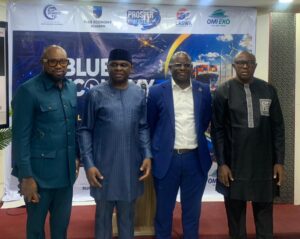
The Blue Economy Academy has officially launched Blue Economy Television (BETV), Nigeria’s first broadcast platform solely dedicated to the blue economy, on March 23, 2026, in Lagos. Marking a step in Nigeria’s efforts to harness its vast ocean and coastal resources while driving awareness, policy conversations, and industry participation within the emerging sector.

Speaking at the event, Founder of the Blue Economy Academy, Ubong Essien, CSP, described BETV as a strategic initiative designed primarily for the media and blue economy practitioners to spotlight opportunities across Nigeria’s 853 kilometre coastline, stretching from Badagry to Bakassi.
He said the project is primarily for the media and serves as a platform for practitioners to bring to light what Nigeria is poised to explore to its fullest potential.
He explained that the Academy, which will mark its second anniversary later this year, was established with a clear mission to see a Nigeria that prospers by water. According to him, the institution focuses on delivering practical, implementation driven knowledge rather than theoretical learning.
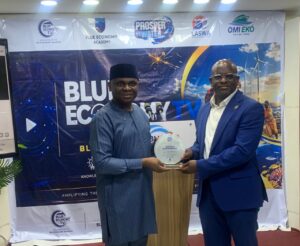
Essien noted that the Academy operates through ten critical inclusion buckets, covering diverse areas such as maritime (blue commerce), blue finance, blue energy, and human capital development (blue talent). He emphasised that while Nigeria has long benefited from maritime activities like shipping and oil exports, the broader blue economy ecosystem remains largely untapped.
Highlighting opportunities in renewable energy, Essien pointed to the potential of offshore wind, tidal, and ocean energy, noting that Nigeria’s coastal regions, particularly Lagos, possess significant natural advantages.
BETV, he explained, will feature a range of programs designed to reshape national conversations around ocean resources. These include Blue Morning Nigeria, a daily show focused on ocean related policy and economic discussions, and Watchers of the Seas, where maritime journalists analyse industry developments and policy directions.
He further described Lagos as ground zero for Nigeria’s blue economy development, urging coastal and riverine states, referred to as Blue Corridor States, to take the lead in unlocking economic value from water resources.
According to him, collaboration among these states will be crucial in driving investment, innovation, and policy reforms necessary to fully harness the sector.
In his remarks, The General Manager of the Lagos State Waterways Authority (LASWA) and Special Adviser to the Governor of Lagos State on the Blue Economy, Mr. Emmanuel Oluwadamilola, underscored the vital role of communication in harnessing Nigeria’s marine and coastal resources. He stated that nations rise not only by what they build but also by how well they communicate what is possible, noting that BETV will serve as the voice for Nigeria’s waters.
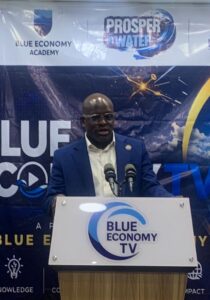
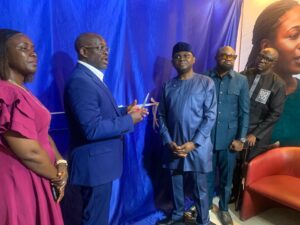
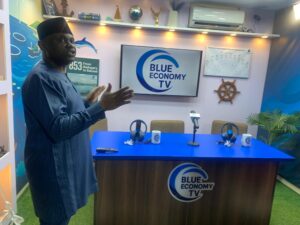
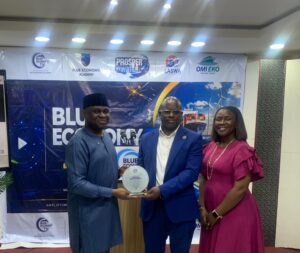

He described the moment as highly symbolic, emphasising that throughout history, waters have represented untapped potential deep, vast, and often unexplored. For Lagos, this potential is undeniable, with the state boasting over 180 kilometers of coastline and more than 140 kilometers of inland waterways that traverse local communities.
Oluwadamilola highlighted Lagos as a maritime corridor supporting over 70 % of Nigeria’s international trade. He observed that despite decades of engagement with maritime activities, public consciousness of the full potential of the state’s waters and maritime space is only now beginning to awaken.
The Special Adviser pointed to the tangible opportunities embedded in the blue economy, including job creation for youth, food security through fisheries and aquaculture, and mobility solutions via water transport. He also highlighted investment prospects in tourism, sports, ports, and marine services, as well as pathways to environmental sustainability and climate resilience.
He described the platform as carrying the “sound” of Lagos’ readiness and Nigeria’s rising potential, signaling that the blue economy is no longer merely an idea but a growing movement.
Oluwadamilola explained that BETV will connect vision to action by telling the stories that need to be told, revealing previously unseen opportunities, and inspiring systemic transformation starting in the minds of people. He called on viewers to engage actively, build strategically, and lead decisively in harnessing the state’s aquatic resources.
He commended the team behind the platform, commending their vision and daring to see differently. He urged stakeholders and citizens alike to respond to the call of the waters, noting that platforms like BETV will help Lagos fully embrace its identity not only as a commercial hub but as a Blue Economy powerhouse.




One Comment