

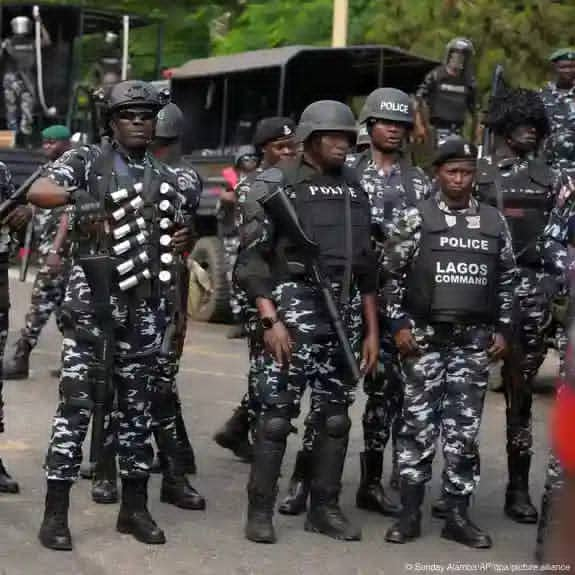
All 36 State Houses of Assembly have approved the constitutional amendment bill (Constitution Sixth Alteration Bill, 2026) to establish State Police Services alongside a Federal Police Service. This was confirmed by the Clerk to the National Assembly on November 16, 2026.

The bill has exceeded the two-thirds threshold (24 states) required under Section 9 of the 1999 Constitution and is now ready for transmission to President Bola Tinubu for assent.
This would end Nigeria’s long-standing centralized Nigeria Police Force model rooted in Section 214 of the Constitution and introduce a dual policing system. Federal police would handle national security issues terrorism, interstate crimes, organized crime, borders, cybercrime, and more while state police would focus on local law enforcement, public order, and community-level threats. States would still need enabling laws, funding, recruitment, and certification under national standards before operationalizing their forces.
Positive Implications for National Security
Faster, more effective local response:
Nigeria’s security challenges—banditry and kidnapping (especially in the North-West), residual terrorism (North-East), farmer-herder clashes, communal violence, cultism, and urban crime—are highly localized. A single federal force of roughly 370,000–400,000 officers for a population exceeding 230 million has been chronically overstretched, with many officers tied to VIP protection. State police, recruited from local communities and familiar with terrain, languages, and networks, should improve intelligence gathering and response times.

Better intelligence and community trust: Officers who live in or come from the areas they police are more likely to gain public cooperation, which is critical for preventing and disrupting crimes that rely on local information (e.g., bandit hideouts or kidnapping networks).
Reduced burden on federal resources: The federal police could concentrate on high-end national threats and coordination rather than routine local policing.
This mirrors models in countries such as the US, India, and Germany, where federal agencies focus on interstate/national issues.
Alignment with federalism: Governors have long been called “chief security officers” without operational control over police commissioners. State police would give them meaningful tools while formalizing existing informal outfits like Amotekun in the South-West, Ebube Agu in the South-East under clearer legal frameworks.

Potential long-term capacity building: Local recruitment and accountability could professionalize policing over time if standards, training, and oversight are rigorously enforced.
Risks and Negative Implications for National Security
Political abuse and weaponization: This is the most cited concern. Governors already wield significant influence over state institutions (assemblies, electoral commissions, local governments). State police could be used to intimidate opponents, suppress dissent, harass journalists/activists, or influence elections—especially ahead of 2027. Historical precedents from the First Republic’s Native Authority/local police and experiences with some regional security outfits reinforce these fears. Safeguards in the bill appointment/confirmation involving the National Police Council and state assemblies, prohibitions on using police against critics or for partisan purposes, federal intervention powers in cases of abuse or breakdown of order exist on paper, but their effectiveness depends on political will and independent institutions.
Fragmentation and coordination failures: Criminal networks kidnappers, traffickers, bandits routinely cross state borders. Poor inter-force cooperation, jurisdictional disputes, or rivalry between federal and state police could create gaps that criminals exploit. Uneven capacity across states (wealthy states vs. poorer ones could produce unequal security standards.
Funding and capacity shortfalls: Many states struggle with salaries and basic services. Building, equipping, training, and sustaining professional police forces (including access to appropriate weapons for confronting heavily armed groups) will be expensive. Underfunded forces risk becoming ineffective, corrupt, or prone to human rights abuses.
Ethnic/religious tensions or local capture: Recruitment or deployment patterns could favor dominant groups in multi-ethnic states, exacerbating tensions. In resource-rich or conflict-prone areas, local elites or criminal networks might seek to influence or capture state forces.
National cohesion risks: Extreme scenarios (though less likely with strong federal oversight) could involve states resisting federal authority or using police in ways that heighten centrifugal pressures. Conversely, federal intervention powers could themselves be politicized.
Overall Assessment
The move addresses a genuine structural weakness: a centralized force has proven inadequate against decentralized, adaptive threats. If implemented with robust national standards, independent oversight (including effective complaints mechanisms and judicial review), sustainable funding models, clear jurisdictional rules, and strict political neutrality especially during elections, it could meaningfully improve security outcomes and strengthen federalism.
However, success is not automatic. Nigeria’s institutional weaknesses—weak accountability, strong executive dominance at state level, and uneven state capacity—mean the risks of politicization and fragmentation are real.
The quality of the forthcoming National Policing Bill operational framework, state enabling laws, recruitment standards, and actual enforcement of safeguards will determine whether this becomes a net positive for national security or simply relocates existing problems closer to citizens.
The constitutional barrier has been cleared; the harder work of building professional, accountable, and coordinated institutions now begins.








One Comment