
INTERVIEW: How Intelligence , Vigilance Drive Major Drug Seizures at Tin Can Island Port — CN Omotosho

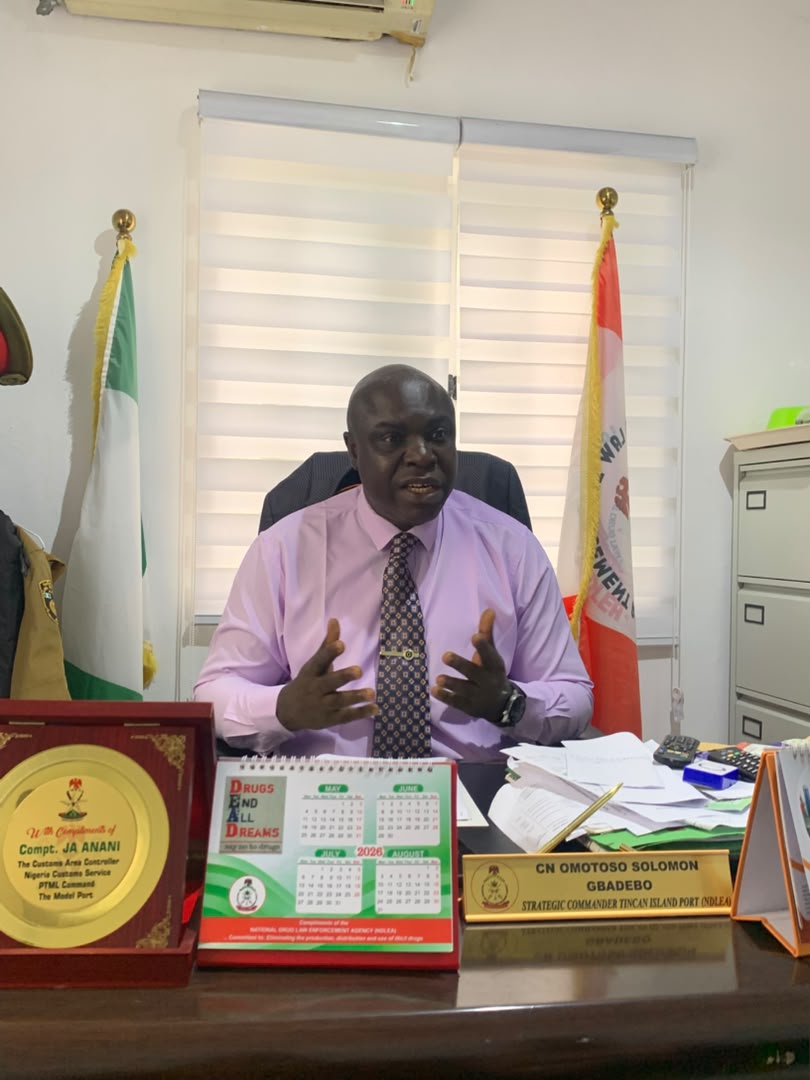
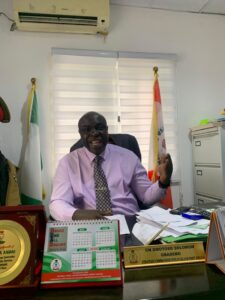
In this exclusive interview, the Commander of Narcotics, Tin Can Island Strategic Port Command of the National Drug Law Enforcement Agency (NDLEA), Omotosho Solomon Gbadebo, spoke with Elizabeth Toyon and Maria Yusuf on the Command’s achievements in the H1 of 2026, major drug seizures, evolving trafficking methods, international collaboration and the agency’s determination to keep Nigeria’s maritime gateway free of illicit drugs.
(Q) The Tin Can Strategic Command has become a critical line of defence against transnational drug trafficking. How would you assess the Command’s performance and impact in the first half of 2026?
I resumed duty as the Commander of the Tin Can Island Strategic Port Command on January 23, 2026, and I can confidently say the Command has recorded remarkable achievements in the first half of the year. The Command was redesignated as a Strategic Port Command because of its critical role in protecting Nigeria’s maritime gateway from illicit drug trafficking.
Large quantities of illicit drugs entering the country come through the maritime corridor, making our work extremely important. We work closely with the Nigeria Customs Service, Immigration, Police, DSS, Port Health and other agencies to ensure these dangerous substances do not find their way into Nigeria.
Our operations are intelligence driven. We combine confidential human intelligence with technology to profile containers, track vessels and identify suspicious consignments before they arrive. Informants also play a key role, whether they come forward out of patriotism, for rewards or to expose criminal syndicates.
Technology has also greatly strengthened our operations. We monitor vessels from their ports of origin until they berth in Nigeria, enabling us to trace shipments even when traffickers attempt to disguise their routes through multiple countries. As a result, many criminals now realise that Tin Can Port is no longer an easy route for smuggling illicit drugs into Nigeria.

(Q) The Command recorded several significant seizures during the first half of the year. What were some of the major interceptions and what do they reveal about emerging trafficking trends?
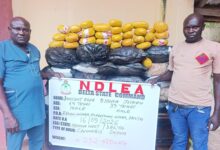
We have recorded one of the most successful operational periods in the history of this Command. Our first major seizure came barely days after I assumed office. On January 28, 2026, we intercepted 1,003 kilograms of Cannabis Indica concealed in a container originating from Canada. Cannabis Indica differs from the locally cultivated Cannabis Sativa commonly found in Nigeria. It is significantly more potent, acts faster on the central nervous system and commands a much higher value on the illicit market because of its strength and demand.
Beyond that interception, we recorded several other major seizures during the first six months of the year. On April 27, we intercepted approximately 4,729 kilograms of illicit drugs. Three days later, on April 30, another seizure of 610.5 kilograms was recorded. Operations continued in May, with another seizure on May 7, followed by an additional 4,173.5 kilograms intercepted on May 12. When all the seizures are combined, the Tin Can Island Strategic Port Command recorded a total seizure of 10,727.853 kilograms of illicit drugs during the first half of 2026. Every suspect connected to these seizures has been charged to court. We have already secured convictions in some of the cases, while others remain before the courts. People often ask about the monetary value of the drugs we seize. While the quantity seized by this Command in the first half of the year is worth over ₦100 billion based on street estimates, we deliberately avoid placing too much emphasis on market value.
The reason is simple, we do not want to create the impression that drug trafficking is an attractive or lucrative business. Our focus is on protecting lives rather than advertising the financial worth of illicit drugs.
In addition to large scale import seizures, we also conducted enforcement operations within the port environment itself. We raided locations where truck drivers and other individuals patronised illicit drug sellers, arresting suspects and confiscating narcotic substances.
(Q) Drug trafficking networks continue to adopt sophisticated methods to evade detection. How is the Command staying ahead through intelligence, technology and operational innovation?
Intelligence remains the foundation of everything we do. Every suspicious shipment is profiled before it arrives in Nigeria. We analyse the country of origin, shipping routes, transshipment history and documentation, while using technology to track vessels from the port of loading to their final destination. Although traffickers constantly change their methods to evade detection, our systems enable us to monitor the entire movement of suspicious consignments.
We also rely heavily on credible human intelligence because technology alone is not enough. Many shipments arrive with fake consignee names, false addresses and inaccurate contact details, all of which our officers painstakingly verify. Through lawful investigations, including subscriber verification and call record analysis, we uncover these fraudulent identities. Once a suspicious container is identified and blocked by the NDLEA, traffickers often abandon it rather than risk arrest.
(Q) Every major seizure tells a story. Was there any operation this year that stood out as particularly challenging or significant, and what lessons did it offer?
Every seizure presents its own challenges, but one operation this year stands out because of the strategy we adopted and the outcome we achieved.
One of the biggest challenges we face is the use of false shipping documents. Traffickers often provide fictitious consignee names, fake addresses and incorrect contact details. Our officers verify every piece of information, and in many cases we discover the identities and addresses do not exist or belong to unsuspecting individuals.
Ordinarily, once intelligence confirms that a container is suspicious, we block it within the port system. However, traffickers have become familiar with this process and often abandon such containers once they realise they are under NDLEA surveillance.
To outsmart them, we changed our strategy during one operation this year. Instead of blocking the container immediately, we allowed the clearance process to continue while our officers maintained discreet surveillance from the time the vessel berthed until the container left the terminal.
Once the container was moved out on a truck, our officers intercepted it, arrested the driver and the clearing agent, and escorted it to a bonded terminal for a 100 per cent examination. Inside, three Toyota Sienna vehicles concealed in the container, we recovered almost one tonne of illicit drugs.
Unlike previous operations, the entire investigation remained under NDLEA’s custody from interception to prosecution. The drugs, vehicles and container were immediately secured, while the exhibits were transferred to our central storage facility and the case file prepared for prosecution. The suspect eventually pleaded guilty and was convicted by the court without unnecessary delay.
(Q) The fight against illicit drugs requires close collaboration among several agencies operating within the ports. How would you assess the current level of inter-agency cooperation, and what improvements would you like to see?
No single agency can secure Nigeria’s maritime domain alone. At Tin Can Port, the Nigeria Customs Service is the lead agency by law, and NDLEA works closely with Customs and other security organisations during examinations and enforcement activities.
However, I believe there is still room for improvement in the way agencies coordinate operations. From our perspective, many successful drug interceptions begin with NDLEA intelligence. We receive information, analyse it, track vessels, profile containers, identify suspicious consignments and notify relevant agencies before examinations take place.
The challenge sometimes arises after illicit drugs are discovered. There are occasions when exhibits remain outside NDLEA’s immediate custody until after public presentations are conducted by Customs. This can create operational delays, particularly in relation to prosecution and maintaining an uninterrupted chain of custody. Our position is that security agencies should place greater emphasis on national security than institutional recognition. The fight against illicit drugs should never become a competition over which agency receives public attention.
(Q) Beyond seizures and arrests, NDLEA also focuses on reducing drug demand. What initiatives has the Command undertaken this year to educate stakeholders and discourage drug abuse within the port environment?
NDLEA operates on two major pillars which are drug supply reduction and drug demand reduction. Drug supply reduction involves intelligence gathering, arrests, investigations and seizures. Drug demand reduction focuses on prevention through public enlightenment, education, counselling and advocacy.
We strongly believe prevention is far less costly than rehabilitation. Once an individual becomes drug dependent, treatment requires enormous financial and professional resources. Rehabilitation involves psychiatrists, psychologists, counsellors and specialised treatment facilities, all of which are limited and expensive.
That is why we continue to emphasise prevention, through the War Against Drug Abuse (WADA) initiative, our officers regularly engage truck drivers, terminal operators, freight stakeholders, labour unions, security agencies and other members of the port community.
This is not a one-off campaign. It is a continuous programme aimed at changing attitudes towards drug abuse. As part of activities to mark the 2026 International Day Against Drug Abuse and Illicit Trafficking, we organised a series of awareness programmes. Our Muslim officers observed a thanksgiving prayer at the mosque, while on the last Sunday of June I led officers of the Command to St. Andrew’s Anglican Church, Apapa, to thank God for a successful first half of the year. We also held awareness rallies across the port corridor, moving from Tin Can through PTML to Liverpool, where our officers engaged residents, workers and other stakeholders in different languages and local dialects. We distributed pamphlets, leaflets and other educational materials to discourage drug abuse and educate people on its dangers.
In addition, we organised a novelty football match at the Police College, Ikeja, where our team played against the team led by Olympic gold medallist Chioma Ajunwa. The event formed part of our efforts to use sports and community engagement to promote the anti-drug campaign and encourage greater public participation in the fight against drug abuse.
We also partnered with our sister commands at Apapa and Lilypond to organise the grand finale of the campaign, ensuring that our message reached a wider audience. In addition, we honoured invitations from stakeholders, including the Customs Officers’ Wives Association (COWA), where our officers educated secondary school students on the dangers of substance abuse.
(Q) If you could recommend one policy or operational reform that would significantly strengthen maritime drug enforcement in Nigeria, what would it be and why?
My first recommendation would be that government should continue to place national security above every other consideration. Revenue generation is important, but security must always come first. Without security, economic development becomes difficult.
Technology is another area requiring urgent attention. Modern drug enforcement cannot depend entirely on manual searches. Technology enables officers to inspect far more containers accurately within a shorter period.
Unfortunately, NDLEA currently does not have dedicated drug detection scanners at the ports. While scanners exist within the port system, specialised equipment capable of detecting narcotics would significantly improve operational efficiency. Our K-9 unit also plays a vital role in drug detection. At the moment, the sniffer dogs serving Tin Can operations are stationed at the Nigerian Aviation Handling Company (NAHCO) at the airport. These are highly specialised dogs trained in colder climates, so operating them in our environment requires extra care. They cannot all work at the same time, and they must remain in air-conditioned vehicles throughout operations. Their feeding, medical care and maintenance are highly specialised and expensive. Some of the dogs were donated by the German government, and their upkeep requires significant resources. I commend the Nigerian Ports Authority (NPA) for introducing the joint vessel boarding system, which brings all relevant security agencies together for inspections. That is the kind of cooperation we need. National security should not be undermined by institutional rivalry. Every agency should have a level playing field and the resources required to perform its statutory responsibilities effectively. Government should also invest more in the welfare of law enforcement personnel. Agencies that do not generate revenue should not be disadvantaged in funding because they play equally critical roles in national security. Adequate remuneration, proper equipment and improved welfare will not only enhance operational efficiency but also strengthen integrity and reduce the temptation of corruption among officers. Welfare should not end while officers are in service. Housing, retirement benefits and post-service support deserve greater attention because officers who dedicate over three decades of their lives to public service should retire with dignity and security.
(Q) The International Day Against Drug Abuse and Illicit Trafficking is observed annually to raise awareness and strengthen efforts to combat drug abuse. However, despite these campaigns, drug abuse remains a growing concern in many communities. Coming from a community located close to the port, we have observed this challenge firsthand among residents who live within the port environment. What is the NDLEA doing to ensure that awareness campaigns, drug prevention programmes and rehabilitation services are extended to these port host communities? Do you have plans for the Command to work with community leaders and other stakeholders to reduce drug abuse and provide support for those battling addiction?
NDLEA approaches the drug problem holistically. While enforcement is a major part of our mandate, prevention through public enlightenment and rehabilitation is equally important.
At Tin Can Island Strategic Port Command, our operational jurisdiction is primarily limited to the port environment and facilities under our control. Community sensitisation programmes across Lagos State, including riverine and port host communities, fall under the responsibility of the Lagos State Strategic Command.
That Command carries out regular awareness campaigns, educational programmes and community engagements across local government areas in the state, including communities located around the ports.
However, whenever stakeholders within the port community invite us to participate in sensitisation programmes outside our immediate jurisdiction, we gladly do so in collaboration with the Lagos State Strategic Command.
Like I stated earlier , this year we honoured an invitation from the Customs Officers’ Wives Association(COWA) to educate students at one of its adopted secondary schools on the dangers of drug abuse. We have also responded to similar requests from stakeholders within the maritime sector.
We remain open to working with community leaders, schools, youth organisations, religious bodies and other stakeholders because preventing drug abuse requires collective responsibility. The earlier we educate young people about the dangers of illicit drugs, the better the chances of protecting them from addiction.
(Q) Finally, what should Nigerians expect from the Tin Can Strategic Port Command in the second half of the year in terms of operational priorities and strategic focus?
Nigerians should expect even stronger performance from the Command in the second half of the year. We intend to build on the successes recorded during the first six months by intensifying intelligence gathering, increasing surveillance, strengthening stakeholder engagement and improving operational efficiency.
Our priority remains to sanitise the port environment and prevent illicit drugs from entering the country through Tin Can Port. We will also sustain our campaigns against drug abuse among truck drivers, port workers and other stakeholders because ensuring safety within the port environment goes beyond making seizures. A truck driver operating under the influence of drugs poses a serious danger not only within the port but also to every road user outside the port corridor.
We expect to record more seizures, more arrests, more successful prosecutions and better operational outcomes before the end of the year. Training will also remain a major priority because criminals continue to change their methods. Our officers must continue to improve their skills and remain ahead of emerging trafficking trends.
For me, this job is more than a career; it is a service to humanity. I joined the NDLEA not just to build a profession, but to contribute my quota to protecting society. It is painful to see lives destroyed by drug abuse, and that is what motivates me to approach this responsibility with passion and commitment. When you see your work as a service to humanity, it gives you the fulfilment to keep going despite the challenges.
I can confidently say that officers of the NDLEA, both at the Tin Can Island Strategic Port Command and across other formations, are doing an outstanding job.
I also wish to commend the Chairman and Chief Executive Officer of the NDLEA, Brigadier General Mohamed Buba Marwa (Rtd.), CON, OFR, for his leadership. Since assuming office in 2021, he has introduced reforms that have transformed the Agency. Officers are more motivated, welfare has improved considerably, training opportunities have expanded and operational capacity has continued to grow.
He believes in rewarding hard work and recognising outstanding performance. His leadership has significantly boosted staff morale, and the results are evident in the Agency’s achievements across the country.
I must equally appreciate President Bola Ahmed Tinubu for his continued support to the NDLEA. Through the Federal Government’s backing, several welfare initiatives, including the construction of staff barracks in different parts of the country, are being implemented to improve officers’ living conditions.




fastpay casino, fastpay casino australia
offers an enjoyable gaming experience with numerous games for players.
Delight in fast transactions and excellent customer support.
Join now to uncover great bonuses and promotions.
fastpay casino, fastpay casino offers an engaging gaming experience with numerous options
for players. Savor fast transactions and an abundant choice
of games that fulfill all preferences.
my web site; https://fastpay-casinos-au.com/