

For years, Tin Can Island Port stood as a paradox. As Nigeria’s second busiest seaport and a critical artery of international trade, it powered economic activity while simultaneously battling a reputation for chronic bottlenecks, multiple alerts, and prolonged clearance delays that frustrated importers and exporters alike.
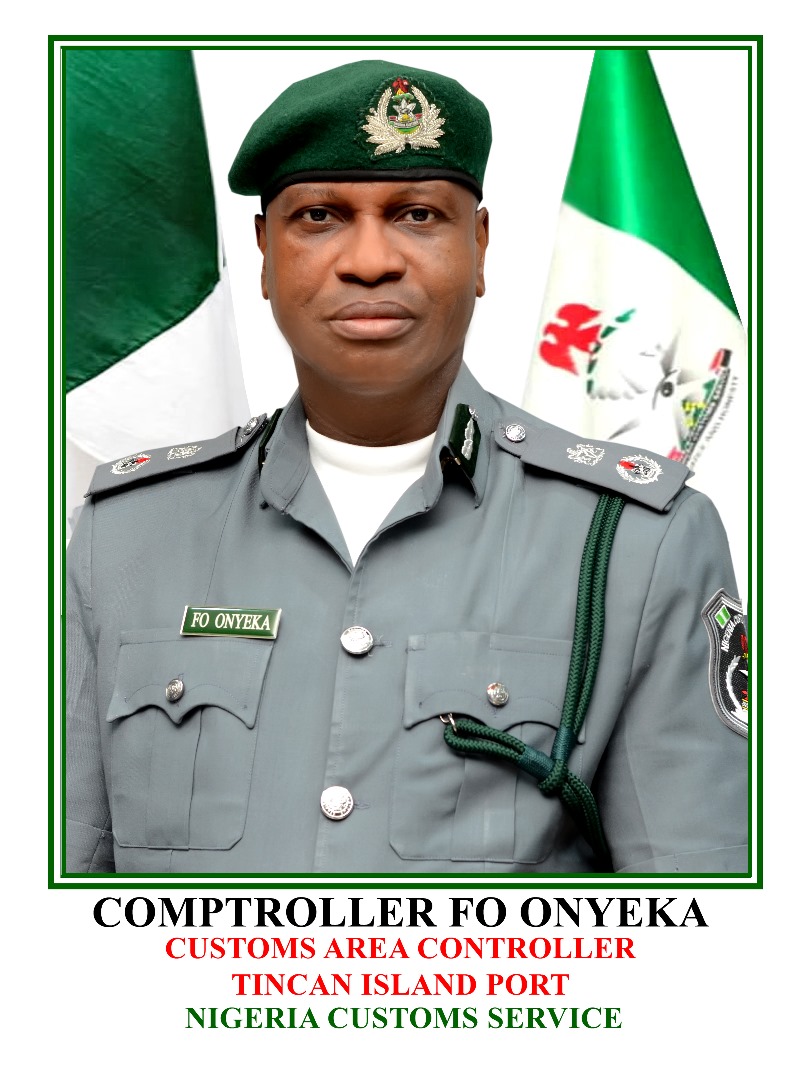
It was often described as a “flashpoint of surprises” a port where efficiency collided with entrenched inefficiencies. But that narrative has gradually shifted over the past five to six years. In the last one year especially, under the leadership of Comptroller Frank Okechukwu Onyeka, the Customs Area Controller (CAC), the transformation has assumed a more decisive dimension.
What was once synonymous with gridlock is steadily emerging as a showcase of reform, resilience, and revenue breakthroughs.
Historically, Tin Can Island Command grappled with overlapping alerts from multiple units, inconsistent enforcement protocols, and interventions by various agencies that complicated cargo clearance. Importers frequently endured weeks of delay, while freight forwarders lamented excessive human interface that fostered rent-seeking and slowed legitimate trade.
When Onyeka assumed office nine months ago, expectations were high. His predecessor, DCG Dera Nnadi, had significantly improved compliance standards and institutional work culture, setting a formidable benchmark. Many wondered whether the new CAC could sustain the momentum.
“It’s by God’s grace, and through the cooperation of our stakeholders. We will build on the foundation laid and raise the bar of performance.”
One of Onyeka’s most ambitious reforms has been the push toward a paperless clearance regime.
At a recent media parley, he unveiled the One-Stop-Shop (OSS) platform, designed to harmonize clearance processes, eliminate duplication, and drastically reduce human contact in documentation procedures.
“We are determined to accelerate trade and strengthen transparency. The era of fragmented documentation is ending,” he declared.
In January 2026, Tin Can Customs generated ₦145.9 billion a significant jump from ₦116.4 billion recorded in January 2025. Onyeka attributed the leap to improved operational efficiency and digital adoption.
“Our officers are embracing e-transactions, and the results are evident in both revenue and facilitation,” he said.

The Command’s performance in 2025 further reinforced this shift. Tin Can Island Customs surpassed its revenue target of ₦1.52 trillion, recording an impressive ₦1.67 trillion.
Onyeka credited the milestone to the “unalloyed commitment and unwavering zeal” of officers in aligning with the Comptroller-General’s tripod policy thrust revenue generation, anti-smuggling, and trade facilitation.
However, he insists the numbers tell only part of the story:
“Revenue is important, but it must be earned through legitimate trade. Our enforcement is not to stifle business but to protect the economy.”
Stakeholders confirm that the reforms are taking effect. Clearing agents report shorter cargo processing timelines under the OSS platform.
“We used to spend days chasing alerts from different desks. Now, clearance is faster, though there are still hiccups,” said one freight forwarder.
“The paperless system reduces opportunities for rent-seeking. It’s not perfect yet, but it’s a step in the right direction,” noted a Lagos-based trader.
“Customs is more open to dialogue now. Issues are resolved quicker, and that helps us plan better,” said a senior official at one of Tin Can’s terminals.
Despite the reforms, Tin Can remains a frontline in the battle against illicit trade. Smugglers continue to deploy sophisticated tactics concealed vehicle compartments, mislabelled consignments, and other deceptive schemes.
Under Onyeka’s watch, the Command has recorded notable seizures, including narcotics and arms.
“Smugglers are becoming more sophisticated, but so are we. Intelligence-driven enforcement is our weapon of choice.”
These enforcement successes not only safeguard revenue but also strengthen national security and economic integrity.
Beyond technology and enforcement, Onyeka has emphasized officer welfare and stakeholder engagement, aligning with the broader vision of the Comptroller-General of Customs.
Through the Customs Care Initiative, the Command seeks to humanize enforcement and boost morale among officers.
“Morale is critical. A motivated officer delivers better service, and a satisfied stakeholder complies more willingly,” he explained.
Training and capacity building have also been prioritized to equip officers with the skills required to manage modern trade complexities.
Tin Can Island Port remains central to Nigeria’s maritime economy. While challenges persist, the trajectory under Comptroller Frank Onyeka suggests a steady pivot toward efficiency, accountability, and structured growth.
With rising revenue figures, digital integration, intelligence-driven enforcement, and strengthened stakeholder engagement, the Command is scripting a new chapter one where trade facilitation and enforcement operate in balance.
The journey is far from complete. But for now, Tin Can Customs stands as a compelling example of what determined leadership, institutional continuity, and digital innovation can achieve in Nigeria’s maritime sector.








One Comment