

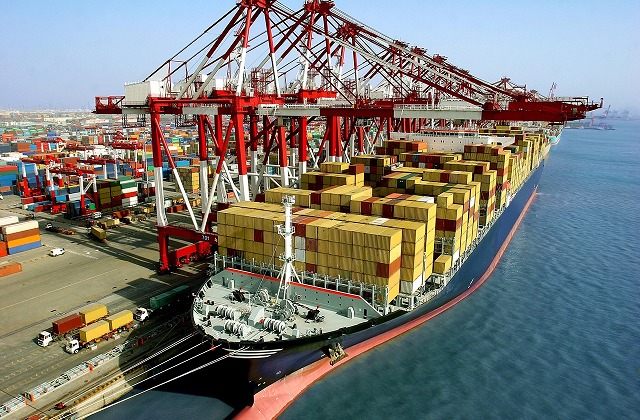
Nigeria’s maritime transformation is already taking shape at Lekki Deep Sea Port, and my visit to the country’s first fully automated seaport revealed just how far the industry has advanced. From the moment I entered the facility, it was clear that this port operates on a standard entirely different from what many Nigerians are familiar with. The atmosphere was one of order, precision, and efficiency proof that technology now drives the flow of cargo more than human intervention.
The first impression that struck me was the sheer scale of the yard and how flawlessly organized it appeared. Containers were stacked in towering, uniform blocks, while cranes and internal trucks moved in a smooth, almost choreographed rhythm. Lekki Port is fast becoming a major transshipment hub, and it was evident from the number of containers destined for other countries. These containers bypass normal scanning because Nigeria is not their final destination, and seeing how seamlessly they were handled offered a glimpse into the port’s growing strategic relevance.
What fascinated me even more was learning that port operations start long before a vessel arrives. Behind the scenes, a dedicated planning team works with detailed stowage information, mapping out exactly where each container will go once offloaded whether for discharge, onward transshipment, or barge movement. Electricity plays a vital role in all these processes, and the port authority, acting in its landlord capacity, ensures uninterrupted supply since nearly every operation depends on power. By the time a vessel berths, the system already knows the destination of each unit of cargo, leaving very little room for guesswork.

The biggest revelation, however, came at the automated truck gates. There are no officers manually opening barriers, no clusters of drivers waiting to negotiate access, and no physical interference of any kind. Every truck must book an online time slot using the DBS system. The gate operates strictly on the allocated time arrive too early or too late and the gate simply refuses to open. The system scans the DBS slip, checking the container number, type, and timing. Any mismatch results in an automatic denial of entry. Inside the port, a second round of scanning ensures that no truck can swap documents or manipulate access. Watching this process play out made it obvious why crowding and gate-side delays are nonexistent at Lekki Port.
Inside the yard, the automation becomes even more impressive. The system already knows which truck is assigned to which container, so internal vehicles reposition the cargo in advance to ensure swift loading. Everything moves in a coordinated fashion, significantly reducing waiting time and eliminating confusion. The level of synchronization between the equipment, the truck drivers, and the terminal software mirrors the standards seen in some of the world’s most efficient ports.
My tour eventually took me to the barge operations section, where I observed a similar level of discipline and planning. Most barges arrive tug-propelled, and their loading and discharge schedules are digitally aligned with the port’s operations. The process is smooth, predictable, and free from the bottlenecks commonly associated with manual coordination.

By the end of my visit, one conclusion stood out clearly: Lekki Port represents a bold leap forward for Nigeria’s maritime sector. Its reliance on automation, precision planning, and minimal human contact not only boosts productivity but also positions the port as a world class gateway capable of competing with leading ports across the globe.
Hannah Tedunjaye , a news reporter writes from Lagos.








One Comment