

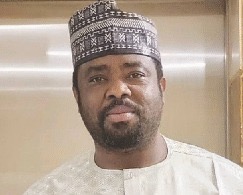
The Kano Free Trade Zone (KFTZ) is emerging as an economic hub for manufacturing, employment generation and regional trade, with operators crediting improved Customs operations with making business processes more efficient. In this interview, former Chairman of the Association of Nigerian Licensed Customs Agents (ANLCA), Kano Chapter, and investor, Alhaji AbdulRashid Nasidi, spoke with Ismail Aniemu about his experience with the Nigeria Customs Service, the growth of manufacturing activities and its emerging export links with markets in Niger and Cameroon.
(Q) As part of our overview of Customs operations in Kano, how would you assess the impact of Nigerian Customs Service operations on your business? What type of business do you operate in Kano, and how would you describe your relationship with the Nigeria Customs Service?
My name is AbdulRashid Nasidi, former Chairman of the Association of Nigerian Licensed Customs Agents (ANLCA), Kano Chapter. I am also a clearing agent and an investor operating within the Kano Area Command.

My relationship with the Nigeria Customs Service is therefore twofold. As a clearing agent and an investor, I work closely with Customs in the course of my business. In many ways, our activities are closely connected, as we depend on each other to facilitate trade and ensure the smooth movement of goods.
(Q) How have the operations of the Nigeria Customs Service affected your business, and to what extent would you say Customs has facilitated trade in Kano?
Customs affects us 100% because we cannot do without the Service. The system changes frequently, but the changes we have seen have helped improve the business environment. Since the coming of B’Odogwu, things have changed significantly. The processes have become smoother and faster, and I believe Customs is doing its best to facilitate trade.
The current Acting Controller in Kano, Deputy Controller Usman Adamu, has also made a significant difference. I have rarely seen someone who understands and pays attention to every aspect of the operation the way he does. The revenue figures generated under his watch are a clear indication of the improvement.
For instance, in the Free Trade Zone, we generated about ₦24 billion last year, compared with not more than ₦6 billion the previous year. This year is not yet over, but we are already projecting that the figure could reach about ₦40 billion to ₦50 billion. To me, that represents a significant improvement in Customs operations and trade facilitation in Kano.
(Q) How would you assess the contribution of the Free Trade Zone to employment generation in Kano?
As I said earlier, the Free Trade Zone has a significant impact on employment. We currently have more than 5,000 direct workers operating within the zone, while indirect employment is estimated at more than 20,000. Customs operations support us 100% because without their support, it would be difficult to sustain and expand these businesses.
This is why I believe we need to encourage more manufacturing and processing activities in the Free Trade Zone. People sometimes think that bringing more finished goods through the terminals will create more jobs, but I do not believe that will have the same impact. Terminals mainly handle finished goods, while the Free Trade Zone focuses more on bringing in raw materials for production. When you support manufacturing, even a small company can employ 30 people, while larger companies can employ hundreds or even thousands.
For example, I have one company that employs about 1,200 people, another with about 300 workers and another with about 400. I am also planning to establish another operation that will initially employ between 30 and 50 people, with plans to gradually increase the workforce to about 1,500.
The new operation will produce singlets locally, including the sewing and other stages of production. We currently have about 150 sewing machines, and each machine requires an operator, apart from managers, storekeepers and other supporting staff. Instead of importing these products from China, we want to produce them here in Kano. We already export some of our products to countries such as Niger and Cameroon. This is the kind of manufacturing activity that can create employment and contribute to the local economy.
(Q) So what’s the volume of your export so far?
The volume is not yet very large because exporting is still relatively new for us. At the moment, exports account for about 10 to 15 per cent of our business. However, based on the markets we are currently exploring, Insha Allah, we expect the volume to increase significantly this year and into next year.
(Q) Could you tell us more about the products you manufacture and the different product lines you currently have?
We are involved in several areas of manufacturing. We are into textiles, rubber shoes and plastic products such as jerrycans and buckets. We also produce packaging materials for cooking oil.
In the food sector, we produce and process items such as fish and meat, and we also manufacture food warmers and plastic plates. We are also involved in the production of galvanised sheets used for roofing.
Very soon, Insha Allah, we plan to start producing spaghetti. It will be a large-scale operation with several machines dedicated to the production process. We are expanding our manufacturing activities to increase local production and reduce dependence on imported products.
(Q) Are you also involved in the hospitality sector, particularly hotel and related businesses?
We are not directly involved in the hospitality sector, but we have a partner who operates in that area. Our own business interests are focused on manufacturing and related activities.







One Comment