
IMION Flags Off Advanced Blue Economy Course as Experts Advocate Exploitation of Marine Resources

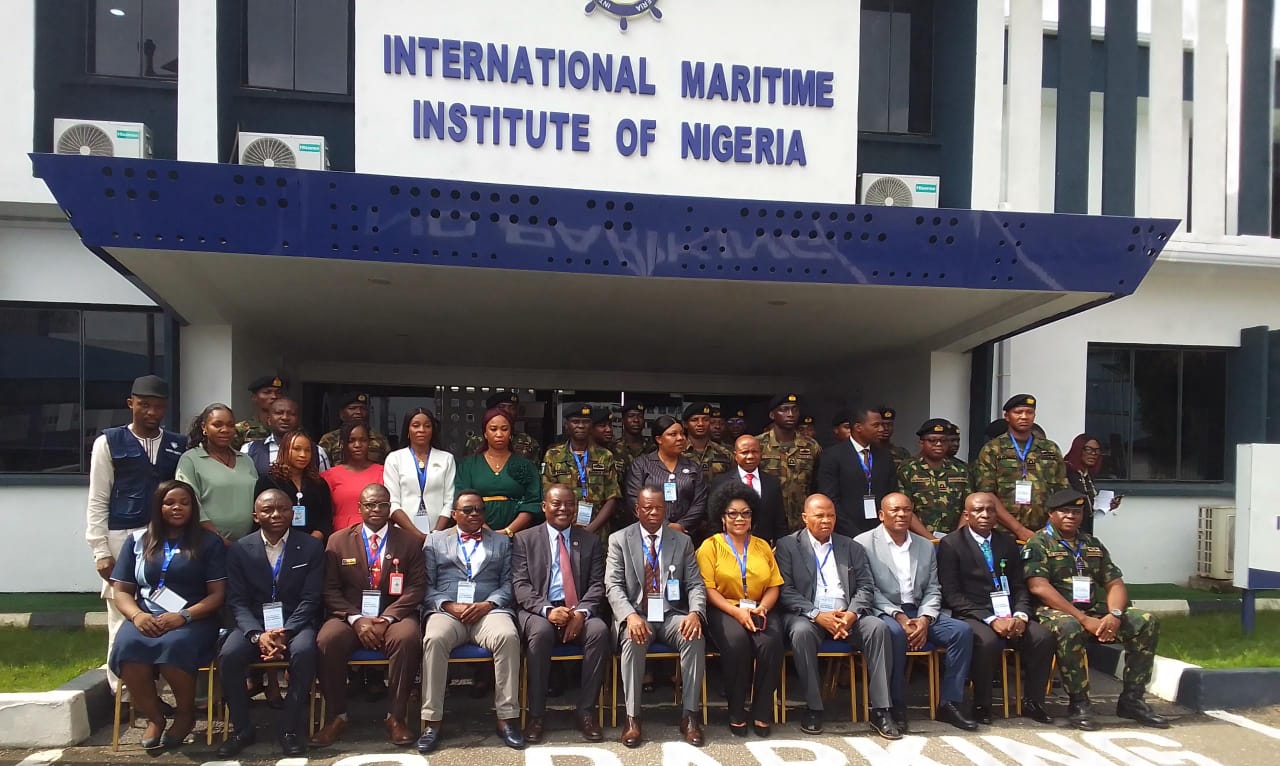
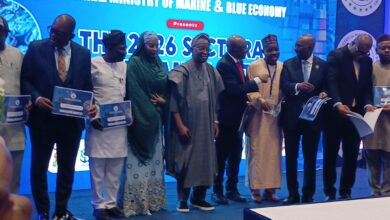
The International Maritime Institute of Nigeria (IMION) has commenced a three-day Advanced Course on the Sustainable Blue Economy, bringing together maritime professionals, policymakers and stakeholders to strengthen national capacity in ocean governance and marine resource management.
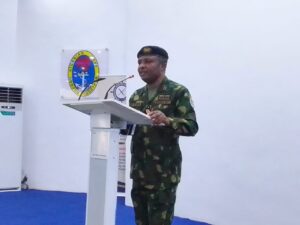
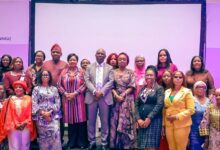
Declaring the programme open at the Institute on 3rd November , 2025, the Director General of IMION, Rear Admiral Thaddeus Udofia (Rtd.) said the course reflects the growing importance of Nigeria’s maritime domain and the urgent need for sustainable practices to safeguard ocean resources.
Udofia noted that oceans remain central to national and global prosperity, supporting transportation, fisheries, energy, tourism and environmental regulation. He warned that these systems are increasingly threatened by climate change, environmental degradation, unsustainable exploitation and emerging security concerns.
According to him, the course was designed to deepen participants’ understanding of contemporary issues, strengthen institutional capacity and promote innovative approaches to sustainable marine resource management.
The programme will expose participants to global frameworks, scientific insights and emerging innovations in the blue economy.
Course modules include blue economy fundamentals, innovation opportunities, sustainable business strategies, and international regulations governing ocean resources.
Participants are expected to leave the training with the ability to articulate the importance of the blue economy, identify innovative technologies, develop strategies aligned with the Sustainable Development Goals, navigate international regulatory systems and apply their knowledge to real-world maritime challenges.
Rear Admiral Udofia expressed appreciation to the Chief of the Naval Staff, Vice Admiral Idi Abbas, for nominating officers for the course and for his continuous support to the institute. He also acknowledged former CNS Vice Admiral Emmanuel Ogalla for initiating the establishment of IMION.
Special recognition was given to the Minister of Marine and Blue Economy, Adegboyega Oyetola.
The DG further commended IMION’s partners, including Paul Usoro & Co and Peace Building Development Consult, for their role in facilitating the programme.
With the course officially declared open, maritime stakeholders are expected to spend the next three days engaging in policy dialogue, knowledge sharing and collaborative action aimed at advancing Nigeria’s drive toward a sustainable blue economy.
“The successful transition to a sustainable blue economy depends on informed decision-making, robust collaboration and a shared dedication to protecting our marine environment.”
Director General of the Nigerian Institute of International Affair, Eghosa Osagie stated that Nigeria must build the capacity to fully harness the economic potential of its marine resources if it hopes to benefit from the rapidly growing global blue economy.
Speaking during a session on diplomacy, coastal communities and civil–military collaboration, Osagie stressed that oceans now hold the key to future prosperity, with countries and global agencies placing increasing emphasis on marine resources. He also warned that competition for these resources could, in extreme circumstances, fuel international conflict.
Osagie highlighted Nigeria’s long-standing underutilisation of its maritime potential, using the example of the Ibru fishing organization, which for decades sourced most of its fish from Mozambique rather than Nigerian waters. According to him, this reflects the country’s historic failure to prioritise the blue economy.
He identified insecurity in Nigeria’s maritime domain as a major threat to economic development, stressing that securing coastal areas remains a national priority. While acknowledging the role of military action, he emphasised that diplomacy and non-violent strategies must complement traditional security efforts.
He urged security agencies to incorporate peacetime psychological strategies, such as community engagement and confidence-building, into their operations.
Osagie outlined ways the Navy and military could work with fishing communities, including establishing young fishers’ clubs, supporting local initiatives and strengthening healthcare and humanitarian outreach already underway.
He said community participation remains central to sustainable maritime security and cited the United Nations’ multi-stakeholder model, which prioritises consultation, accountability and ownership.
Osagie referenced World Bank community-development models from the 1990s, explaining how local stakeholders can jointly identify problems, propose solutions and contribute funding. Such collaboration, he said, strengthens ownership and ensures sustainability.

He advocated a similar participatory system for Nigeria’s coastal communities, where residents help design interventions, contribute counterpart funding and oversee management committees.
Osagie also commended the Director General of IMION, describing him as one of the institute’s most outstanding alumni and expressing confidence in the institute’s role in strengthening marine governance and supporting the blue economy agenda.
He stressed that Nigeria’s future progress depends on the collective efforts of government, military institutions, development partners and coastal communities.
“Diplomacy is not the opposite of military action. It is a useful complement because it offers non-violent pathways through persuasion and psychological operations to achieve the same goal.
“We must identify key social forces, community-based groups, civil society advocates and military participants in the fishing value chain. Climate change has worsened challenges for coastal dwellers, including the destruction and displacement of navigational aids, which has caused fisherfolk to drift into foreign waters.”


One Comment