


The Federal Government has approved the reopening of the Tsamiya Border Corridor as part of renewed efforts to enhance border governance, facilitate legitimate transit trade, and strengthen security along Nigeria’s northwest frontier.

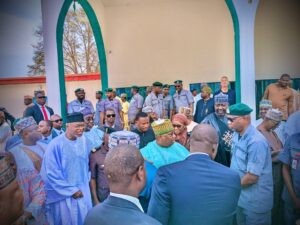
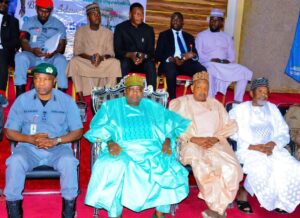
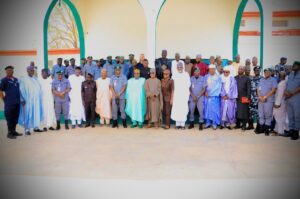
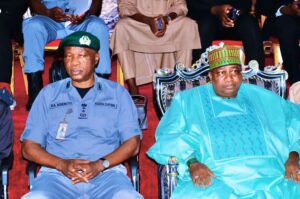
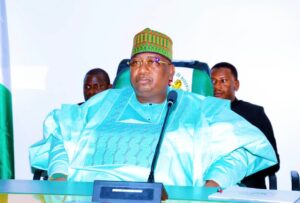
This was disclosed on Saturday, 7th February 2026, during a high level stakeholders’ engagement at the Government House, Birnin Kebbi, convened by the Nigeria Customs Service (NCS) and led by the Comptroller General of Customs, Bashir Adewale Adeniyi.
The meeting brought together key security agencies, traditional rulers, economic operators, and international customs representatives to review practical strategies for improving border management while ensuring seamless movement of lawful goods through the corridor.
Speaking at the engagement, Adeniyi said the reopening of the Tsamiya Corridor reflects the Federal Government’s determination to strike a balance between national security imperatives and trade facilitation, particularly along strategic land borders and the River Niger axis linking Nigeria with neighbouring countries.
He stressed that addressing modern security and transit trade challenges requires structured inter-agency and cross-border collaboration, noting that criminal elements operate through cooperation, shared resources, and organised networks, making coordinated action among security agencies imperative.
Adeniyi disclosed that the NCS is deepening engagement with customs authorities in the Republic of Niger and the Republic of Benin, with strong political backing from President Bola Tinubu and President Patrice Talon, to resolve longstanding transit trade challenges through Customs-to-Customs cooperation.
He noted that diversion of goods in transit remains a cross border issue and not one peculiar to Nigeria, adding that effective enforcement depends on clear operational guidelines, coordinated monitoring, and strict compliance.
Under the renewed framework, the CGC explained that the Tsamiya Corridor will operate with enhanced oversight, including ICT driven monitoring systems, strengthened profiling of licensed customs agents, and close surveillance of transit cargo. He warned that any truck found operating outside approved routes would be seized, while offenders would face prosecution in line with existing transit regulations.
Adeniyi also commended the Kebbi State Government for promoting a coordinated security environment and acknowledged the contributions of retired senior customs officers from the state to the growth of the service and national security architecture.
In his remarks, Kebbi State Governor, Nasir Idris, reaffirmed the state government’s commitment to supporting Customs and other security agencies through logistics, infrastructure, and sustained community engagement in border areas, while prioritising security and an enabling environment for effective operations.

The engagement was attended by the Immediate Past Governor of Kebbi State and Minister of Budget and National Planning, Senator Atiku Bagudu; former Governor Usman Dakingari; customs officials from the Republic of Benin; representatives of the Office of the National Security Adviser; heads of security agencies; traditional rulers; and key economic operators.








One Comment