

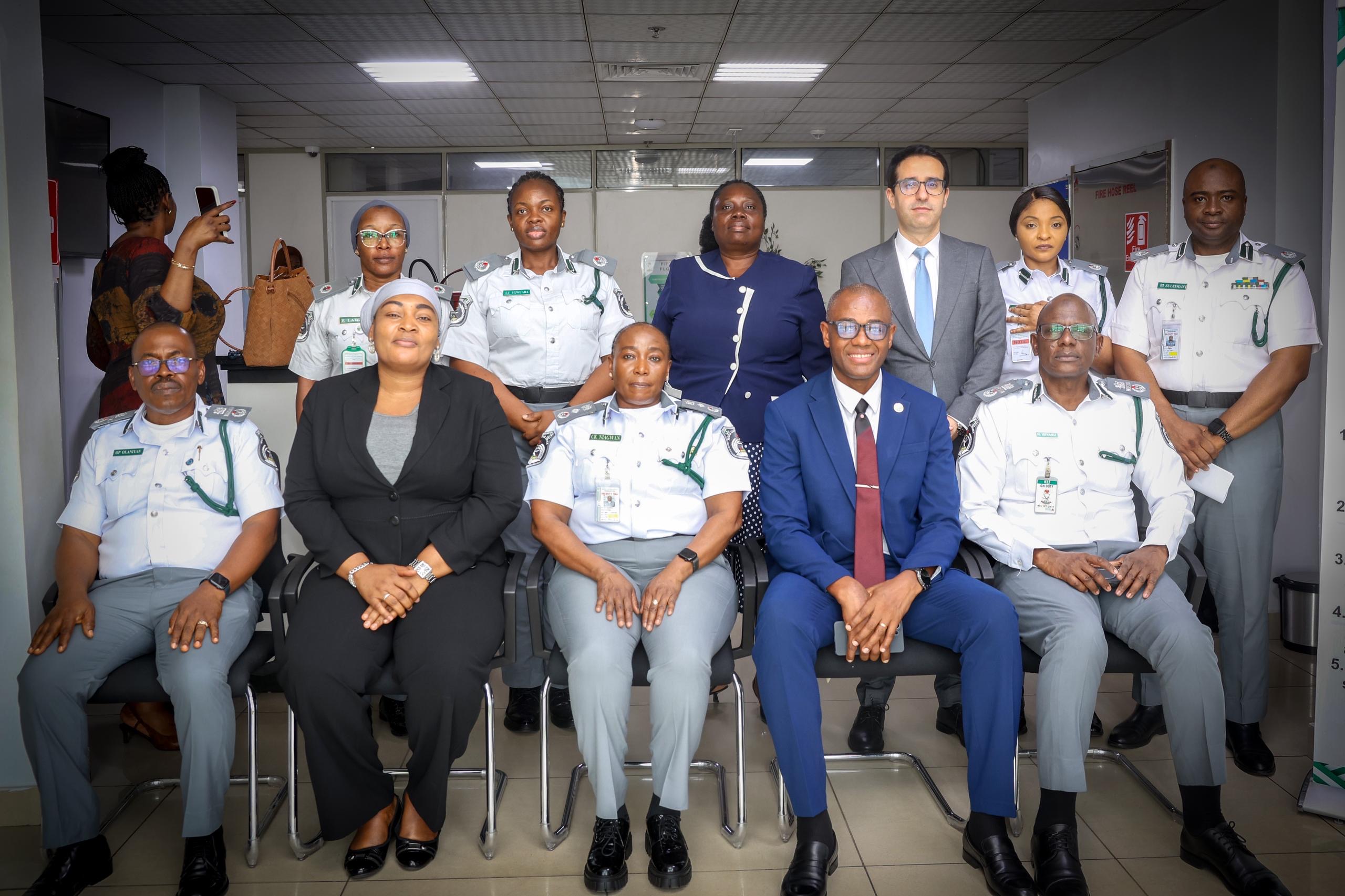
The Nigeria Customs Service (NCS) has intensified efforts to boost regional trade integration, engaging the African Continental Free Trade Area (AfCFTA) Secretariat on the rollout of a Simplified Trade Regime (STR) aimed at empowering small scale traders and Micro, Small, and Medium Enterprises (MSMEs).
The strategic meeting, held on March 23, 2026, at the NCS Headquarters, brought together senior customs officials and an AfCFTA delegation to align frameworks for the implementation of the STR, a key initiative designed to ease cross-border trade across Africa.
Representing the Comptroller-General of Customs, the Deputy Comptroller-General in charge of Tariff and Trade, Caroline Niagwan, reaffirmed the Service’s commitment to trade facilitation through streamlined and transparent processes, noting that the goal is to make trade easier, more transparent, and inclusive for small-scale traders while ensuring compliance with national and regional trade regulations.
Leading the AfCFTA delegation, Pedro Estevao underscored Nigeria’s pivotal role as the designated pilot country for the STR in West Africa, noting that the country’s vast market size positions it as a catalyst for inclusive growth and regional commerce.
A key highlight of the meeting was the presentation of the NCS draft Standard Operating Procedure (SOP) for implementing the STR. The framework outlines simplified customs processes covering informal cross-border trade, passenger baggage, and low-value e-commerce transactions, while incorporating digital declaration systems and risk-based controls to improve efficiency and compliance.
Further insights were provided by AfCFTA consultant Nabil Zibani, who emphasized the need for accessible and simplified systems that enable MSMEs to participate more actively in cross-border trade.

Deliberations revealed strong alignment between Nigeria’s proposed SOP and the broader AfCFTA framework. Both sides agreed on key priorities, including simplifying documentation, deploying digital platforms for trade declarations, adopting de minimis thresholds for low-value goods, and promoting inclusive participation, particularly among women traders.
The meeting also highlighted the importance of sustained technical collaboration to address operational challenges and ensure seamless integration between national and continental systems.
The engagement marks a significant milestone in Nigeria’s journey toward implementing the Simplified Trade Regime, reinforcing its leadership role within AfCFTA and its broader commitment to facilitating legitimate trade, enhancing regional integration, and driving inclusive economic growth across the continent.







One Comment