

The Nigeria Customs Service (NCS) has launched the automation of the process for acquiring and renewing licences and permits, in a move aimed at enhancing trade facilitation, reducing operational costs, and boosting revenue generation.
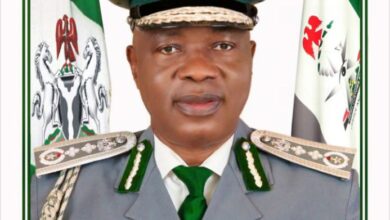
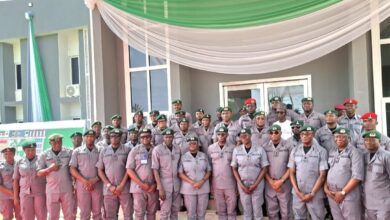
Speaking at a sensitisation programme, the Service said the initiative forms part of the modernisation drive under the leadership of the Comptroller-General of Customs (CGC), Dr. Bashir Adewale Adeniyi, whose administration is anchored on the pillars of Consolidation, Collaboration, and Innovation.
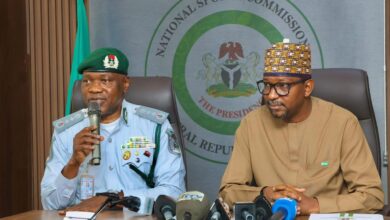
The Deputy Comptroller-General of Customs in charge of Tariff and Trade, C.K. Niagwan, who was represented by the Zonal Coordinator of Zone A, Assistant Comptroller-General of Customs, Mohammed Babandede, described the automation project as a major milestone in aligning Nigeria’s Customs procedures with global best practices.
He noted that the world has become a global village and that digitisation of Customs processes is essential for efficiency, transparency, and competitiveness in international trade.
According to him, the automated system will allow importers, clearing and forwarding agents to apply for and renew licences and permits from their offices or homes, eliminating the need for physical visits to Customs Headquarters in Abuja.
“The automation will significantly cut the cost of doing business, reduce movement-related risks for stakeholders, and save valuable time that can be redirected to other productive business activities,” he said.
He further explained that the system is designed to minimise fraudulent practices, as uploaded documents will be automatically validated, with fake documents rejected by default.
The platform will also enable the Licences and Permits Unit to view outstanding assessments through the B’Odogwu system, ensuring only compliant companies are processed.
The Customs official added that the initiative would enhance statutory revenue generation, noting that every licence and permit processed attracts statutory fees, while subsequent import and clearance activities also contribute to government revenue.
He stressed that automation would improve productivity among Customs officers, enabling them to process more applications within minutes and increase operational output.
He urged officers whose duties interface with the Licences and Permits Unit to embrace the system, describing its success as a collective responsibility. Stakeholders were also encouraged to adopt the platform, while the media was called upon to support awareness and public enlightenment.

The NCS assured that bond seat officers across Commands have been trained on the system, and stakeholders would be guided during the sensitisation programme. Handbooks and step-by-step procedure posters will also be distributed to facilitate seamless adoption.
The automation of licences and permits is part of the broader digital transformation agenda of the Nigeria Customs Service aimed at enhancing trade facilitation, transparency, and revenue performance in the maritime sector and beyond.





One Comment