

AKUTAH: New Maritime Regulatory Reforms Will Unlock Investment, Efficiency, Global Competitiveness

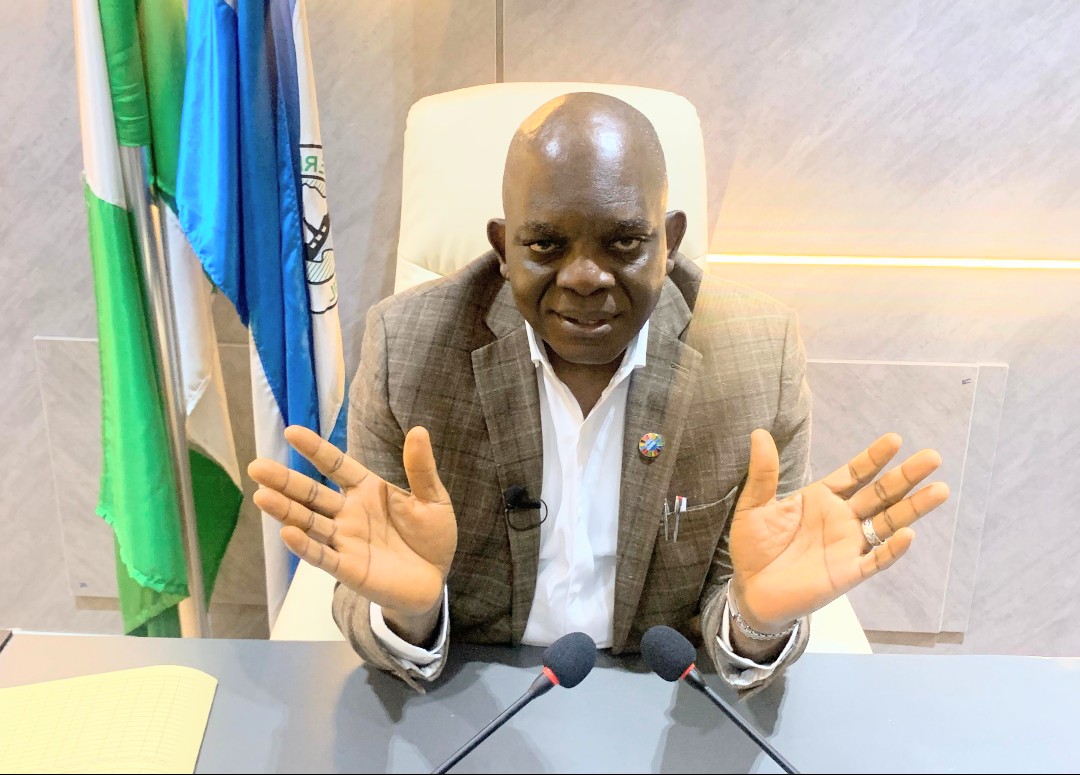
In this exclusive interview, Dr. Pius Akutah, Executive Secretary/Chief Executive Officer of the Nigerian Shippers’ Council reflects on the Council’s most significant milestones, outlines expectations for the next phase under the current administration, and highlights how ongoing reforms from port regulation to inland logistics and dispute resolution are laying the foundation for a more efficient and globally competitive maritime economy
Excerpt
Looking back at your two years as Executive Secretary, what would you identify as the most significant achievement of the Council on your watch?
Two years have indeed come and gone, and within that period, a great deal has happened in the Council. As you requested, I will highlight the most significant achievement we have recorded which is the Nigerian Port Economic Regulatory Agency Bill.
The Bill, sponsored by the Speaker of the Federal House of Representatives, Honourable Tajudeen Abbas, progressed through both chambers of the National Assembly in record time and has now been passed.
At the moment, it is undergoing final refinements by the National Assembly after being vetted by the Office of the Attorney-General of the Federation. Once this stage is completed, it will proceed to the President for assent.
This development is particularly important because the Council has long operated under a 1978 decree, now codified as CAP N133 LFN 2004.
The Nigerian Shippers’ Council Act an outdated law that no longer reflects the realities or reform direction of the maritime sector under the administration of President Bola Ahmed Tinubu.
For us as a Council, this new legal framework is crucial.
It equips us to address sectoral challenges more effectively and positions the industry to attain the targets set by Mr. President for a modern, efficient, and globally competitive maritime sector.
Q:It’s the first half, give us an idea of what you expect in the second half that you have stepped into now.
First of all, I must congratulate Mr. President for the leadership he is providing in driving the economic rebirth of this country. For many years, we have spoken about diversifying Nigeria’s economy, but for the first time, we are now witnessing true diversification in both real time and in practical terms.

The maritime and blue economy sector holds immense potential. As we unlock these opportunities, we will generate significant wealth, create jobs, and lift many Nigerians out of poverty. The reality and importance of this sector are now clearly visible to everyone. Fortunately, we have a proactive Minister who is working tirelessly to reposition Nigeria on the global stage as a true maritime nation.
At this moment, the Honourable Minister is in England, engaging with various countries ahead of Nigeria’s bid for the IMO Category C election. This, combined with the passage of the Marine and Blue Economy Policy championed by His Excellency Adegboyega Oyetola, shows that the necessary foundations for the sector have been firmly laid. As we move into the second half of this administration’s tenure, the next two years carry great significance for the Ministry of Marine and Blue Economy.
A lot has already been done to prepare the ground for what is coming next. I believe that with the structures now in place, we will witness major progress in the next phase. For us as a Council in particular, we are focused on securing assent to our bill.
Once it becomes law, we will transition into a new agency, the Nigerian Port Economic Regulatory Agency. In this next phase, we will establish a strong regulatory framework that will entrench corporate governance in our operations as regulators.
We will introduce regulations that enhance efficiency, promote healthy competition among industry players, safeguard existing investments, and encourage new ones.
We also intend to take a more proactive approach in managing disputes within the sector. We understand how costly such disputes can be and how significantly they can weaken investment prospects. With the strength of the new law, we will be better positioned to provide the leadership required to ensure efficiency, stability, and growth within the maritime industry.
As regulators, our goal is to support and amplify the progress currently being driven by the Ministry and the Presidency, ensuring that the momentum we are seeing today translates into tangible, long term transformation for the sector.
Q:The port ecosystem has various stakeholders, manufacturers, importers, exporters, shipping companies, terminal operators, and what have we. The Shippers Council, to a large extent, has started performing its role as an economic regulator based on the Gazette. Now, could you give us an overview of your interaction with these various stakeholders and how they are cooperating with you in respect of this mandate that you have already undertaken so far?
The Nigerian Port Economic Regulation of 2015 has remained our guiding document and the framework through which we currently execute our mandate. I must acknowledge that stakeholders have demonstrated a genuine willingness to work collaboratively with us. Everyone recognizes that the sector is facing challenges, and no one is interested in sustaining these problems. Instead, stakeholders are focused on protecting their investments and ensuring profitability.
So far, engagements with stakeholders have been smooth. We have not encountered any major issues, and shippers’ associations across the country have fully cooperated with us. I am pleased to note that we have introduced certain policies, and stakeholders have promptly adjusted to them. This level of responsiveness has contributed to a healthy working relationship as we move forward.
We all understand that the more reformed and efficient the sector becomes, the better it is for every player operating within it. Today, the shipping subsector has become one of the most attractive areas of employment, offering a minimum wage of over ₦200,000 a standard negotiated by the Council. While this wage structure has existed for over two decades, it is important to emphasize that achieving and sustaining this milestone would have been impossible without the active support and contributions of stakeholders.
Our shared understanding and collaboration have enabled us to meet many of our targets with ease. I can confidently say that stakeholders have remained fully engaged and cooperative, and I expect this level of partnership to strengthen even further when we move into the enforcement stage of the new law.
Ultimately, we are all working toward the same goal a maritime sector that strengthens our economy, drives job creation, supports investment, and contributes significantly to achieving the $1 trillion economy target set by Mr. President.
Q:The port ecosystem carries an inter-ministerial outlook. Some agencies are domiciled in the same ministry that you belong, which is the Ministry of Marine and Blue Economy, while others are in other ministries. Could you give us the extent to which these various government agencies , especially those not in the same ministry with you are keying into, what you are doing and to what extent have you also modernized your operations in a way that will be in tandem with global best practices, talking about national single window and port community system?
Most of these interventions and reforms are still ongoing. Within the Ministry of Marine and Blue Economy, the traditional agencies that everyone is familiar with have now been fully integrated into the ministry’s policy framework. As a result, challenges related to collaboration and coordination have significantly reduced, as the ministry now maintains firm oversight and alignment across its agencies.
For agencies that were previously under other ministries, you will recall that many have undergone restructuring. Several of those that naturally belong under the Ministry of Marine and Blue Economy have now been transferred accordingly. Today, the ministry hosts a wider range of agencies than before, including those moved from other ministries. However, as rightly noted, the maritime ecosystem still intersects with numerous ministries.
For example, as a Council, we promote an intermodal transport system, which cannot be achieved without engaging the Ministry of Transportation. Over the years, the Council has signed various Memoranda of Understanding (MoUs) with agencies located in other ministries. One such MoU exists with the Nigerian Railway Corporation, designed to ensure a harmonious working relationship and to promote key services within the sector. Specifically, this MoU guides cooperation between the Nigerian Shippers’ Council and the Nigerian Railway Corporation on cost structuring and ensures that shippers are not shortchanged when using the rail system recognizing that rail remains the most efficient and cost effective means of cargo movement across the country. Similar agreements exist with other agencies across different ministries.
The Nigeria Customs Service (NCS) is also a major stakeholder in the country’s maritime structure, and we maintain an excellent and robust working relationship with them. As a Council, our guiding principle has always been to advocate for cooperation with every stakeholder, because collectively we are executing the mandate of Mr. President, as provided under Section 5 of the 1999 Constitution.
The executive powers of the country are vested in the President, and all of us, as chief executives of various agencies are simply assisting him in delivering on his mandate. There is no room for creating turf battles or engaging in agency rivalries. Our goal is to work collaboratively to ensure the effective execution of the President’s vision for the maritime sector and the nation as a whole.
Can we have a kind of measurable projection in respect to the Nigerian Port Economic Regulatory Bill? What are the immediate, medium, and long-term gains that we expect from that bill if signed into law?
There are numerous gains that will come with the passage of this law. Its signing alone will establish a strong and coherent framework for effective regulation of the sector and I can assure you that the port efficiency we have been discussing for years will finally become attainable. To quote one of the industry’s respected leaders, Chief Adebayo Sarumi, former Managing Director of both the NPA and the Nigerian Shippers’ Council, he noted during the public hearing that many of the sector’s challenges began in 2006 after port concessioning took place.
According to him, the major gap created at that time was the absence of a port regulatory agency. Had such an agency been appointed immediately, many of the inefficiencies that later emerged would have been avoided. The need for a dedicated port regulator has existed since 2006. Recognizing this gap, the government later adopted a stopgap measure by assigning regulatory responsibilities to the NSC, supported by a Presidential Order and the 2015 regulations issued under that order.
What this demonstrates is that a comprehensive law to streamline port regulation in Nigeria has been long overdue.
The signing of this bill into law will mark the beginning of a new regulatory era one that guarantees efficiency, transparency, and stability in the sector.
In the medium term, we will see a surge in investment as investor confidence increases. Predictability both in regulation and in return on investment is a key factor for investors, especially in a sector as capital-intensive as the port and shipping industry. Investments here require significant financial commitments, and investors must be certain that the regulatory environment will remain stable.
They need assurance that policies and laws will not suddenly shift in ways that could negatively affect their investments. Without this clarity and predictability, no serious investor will commit substantial funds to such a sensitive and high cost sector.
Even with the policy adjustments already made, we have seen encouraging progress. Several investors have begun injecting more capital into the sector. Our review of the financials of various service providers shows that many have made notable investments over the last two years an encouraging sign of trust and optimism.
In the long term, Nigeria will begin to fully integrate into the global maritime community. Our processes would have been streamlined, and key systems such as the cargo tracking note, the port community system, and the National Single Window will be fully operational. Together with a solid regulatory framework, these systems will create a modern and efficient maritime environment.
At that point, Nigeria will truly stand out as a maritime nation of repute, recognized globally for its efficiency, competitiveness, and regulatory strength.
Q:Give us an insight into the truck transit park that has been promoted by the Nigerian Shippers Council, a brief into what the geographical spread is, project completion, and their contribution to the good and growth of the Nigerian economy, particularly the logistics sector.
Nigeria is a country located in West Africa, and across the continent from North Africa to West, Central, and Southern Africa you find port infrastructures spread widely.
As the most populous nation on the continent, Nigeria remains a country the rest of Africa looks up to, even though they are not waiting for us. Several African nations are already making deliberate efforts to develop their maritime infrastructure, especially in the area of logistics.
Nigeria is not entirely behind, but we are behind to an extent, particularly because Africa expects us to take the lead in developing logistics infrastructure.
At the Nigerian Shippers’ Council, we have carefully studied these infrastructural gaps and what is needed to address them.
Today, we have developed two important maps one covering the entire African continent. It highlights the distribution of critical maritime infrastructure, especially those linked to logistics. Under the African Continental Free Trade Area (AfCFTA), it is evident that one of the biggest challenges will be maritime logistics. Connecting African countries remains extremely difficult. For example, a vessel carrying cargo from Nigeria to Ghana may first go to Europe before returning to Ghana.
This is inefficient and time consuming, underscoring the urgent need for proper African connectivity. A key challenge is that most African countries are not ship owning nations. They lease vessels, and these vessels operate on predetermined routes that cannot easily be altered to create direct African shipping lanes. That is the crux of the problem.
Bringing it back home, we examined logistics supporting infrastructure and concluded that, as a Council, we must promote the development of inland dry ports, transit parks, border facilities, and similar structures. These will support the movement of transit cargo from the hinterlands to the seaports and bring shipping services closer to shippers across the country.
Regarding inland dry ports, we have several legacy projects. When Mr. President assumed office, he pushed for the completion of the nearly finished Funtua Inland Dry Port. Currently, the operational dry ports are mainly in the north-western region , Kano, Kaduna, and Katsina. Others exist across the country, but their progress has been slow.
We are working with state governments to accelerate their completion. In Borno State, for instance, a privately developed inland dry port has been established. We are now engaging stakeholders to fast-track its completion so it can be commissioned during the second half of the President’s tenure. The Governor of Borno State is particularly committed to achieving this.
For Vehicle Transit Parks , one of the major issues you raised we observed that many road accidents are caused by driver fatigue. Drivers travel long hours without rest, leading to fatal accidents. To address this, we began promoting the establishment of Vehicle Transit Parks.
These parks are not only rest stops; they will also serve as economic hubs where drivers can relax, refresh, and secure their cargo. Rather than parking in unsafe roadside areas where goods can be stolen or damaged, drivers will have safe, secure, and well equipped facilities. We currently have about 14 of such parks at different stages of development nationwide. We have been intentional about ensuring an even geographical spread, and the map clearly shows this distribution.
On rail infrastructure, we appreciate this administration for completing the Lagos Kano rail corridor. We are also hopeful about the development of the eastern rail line. Rail infrastructure is capital intensive, but it remains the cheapest and safest means of moving cargo across the country. Once fully optimized, these systems will significantly ease the movement of cargo for shippers and enhance overall national logistics efficiency.
Beyond this, Nigeria has over 10,000 kilometers of inland waterways. The government is exploring dredging options to make them navigable.
This too is capital intensive, but once completed, it will greatly support cargo movement through waterways and contribute meaningfully to economic growth.
As a reporter traveling across borders, I have seen border information centers with Shippers Council logos. I have not been able to enter these centers to find out what they do there. Could you give us an idea of what the BICs do, what they have achieved so far and the impact they have made on trans-border trade?
Many of our border communities live directly along the border lines, yet they interact as though they are within a single country. They trade freely among themselves, and while much of this trade is informal, it is still significant. If we fail to capture these activities, our national trade databank will remain incomplete.
This is why we established the Border Information Centers (BICs).
Their purpose is to monitor the informal trade activities taking place in border towns and crossing points, document them, and ultimately promote processes that will formalize these activities. By doing so, we can fully capture them in our data systems. These centers are therefore critical to the accuracy and completeness of our trade information. We are also engaging with neighboring countries to address issues such as smuggling.
The aim is to ensure that trade across the borders is properly recorded and that illegal smuggling is minimized. Strengthening border monitoring helps ensure that only legitimate trade occurs, while protecting the economy from illicit activities. These are some of the key functions carried out by the Border Information Centers.
First of all, I must admit that Nigeria made a mistake by not signing the agreement immediately when it was negotiated. Nigeria was an active part of the negotiation process, and it all began in Abuja. We should have signed at the same time others were signing so we could take advantage of the opportunities available at the onset.
Because we delayed, we lost many key opportunities to the secretariat in Ghana, opportunities that should naturally have been ours. Nigeria ought to have hosted the secretariat, but that chance is gone. The position of Secretary General and several other strategic roles that Nigerians could have secured were lost.
Thankfully, the agreement was eventually signed, and now Nigeria needs to prepare itself to fully engage and maximize the benefits within it.
One of the immediate priorities, as you earlier pointed out, is strengthening our connectivity. Nigeria must work towards becoming a maritime hub not just for West Africa but for the entire continent so we can ease the connectivity challenges across Africa, which remain a major obstacle to intra-African trade.
We must also stimulate our production economy, encouraging manufacturers to return to producing high quality Nigerian goods that meet the standards required across Africa. When we achieve this, Nigerian products will be competitive, sought after, and able to sell across the continent under the agreement.
Nigeria needs to act decisively in these areas to fully participate and ensure that the benefits of trading under the agreement are felt by Nigerians across the board.
As a regulator with a federal mandate, we want you to award marks. Could you give us, on a scale of 0 to 100 percentage-wise, the level of compliance so far by port operators with Nigeria Shippers Council mandate?
I am aware that stakeholders in this sector have invested significantly, many of them committing very substantial capital and naturally, they want to recoup their investments and make profits.
No investor wants to operate in a sector clouded by uncertainty or inefficiencies that could hinder the smooth running of operations or delay returns on investment.
So far, any regulatory mandate that has been properly communicated to stakeholders has been met with cooperation.
For the modest reforms introduced so far, we have received tremendous support, and many stakeholders have openly aligned themselves with these reforms because they understand that a better, more efficient sector benefits everyone. In terms of rating compliance, I would say it is high. I may not attach a specific percentage, but from what we have observed, compliance has been commendable.
For instance, when we commenced the registration of service providers across the sector, a large number voluntarily came forward to register without coercion or the need for heavy enforcement. This gives me confidence that once our full regulatory mandate under the new law becomes operational, compliance will not be a major challenge. However, there is still work to be done.
Many countries are building their economies around this sector.
They are investing heavily in infrastructure, strengthening institutions, and granting them the authority needed to compete with similar institutions globally. We cannot afford to delay. We must build our institutions, strengthen them, and establish proper legal frameworks. These legal regimes will not only support us as regulators; they will apply to all players who want to do business within Nigeria.
The question is: why do we keep waiting instead of doing the right thing? The sector needs reform, and many of the agencies operating within it whether under the Ministry of Marine and Blue Economy or in other ministries need legislative updates. Most of the laws guiding the sector today are obsolete and have outlived their usefulness. We need modern, robust legal regimes that can effectively govern the maritime industry in Nigeria.
Wherever there is trade, there are bound to be disputes resolved and the maritime sector accounts for over 80 percent of trade globally and Nigeria is not an exception. Can you give us, in figures, the number of trade disputes resolved and the benefits of those disputes to the viral economy of this country on your watch?
Last year, we made significant progress in this regard and also strengthened the agency’s capacity for managing maritime conflicts. As you rightly noted, more than 80 percent of trade takes place within the maritime environment, and naturally, this comes with a high volume of disputes. These disputes are often extremely costly to resolve, especially when they end up in court. The delays associated with litigation lead to demurrage and other financial implications that we are keen to avoid.
This is why, as a Council, we strongly promote alternative dispute resolution. Our Compliance Unit is specifically mandated to handle maritime conflicts promptly so they do not escalate into lengthy court cases that waste investors’ time and erode the value of their investments.
The unit has become a dependable platform, and many stakeholders now approach us directly to help resolve their disputes. Most of these cases are settled amicably, allowing the parties involved to return to their businesses and even continue their partnerships seamlessly.
I can confirm the volume is substantial. The last count I reviewed showed that between 300 and 400 cases had been handled this year alone, with many more already processed.
What I can state with certainty is the financial impact. Last year, our interventions saved stakeholders over ₦6 billion in costs that would have been incurred had these disputes gone to court. This year, as at the last review, we have already saved more than ₦4 billion, and that figure has continued to grow. Taken together, in the last two years, we have saved the industry well over ₦10 billion funds that would otherwise have been lost to prolonged litigation and the inefficiencies that come with it.
You are wearing a shoe and as a big one, you should know where it reaches As CEO of Nigerian Shippers Council, you interface with government agencies, private companies, human beings, and international players in the maritime sector.Tell us, what is your greatest challenge in this task and going forward, what are the strategies you intend to deploy in addressing that greatest challenge?
Well, as you know, a sector of this size naturally comes with multiple challenges. However, if I were to identify the most pressing one, I would say the greatest challenge we face today is the lack of efficiency across the sector.
The system, as it stands, is not delivering the results we require. Fortunately, all hands are now on deck. The Ministry has begun reforming itself, and a number of new policies are already being rolled out policies specifically targeted at addressing this inefficiency. At the pace at which the Ministry and its agencies are currently collaborating to improve operations,
I am confident that within the next two years, we will witness significant positive changes. Equally important is the issue of legal reforms. Almost all the agencies under the Ministry of Marine and Blue Economy are working on updating their laws. Once these reforms are completed and we reposition ourselves fully, we will achieve the level of efficiency required to retain cargo that currently diverts from Nigeria as a result of operational shortcomings.
The broader economic policies of the Federal Government under President Bola Ahmed Tinubu are also supporting this progress. Many of these policies are bold and forward-looking. For example, the subsidy removal which was initially opposed by many has now begun to yield tangible results. State governments are visibly better off, with allocations now significantly higher than what they received under the previous administration. For the first time, we also have a clearer picture of Nigeria’s actual fuel consumption.
Similarly, the dollar–naira policy, particularly the floating of the naira, has helped stabilize the exchange rate. We are seeing a gradual downward movement rather than consistent spikes, and as we continue to reduce the dollar component in our economic value chain, the naira will continue to strengthen.
With these reforms, the commitment of all stakeholders, and the strong political will already demonstrated, I am confident that in the coming years we will achieve the level of efficiency this sector needs to fully support and grow the Nigerian economy.








Hello!
This post was created with XRumer 23 StrongAI.
Good luck 🙂