

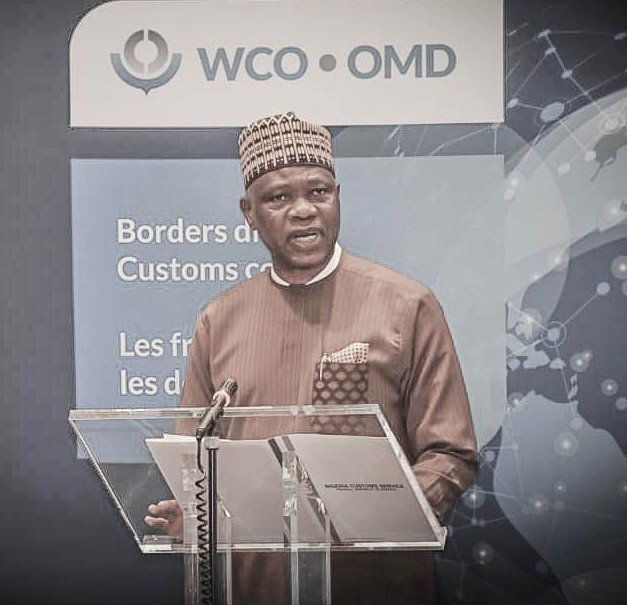
The Comptroller-General of the Nigeria Customs Service and Chairperson of the Council of the World Customs Organization (WCO), Adewale Adeniyi, made history on Monday, 23 March 2026, with a landmark keynote address at the opening of the 46th Session of the WCO Enforcement Committee held in Brussels, Belgium.
 The event marked the first time in the Committee’s 43-year history that its opening session was jointly addressed by both the WCO Secretary-General, Ian Saunders, and the Council Chairperson.
The unprecedented development underscored the rising strategic importance of the Enforcement Committee and placed the Nigeria Customs Service (NCS) at the centre of a defining moment in global customs cooperation.
Beyond its symbolic significance, the session reflected a major transformation in the Committee’s operational outlook. Traditionally focused on enforcement, the body is now evolving into a policy-driven platform addressing broader global challenges such as detection technologies, intelligence sharing, supply chain integrity, and trade-based money laundering.
This shift is further reinforced by an ongoing review of its Terms of Reference, last updated in 2009, aimed at aligning its governance with the complexities of modern international trade.
In his address, Adeniyi commended customs administrations worldwide for their sustained efforts against transnational organised crime.
He stressed that the nature of threats within global supply chains continues to evolve, requiring more coordinated and intelligence-led enforcement strategies.
“Customs enforcement today is no longer about isolated seizures; it is about protecting the integrity of global trade,” he said.
As part of its contribution to the session, the NCS is expected to present field-level insights on fragile border management, drawing from Nigeria’s experience as a frontline administration operating within one of Africa’s most challenging border environments.
These contributions are expected to enrich global policy discussions and strengthen enforcement frameworks across member states.
Adeniyi concluded with a call for stronger international collaboration, noting that collective action remains key to effective enforcement and safer trade systems.

“When Customs administrations work together, enforcement becomes stronger, trade becomes safer, and the global economy becomes more resilient.”
On the sidelines of the session, delegates were treated to a live demonstration of drone technology by the Netherlands Customs team, highlighting the growing role of unmanned systems in modern border surveillance and enforcement operations.






One Comment