
NIMAREX 2026: Adewumi Decries Decline in Indigenous Shipping, Calls for Stronger Industry Collaboration


Otunba Sola Adewumi, Chairman of the Planning Committee of the Nigeria Maritime Expo (NIMAREX) 2026, has raised concerns over the declining participation of indigenous shipowners in Nigeria’s shipping industry, calling for stronger collaboration between government and private-sector stakeholders to rebuild the country’s maritime capacity.
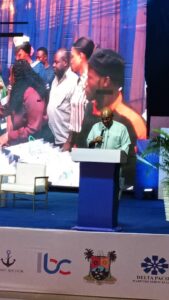
Adewumi, who spoke at the opening of the 2026 NIMAREX at the Oriental Hotel, Lagos, on Tuesday, November 17, said Nigeria’s enormous maritime potential and substantial international trade volume has not translated into commensurate growth in indigenous vessel ownership and operations.
He lamented that the country continued to depend largely on foreign-owned vessels to transport its cargo, thereby surrendering significant economic opportunities that could otherwise generate employment for Nigerian seafarers, strengthen local shipping companies and create wealth for the economy.
Speaking on the theme, “Strengthening Strategic Partnership for a Globally Competitive Blue Economy,” Adewumi maintained that Nigeria must move beyond being a market for international shipping services to becoming a significant participant in the global shipping business.
He identified inadequate access to financing, policy inconsistencies, high operating costs, infrastructural limitations and regulatory bottlenecks as some of the major factors undermining indigenous shipping development.
The NIMAREX Planning Committee Chairman, however, observed that personal interests, individual ambitions and institutional rivalries had also contributed to the industry’s inability to achieve the level of unity required to address its challenges.

He stressed that the maritime industry was bigger than any individual, association or institution, urging stakeholders to put aside their differences and embrace collective action in advancing the sector. On the role of government, Adewumi called for deliberate policies, affordable long-term financing, effective implementation of the Coastal and Inland Shipping (Cabotage) Act and an improved regulatory environment to stimulate indigenous fleet development.
He particularly emphasised the need to ensure that the Cabotage Vessel Financing Fund (CVFF) translates into tangible growth in local vessel capacity and stronger Nigerian shipping companies.
While acknowledging the establishment of a dedicated Ministry of Marine and Blue Economy under President Bola Ahmed Tinubu, Adewumi expressed the expectation that the renewed national focus on the sector would deliver measurable improvements in indigenous shipping, maritime investment, employment and Nigeria’s participation in the global maritime economy.
He noted, however, that government policies and initiatives could only achieve their full potential through genuine collaboration with the private sector.
Addressing concerns over the relationship between industry-led initiatives and government institutions, Adewumi cautioned against the use of public office, institutional influence or government resources to undermine private-sector platforms.
He expressed disappointment over developments suggesting that some individuals within institutions expected to support NIMAREX were promoting competing exhibitions and initiatives capable of weakening the platform and further dividing the industry. While acknowledging that healthy competition was desirable, he drew a distinction between legitimate competition and the use of public authority to undermine established private-sector initiatives.
According to him, government’s responsibility should be to formulate policies, provide effective regulation and create an enabling environment for businesses to thrive, rather than compete with the very industry platforms it is expected to support.
He consequently appealed to the Minister of Marine and Blue Economy and the Ministry to promote collaboration, strengthen existing industry platforms and encourage private-sector initiatives instead of creating unnecessary institutional rivalry.
Describing NIMAREX as a partner in national maritime development rather than an adversary of government, Adewumi maintained that no individual, association or government institution should seek to monopolise the platforms through which stakeholders engage and advance the industry.
He urged participants to ensure that the two-day Expo goes beyond speeches and exhibitions to produce practical solutions and measurable outcomes, particularly in rebuilding indigenous shipping capacity, attracting investment into vessel acquisition, improving access to maritime financing, strengthening regulatory frameworks and developing human capital.
He further called for stronger cooperation among shipowners, maritime associations, government agencies, financial institutions and international partners, noting that Nigeria could not achieve a globally competitive blue economy without a strong indigenous shipping industry.
Adewumi commended the sponsors, exhibitors, speakers, partners and participants for their contributions to the success of the Expo, with particular recognition for the Nigeria Shipowners Association for sustaining the vision of NIMAREX and providing a platform for stakeholders to address the challenges confronting the industry.





One Comment